
By Rob Passmore
As pressure builds globally to tackle river pollution, it’s becoming clear that outdated monitoring methods are the bottlenecks to real progress. In this article, Rob Passmore, CEO of Additive Catchments, explores how methodologies incorporating AI, sensor networks, and shared data infrastructure can help the water sector transition from fragmented, reactive responses to collaborative, intelligence-led action.
River pollution is one of the most urgent and visible environmental challenges facing countries across Europe. Almost 71% of surface water bodies in Europe, show poor ecological status. Nutrient runoff, combined sewer overflows, and ageing infrastructure are pushing ecosystems to the brink, and public confidence is wearing thin. If we’re serious about restoring our rivers, we have to look beyond what’s being done to how decisions are made.
Today, much of our water quality monitoring is designed to check boxes, not drive outcomes. The data collected is often fragmented, stored in incompatible formats, and confined within institutional boundaries. This leaves many organisations working in the dark, repeating efforts, missing early warnings, or making critical choices based on incomplete information. The lack of integration limits what’s possible, not just in the UK, but across Europe.
The Netherlands has the lowest ecological water quality in the EU, with the majority of its rivers, lakes, and coastal waters failing to achieve ‘good’ status. In comparison, even in the UK, where water quality is also a concern, only 14% of rivers meet the ‘good’ ecological standard. To build a better future for waterways, we need to move from reactive, piecemeal interventions to systemic, evidence-led action. And that begins with a clearer, shared view of what’s happening in our catchments—upstream and downstream—in real time.
The problem with legacy approaches
Across Europe, current monitoring regimes are largely built around compliance—confirming whether pollutant levels exceed regulatory thresholds, typically through spot sampling or periodic lab tests. While these methods have their place, they’re slow, expensive, and rarely offer the resolution or frequency needed to detect changes as they happen.
Moreover, the burden of compliance is uneven. Larger utilities may have dedicated teams and resources to navigate regulatory frameworks, but smaller stakeholders, such as farmers, developers, and local authorities, are often left trying to interpret complex requirements with little support. The result is a system that feels more like bureaucracy than a pathway to better water quality.
And when monitoring data does exist, it’s often inaccessible to those who need it. Landowners, planners, environmental groups, and even regulators themselves may be working with different datasets, or none at all, making coordinated responses difficult and trust even harder to build.
A shift toward shared intelligence
What’s needed is a new model: one where water quality isn’t monitored in isolation but understood as part of a dynamic, interconnected system. Rivers don’t respect administrative boundaries, and neither should our data.
In the UK, the Catchment Systems Thinking Cooperative (CaSTCo), a cross-sector initiative involving over 50 organisations, recently submitted a unified framework, ‘Call for Evidence’, to the UK’s Independent Water Commission, calling for precisely this shift. Its recommendations—national data standards, integrated platforms, and citizen science inclusion—are already shaping how we think about catchment-scale insight.
One approach gaining traction is what’s known as Catchment Monitoring-as-a-Service (CMaaS). These platforms consolidate real-time sensor data from multiple sources, overlay it with regulatory information, and make it available in a format that’s easy to interpret, share, and act on.
When powered by AI, CMaaS platforms can go further still. They can identify patterns, flag emerging risks, and even suggest targeted interventions before problems escalate. This kind of foresight is what turns data into decision-making power, and compliance into resilience.
Why local decision-makers matter more than ever
As governments loosen environmental regulations worldwide, we’re seeing new local and community players tasked with monitoring, often without the tools to do it effectively. This decentralisation risks increasing fragmentation, but it also opens the door to a more distributed, transparent model of oversight.
Take housing. In some areas, developments have stalled because planners can’t prove they’ll have a net-zero impact on local rivers. With shared, real-time monitoring platforms, authorities gain the insight they need to quantify environmental impact, ensure natural resources are protected, and allow sustainable construction to move forward. Data becomes the enabler, not the barrier, to progress.
Technology enables transparency, but can’t replace it
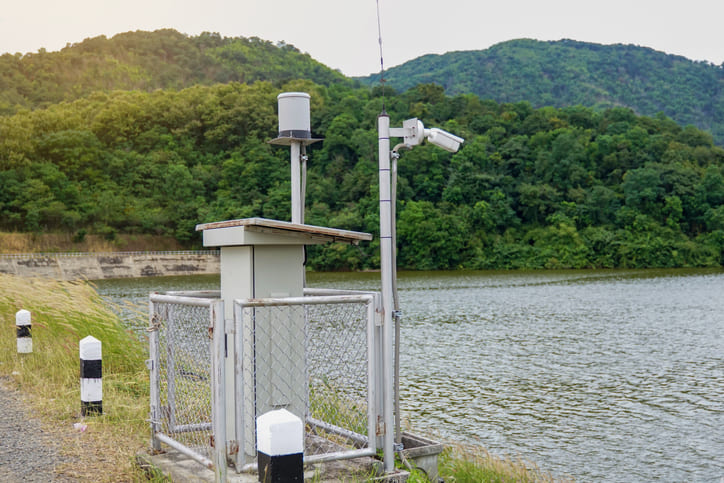
IoT sensors, machine learning algorithms, and edge computing are already changing how we monitor everything from nitrate concentrations to stormwater overflow events. These tools offer unprecedented granularity and frequency, revealing conditions hour-by-hour instead of month-by-month.
However, technology alone isn’t the solution. Without transparency and collaboration, even the most sophisticated monitoring systems risk becoming yet another silo. That’s why platforms must be open, interoperable, and designed with governance in mind. Data must not only be accurate, but it must also be trusted.
That trust comes from shared standards, independent validation, and public visibility. Imagine a world where communities could check the health of their local rivers in real time. Where developers could see the cumulative impact of a new housing project. Where regulators could spot noncompliance before it damages ecosystems. That’s the promise of modern catchment monitoring.
From reaction to prediction
Whether in the UK or across Europe, we face a choice: continue with outdated, reactive methods, or embrace transparency, technology, and shared responsibility.
To get there, we need to treat data not as a byproduct of regulation, but as the foundation for effective governance. We need to build systems where intelligence flows across institutional lines, where monitoring supports real-time decisions, and where accountability is enabled, not avoided, by technology.
This is not just a technical challenge. It’s a cultural one. But it’s one we’re ready for. The tools exist. The partnerships are forming. And the appetite for smarter, more collaborative water management is growing fast.
If we want thriving rivers, restored public trust, and resilient communities, the answer isn’t just to monitor more, it’s to monitor smarter.
 Rob Passmore