AI agents are revolutionizing industries and transforming how businesses manage complex tasks and interact with customers.
These advanced tools are modernizing traditional rule-based workflows to intelligent systems that can operate autonomously and make decisions in real-time.
According to PwC’s AI Agent survey, 79% of senior executive participants said that AI agents are already being adopted in their companies.
AI agents are in action across various industries. They are facilitating different businesses with automation, intelligence, and improved decision-making. Therefore, we have designed this guide to highlight the top real-world AI agents examples and give you a detailed picture of all the possible ways you can use these tools.
What Are AI Agents?
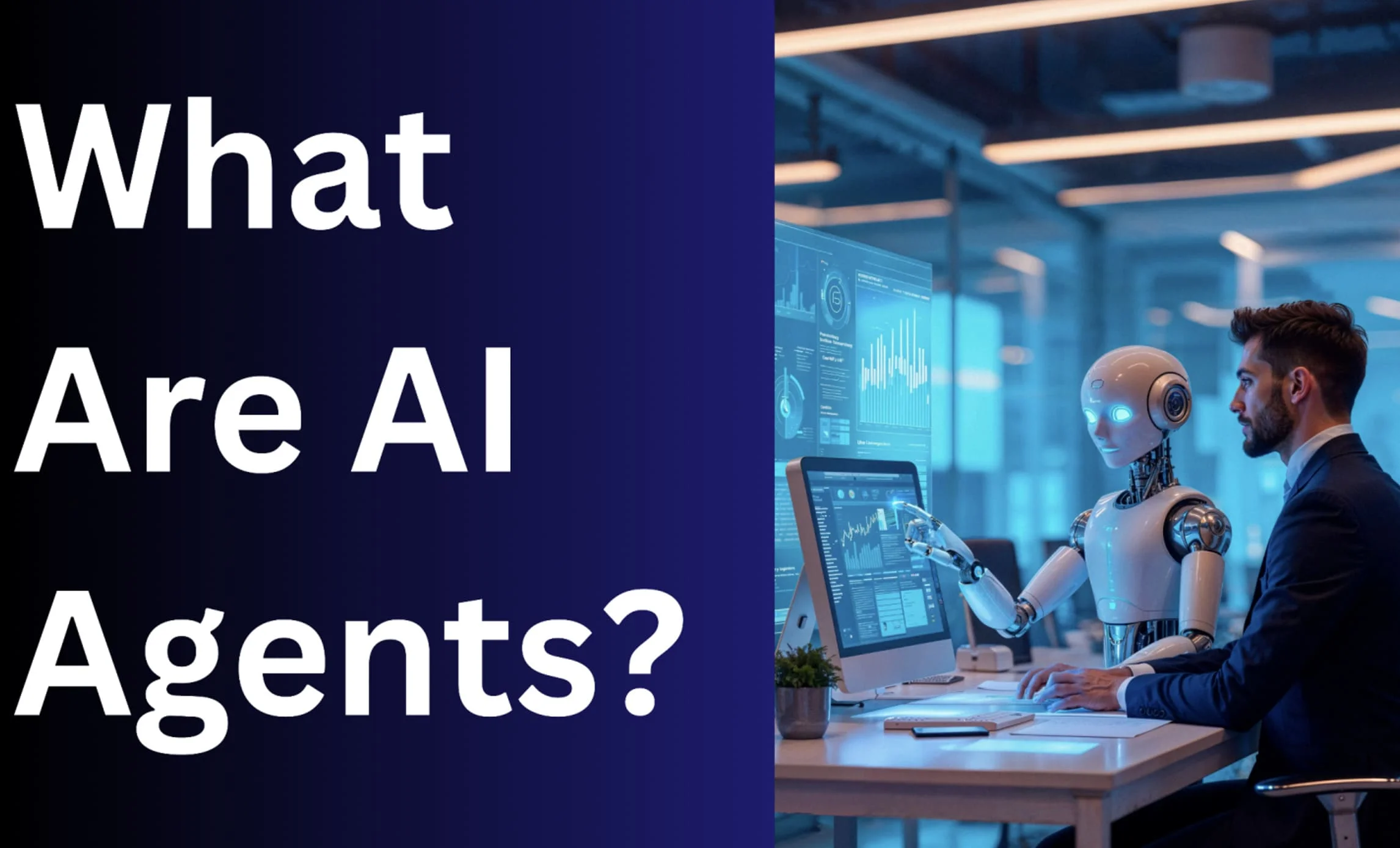
AI agents are software systems that can complete tasks independently, make decisions, and interact with their environment to achieve specific goals. They understand inputs, reason, plan, and act as required with a high level of autonomy.
AI agents are backed with advanced AI technologies, including machine learning, natural language processing (NLP), and large language models (LLMs). They can process multimodal information, such as text, image, video, voice, code, and more.
What makes AI agents different from traditional rule-based agents is that they can make decisions and learn over time. That’s why they are capable of automating complex tasks that otherwise require human intervention.
Key Benefits of AI Agents in Real-Life Applications
Generative AI agents have improved workflow for 90% of companies. They are more than just tools to automate repetitive tasks. Think of them as intelligent bots capable of making decisions, offering personalized interactions, and optimizing complex business processes.
Below are the key benefits of AI agents in real-life applications for businesses:
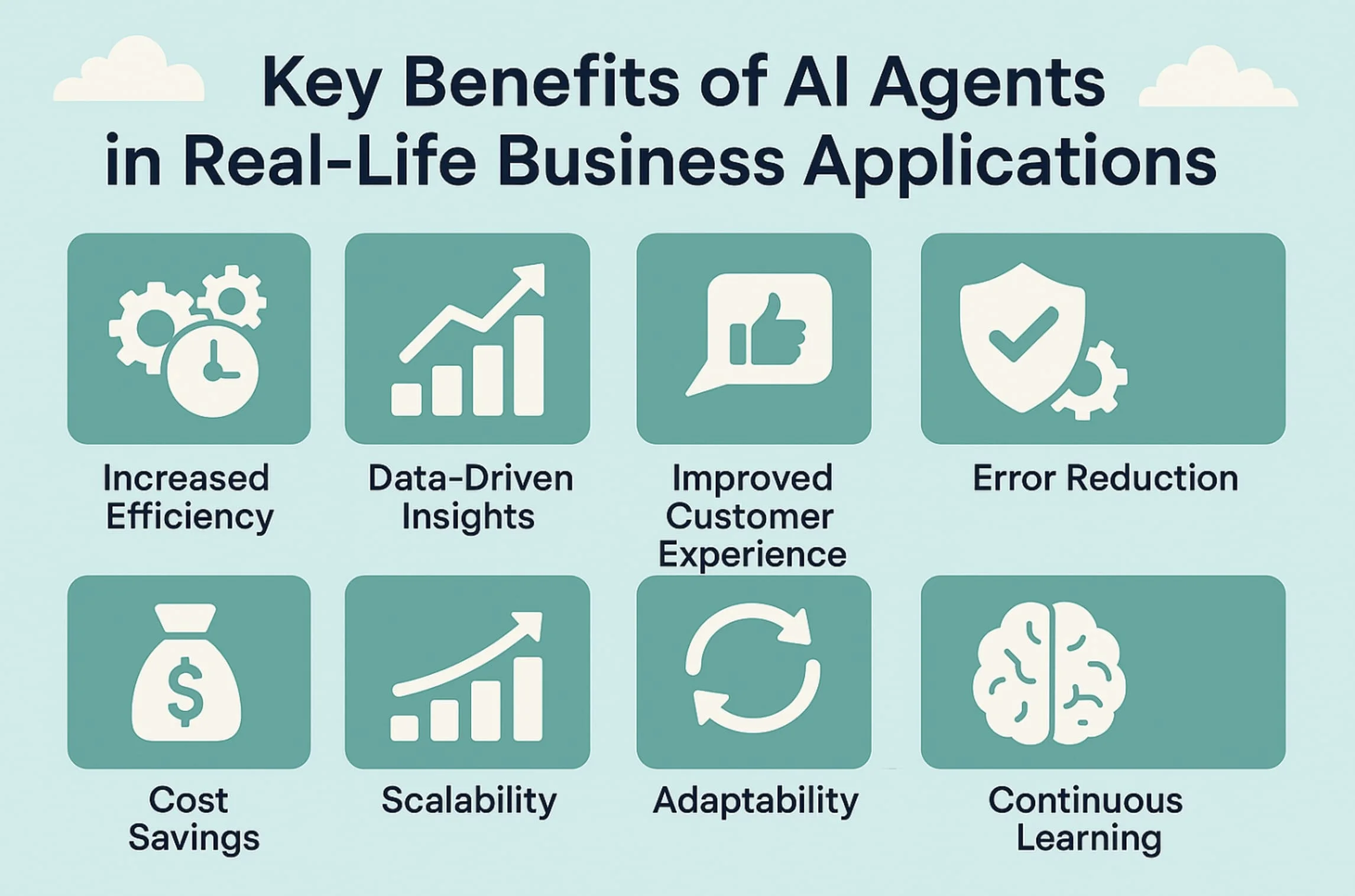
Increased Efficiency and Productivity
AI agents tools can handle repetitive tasks and free humans for creative work. 38% of workers say that AI agents help them become creative.
Agents can work on multiple things simultaneously with consistent service quality. For example, you can consider AI chatbots examples for customer service, as they can handle hundreds of inquiries simultaneously and automate the resolution of common issues.
According to McKinsey & Company, companies that deploy mature AI agents can achieve a 30-50% reduction in process completion times, a 60-85% drop in error rates for routine processes, and a 25-40% decrease in operational costs.
Data-Driven Insights and Decision-Making
Today, the growth and success of businesses are linked to how they use data. In fact, data-driven organizations are 23 times likely to acquire customers, 6 times likely to retain customers, and 19 times likely to be profitable.
The beauty of AI agents platforms is that they can analyze massive datasets in real time. They can highlight patterns and generate actionable insights for better decision-making. They can also execute tasks by making autonomous decisions. For example, an AI agent in finance can detect unusual transaction patterns and trigger fraud alerts or block suspicious activities.
Improved Customer Experiences
AI agents are loved by customers. They are available 24/7 and intelligent enough to respond to different types of queries instantly. This leads to faster response times and higher satisfaction with increased customer loyalty.
For example, a customer support AI chatbot can offer instant replies and resolution to common queries, scheduling appointments, tracking orders, etc.
Error Reduction and Consistency
Humans can make errors, but AI agents reduce errors and provide a consistent service experience. For example, AI robots in the manufacturing sector can build products with minimized defects and waste.
Tesla has implemented AI quality inspections, which have resulted in a 90% reduction in product defects. Similarly, AI agents are offering consistent and error-free services across industries and urging businesses to rely more on them.
Cost Savings and Scalability
Businesses can save significant expenses with AI agents. These agents can operate 24/7 and don’t need salaries, breaks, or benefits. They can handle multiple tasks in parallel without compromising the quality.
AI agents are also scalable. They can handle more workload as the business size increases. For example, customer support agents can handle more queries, while inventory management agents can manage increased inventory volume proficiently.
Adaptability and Continuous Learning
AI agents can learn and adapt with time. They use machine learning and natural language processing to improve their abilities as they process data.
For example, an AI system for product recommendations can improve its predictions as it gets to know more about the user.
10 Real-World AI Agents Examples in Enterprises
AI agents are usable in almost every enterprise operation. They can facilitate customer support, marketing, sales, logistics, and much more. In fact, 85% of enterprises are on track to implement AI agents by 2025. Therefore, let’s talk about the 10 real-world AI agents examples:
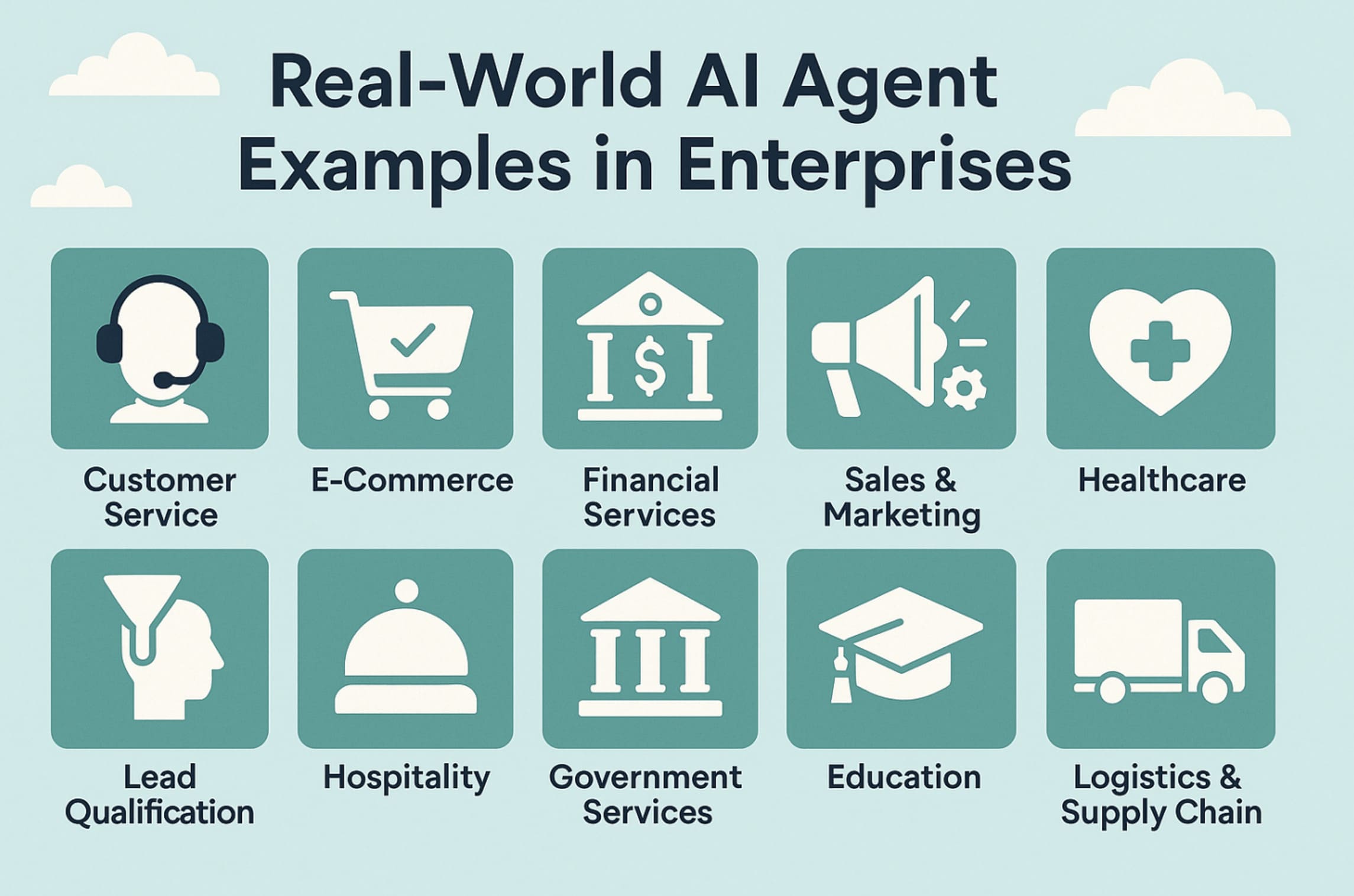
1. Customer Service AI Agents
One of the most widely adopted AI Agents examples in real life is customer service agents. These agents work as virtual customer support professionals who can act as first responders to customer inquiries.
AI customer service agents can handle:
- Frequently asked questions (FAQs)
- Order status updates and tracking
- Processing refunds and returns
- Password resets and account recovery
- Updating customer information and billing details
- Troubleshooting product or service issues
- Creating and managing support tickets
- Escalating complex cases to human agents with full context
- Providing personalized product or service recommendations
- Automating appointment scheduling and reminders

In short, customer service AI agents are intelligent support agents that can reduce the overall workload of human agents and enhance the customer experience with responsive services.
2. E-Commerce AI Agents
E-commerce stores are using AI agents to enhance the experience of shoppers. These agents can automate and optimize various aspects of online retail. They can help:
- Place and process orders automatically
- Track shipments and provide real-time delivery updates
- Facilitate image-based product searches
- Send follow-up messages about abandoned shopping carts
- Ask about product reviews/ratings
- Offer personalized product recommendations
E-commerce chatbots can help increase sales and improve customer satisfaction when used effectively. For example, Amazon’s AI-powered recommendation system generates 35% of the company’s revenue. In short, AI integration in e-commerce is a proven strategy to increase engagement and conversion rates.
3. Financial Services AI Agents
Financial services need smart solutions that can enhance security and automate complex tasks. AI agents tools are doing wonders for these organizations. These agents are backed with ML, NLP, and big data to provide real-time analysis and autonomous decision-making.
Financial services AI agents can:
- Detect fraud by analyzing thousands of transactions
- Offer AI-powered customer support 24/7
- Manage document categorization and data extraction
- Identify, evaluate, and prioritize risks
- Provide cash flow forecasts
- Deliver personalized financial advice and investment recommendations
In short, AI-powered agents enable financial services to operate more efficiently, deliver personalized services, and enhance their security posture.
4. Sales and Marketing AI Agents
AI agents are the companions that sales and marketing teams need to increase their outcomes. These agents can:
- Create engaging content for marketing campaigns
- Execute marketing campaigns autonomously
- Provide 24/7 real-time interaction with customers
- Automate multichannel messaging across email, social media, etc.
- Generate accurate sales forecasts and actionable insights
- Monitor competitor activities, market trends, and customer feedback
Sales and marketing teams can work smarter, save time, and run impactful campaigns with the smart utilization of AI agents.
5. Healthcare AI Agents
When talking about AI agents examples in real life, we cannot exclude healthcare agents. These AI tools are transforming patient care and administrative processes. They are automating routine tasks and providing an enhanced healthcare experience.
Healthcare AI agents can:
- Automate appointment scheduling and reminders
- Assist in clinical documentation and electronic health record (EHR) management
- Analyze medical images and patient data for diagnosis
- Provide 24/7 virtual health assistance for symptom triage and medication reminders
- Managing billing, claims processing, and insurance verification
Simply put, healthcare AI agents are becoming handy to enhance care quality and reduce clinician workload. In fact, 42% of hospitals and clinics in the EU are already using AI agents for disease diagnosis.
6. Lead Qualification AI Agents
Lead qualification AI agents automate the tedious process of evaluating and prioritizing potential customers. They can look into the interaction patterns and other behavioral data to assess which prospects are most likely to convert.
Lead qualification AI agents can:
- Score leads by analyzing behavioral and engagement data
- Extract relevant information from emails and CRM entries
- Route qualified leads to sales representatives
- Automate follow-up reminders and communications
- Prioritize potential leads
In short, lead qualification AI agents tools optimize sales pipelines and improve conversion rates.
7. Hospitality AI Agents
Today, guests need responsive and instant experiences. 65% of guests want hotels to provide better tech than their homes. AI agents in hospitality are serving just what guests want. They are:
- Managing bookings, cancellations, and modifications automatically
- Handling room service requests
- Offering personalized recommendations for dining and activities
- Handling multilingual communication to serve global customers
- Optimizing staff scheduling based on occupancy and guest preferences
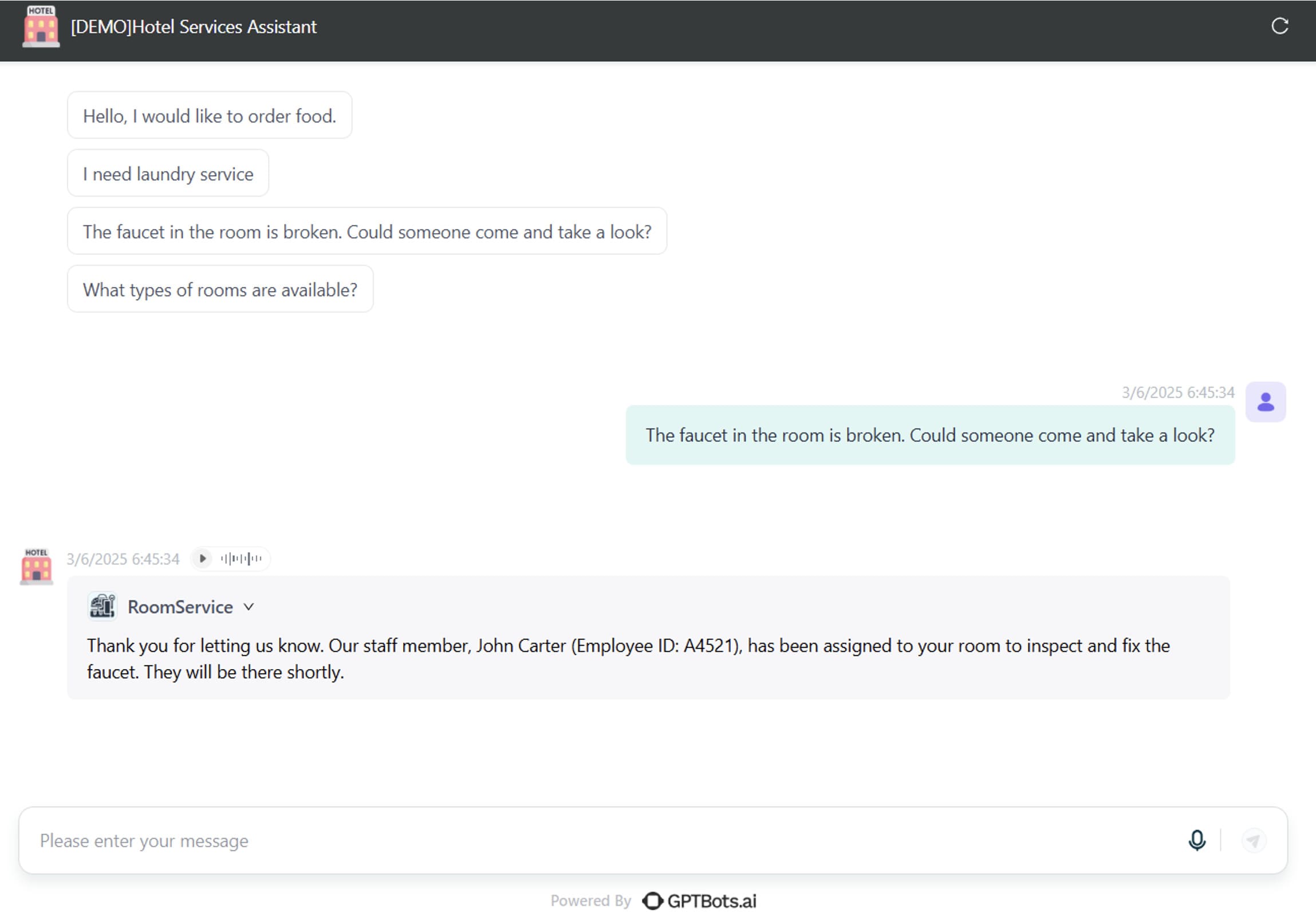
Overall, hospitality AI agents platforms offer around-the-clock personalized services to guests to enhance the experience and reduce operational costs.
8. Government Services AI Agents
Government-related services are often complex and manual-based. AI agents are improving administrative efficiency and citizen engagement. They are automating repetitive tasks and improving accessibility for citizens.
AI agents in government services are helping to:
- Respond to FAQs
- Automate eligibility checks and document verification
- Process applications for licenses, permits, etc.
- Managing appointment scheduling and reminders for public services
87% of U.S. people prefer using an AI agent to understand confusing government processes. Therefore, the government services AI agents are best suited to optimize public experience with advanced technological services.
9. Education AI Agents
The education sector is not left behind in the era of AI agents. There are now plenty of education AI agents that offer personalized learning experiences for students and automate administrative tasks for education.
Education AI agents can:
- Offer personalized learning for each student according to their pace
- Deliver personalized tutoring based on student needs
- Automate grading and assessment
- Manage attendance, scheduling, and administrative workflows
- Assist educators with content creation and lesson planning
Simply put, education AI agents are a helping hand for both students and educators. They give them the intelligence they need to manage their workload. In fact, 77% of students mentioned their willingness to use AI agents for academic tasks, while 83% of administrators mentioned their openness to use AI agent assistance in their professional duties.
10. Logistics and Supply Chain AI Agents
Lastly in our AI agents examples in real life, comes logistics and supply chain. These agents can enhance the efficiency of operations by automating inventory management, transportation planning, and more.
The key functionalities of logistics and supply chain AI agents include:
- Forecast demand and adjust inventory levels
- Schedule deliveries and optimize routes in real time
- Monitor shipments and provide proactive alerts for delays
- Automate order processing and fulfillment workflows
- Reduce waste and improve resource allocation
In short, logistics AI agents are the efficiency boosters and cost savers for organizations.
Top 5 AI Agents in 2025
Considering the benefits and use cases of AI agents, there are now many platforms that let you use these agents for your business operations. Below, we have shortlisted the top five AI agents worth trying in 2025:
GPTBots – LLM-Powered AI Agent Builder
GPTBots is an all-in-one enterprise AI agent builder. It provides organizations with a platform to build and integrate AI agents for customer service, marketing, competitor/data analysis, content writing, enterprise search, and much more.
GPTBots lets you power your agents with controllable LLMs and a corporate knowledge base. Moreover, you can integrate the agents across dozens of different apps and tools conveniently.
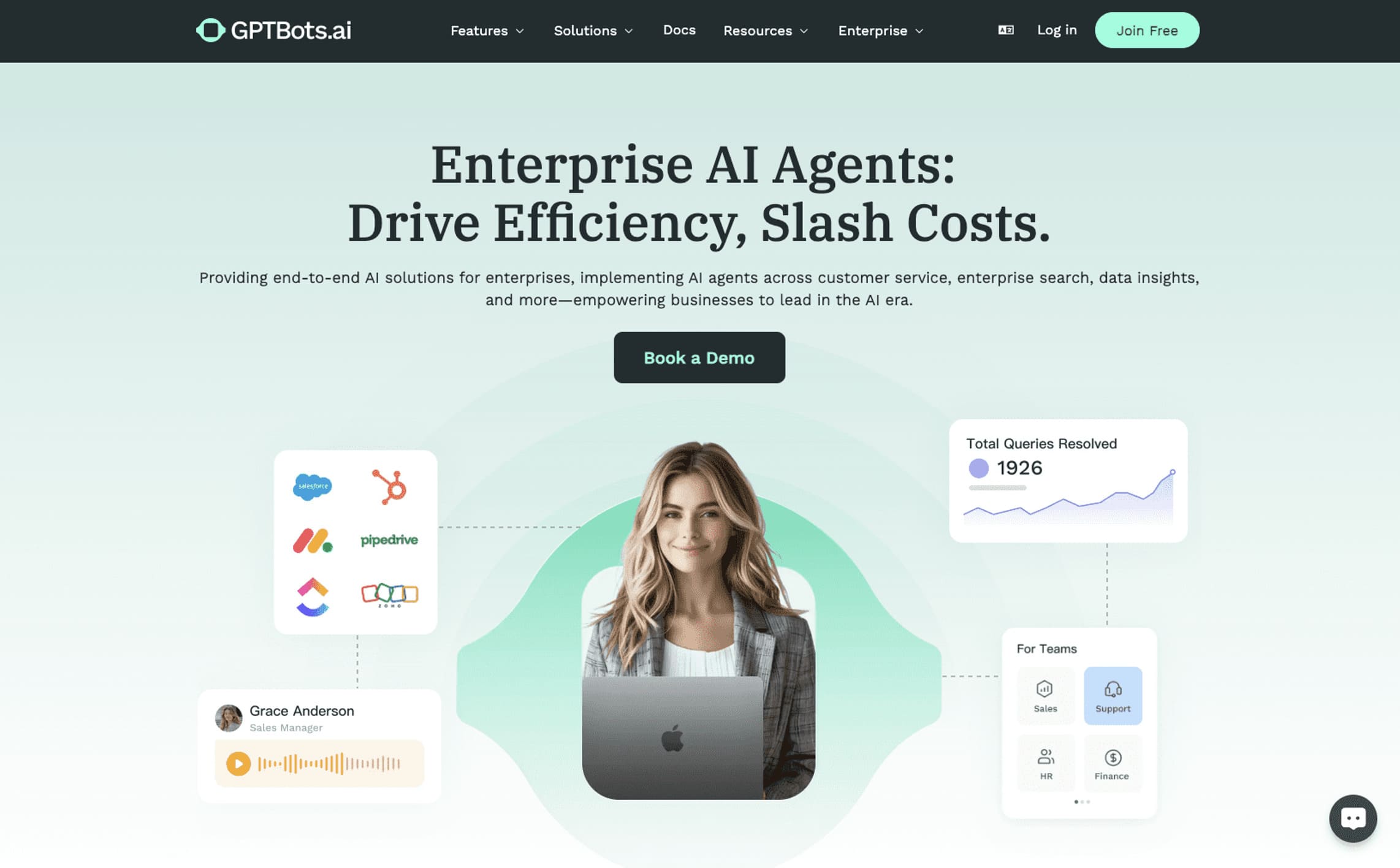
The key features of GPTBots include:
- No-code, visual builder to design AI agents.
- Pre-designed templates for faster chatbot creation.
- Create a diverse range of AI agents, including customer service, data analysis, SEO content writing, marketing, etc.
- Proper AI agent training with the uploaded corporate knowledge base.
- Flexible deployment and switching of LLMs, such as GPT, DeepSeek, Claude, Llama, etc.
- Integrate AI chatbots across websites, WhatsApp, LINE, Discord, Telegram, Zapier, etc.
- Expert guidance in creating and integrating AI agents.
In short, GPTBots serves as an ideal platform to build and deploy AI chatbots and enhance business operations. After integrating, the agent will be capable of resolving 95% of support queries and increasing leads by 300%.
Gumloop – AI Workflow Automation
Gumloop is another useful AI agents platform that helps automate any workflow without any technicalities. It provides a visual builder to design the workflow with elements like web scraping, extracting data, handling input/output, summarizing, etc. It can connect data from different sources and automate different workflows.
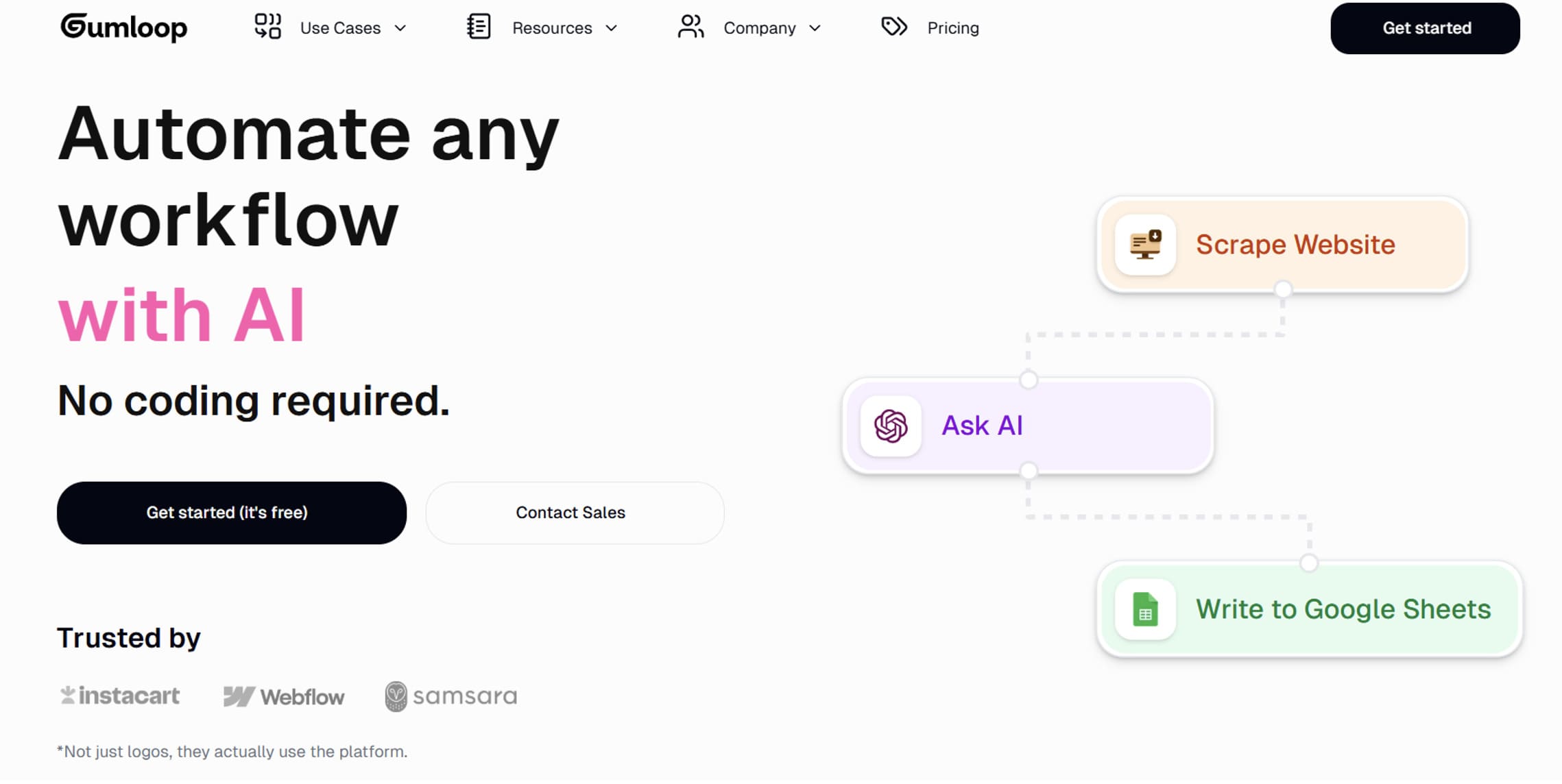
The key features of Gumloop include:
- Create powerful automation by dragging, dropping, and linking nodes onto a canvas.
- Build flows with your team members in a collaborative workspace.
- Integrate with popular services, such as Salesforce, Slack, Airtable, AWS, GitHub, etc.
- Top-notch security and scalability.
Devin – AI Software Engineer
If you are running a software firm, Devin is the tool your developers would love to use. It is an AI software engineer and coding agent that assists developers in building software faster. It provides a chatbot where developers can ask for specific code and other assistance.

The key features of Devin include:
- Chatbot-style interface to understand and respond to natural language requests.
- Develop simple to complex software solutions with perfect coding.
- Test its own code and fix errors.
- Web searching for documentation, testing, and accessing tools.
11x – AI Digital Workforce for Sales
11x.ai is an AI agents platform that provides intelligent digital workers to automate and scale sales and customer engagement processes. These AI agents can engage with prospects across channels, offer a personalized messaging experience, and integrate with existing tools.

The key features of 11x.ai include:
- Digital, intelligent, and enterprise-ready workers to identify, engage, and convert.
- Schedule meetings and manage follow-ups autonomously.
- Operate around the clock without breaks.
- Execute a diverse range of tasks without supervision.
- Support multilingual communication.
- Learn and adapt continuously.
- Integrate with almost all essential enterprise tools.
OpenAI’s Operator – Automate Repetitive Browser Tasks
OpenAI’s Operator is at the end of our list of AI agents tools because it is still pretty new (in beta) and not accessible to all users.
OpenAI’s Operator is an AI agent that can automate repetitive tasks through web browser interactions. It can handle tasks like ordering groceries, filling out forms, creating memes, scheduling appointments, and more.
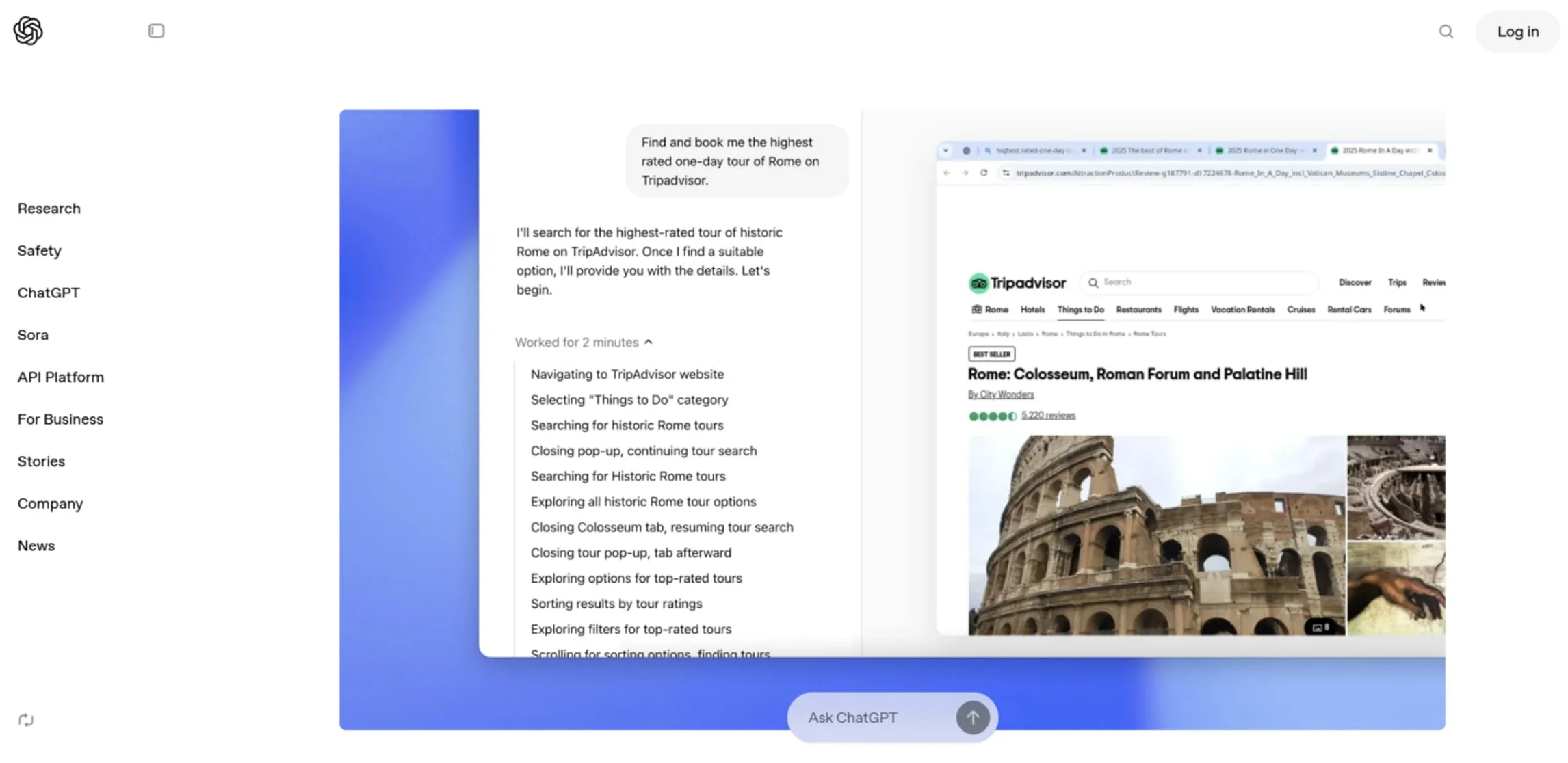
The key features of OpenAI’s Operator include:
- Automate multi-step workflows within web browsers.
- Interact with websites by clicking, entering text, or simply scrolling.
- Take instructions in natural language to perform tasks.
- Adapt to user preferences for a personalized experience.
- Real-time decision support.
The Future of AI Agents: Trends to Watch
The dominance of AI agents across industries is just getting started. The following years show a promising future and deeper involvement in business operations. The global AI agents market size was $5.40 billion in 2024 and is projected to reach $50.31 billion by 2030, which is a 45.8% CAGR growth.
Some of the likely future trends related to AI agents include:
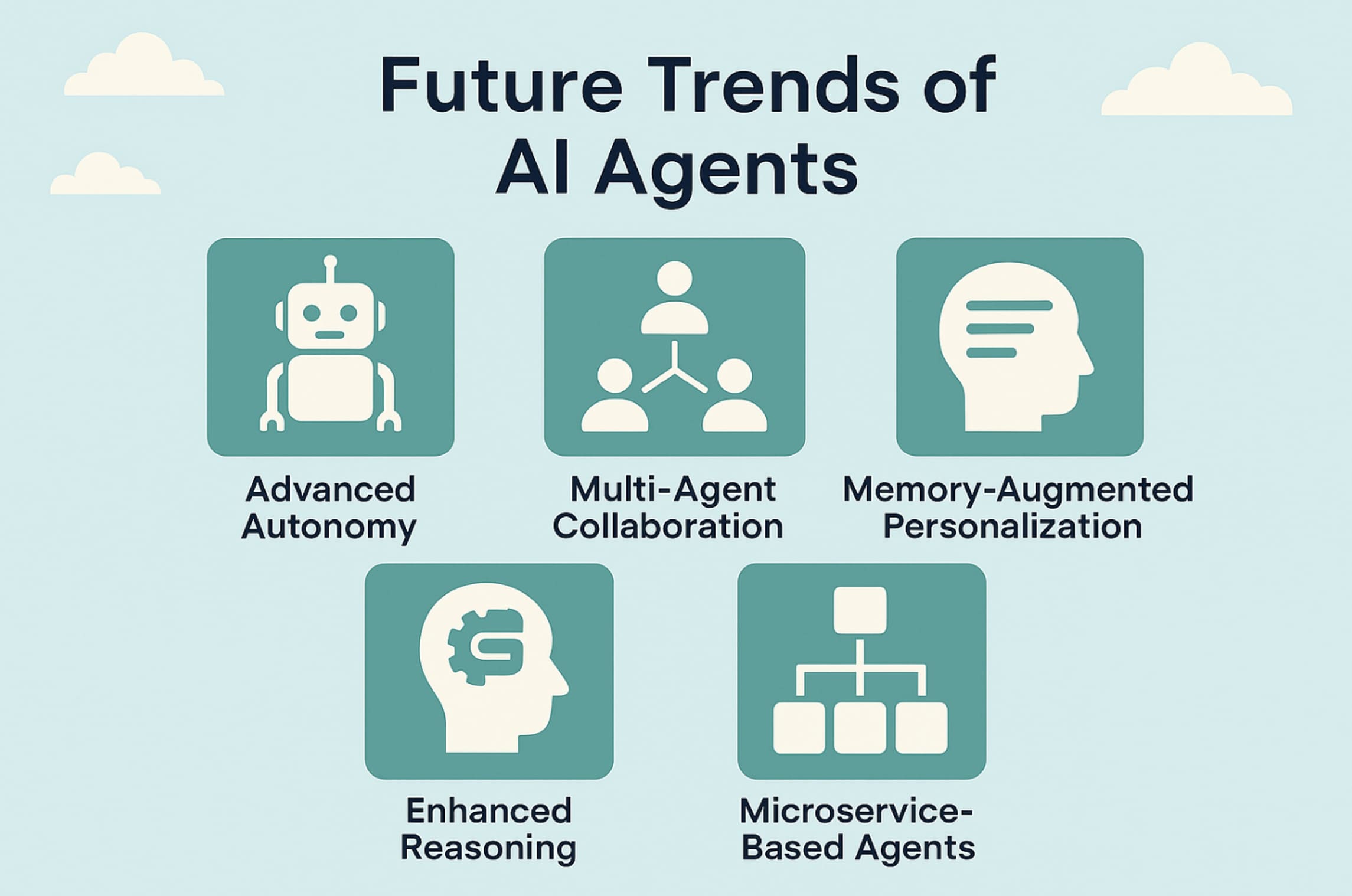
1. Advanced Autonomous Systems Beyond Task Execution
AI agents are known to automate repetitive tasks and even complex ones. However, the level of this automation will become more advanced and sophisticated in the coming years.
We will see truly independent decision-makers who can perform more complex tasks autonomously. These can be related to approving loans, executing trades, ordering inventory, etc.
2. Multi-Agent Collaboration
Most AI systems are currently working standalone. However, the trend is shifting towards multiple AI agents working together to coordinate on complex issues.
Consider logistics where one agent might reroute shipments due to weather disruptions, while another one updates inventory forecasts.
3. Memory-Augmented and Personalized Agents
Future AI agents will retain long-term memory of user preferences and past interactions. They will become more contextually aware and offer hyper-personalized services.
4. Enhanced Reasoning and Natural Interaction
AI agents are improving their reasoning capabilities. The simplest example is ChatGPT. When it was launched in 2022, it failed to offer the enhanced reasoning that it can now provide with more context-aware conversations.
AI systems are now using reinforcement learning from human feedback, iterative reasoning, and contextual memory to evolve from pattern-based text generators into sophisticated reasoning systems. Therefore, we will see AI agents that can understand context deeply, interact naturally, and solve complex problems logically.
5. Microservice-Based AI Agents
Instead of generic AI agents, the trend is also shifting towards microservice AI agents that are designed for specific tasks or domains. For example, a healthcare imaging AI agent might specialize in diagnosing medical images only, while another handles patient scheduling and follow-ups.
Summary
AI agents are driving business success without any doubt. The above AI agents examples are proof of their dominance across industries and the key role they play in real-world applications. Therefore, it’s a crucial time for enterprises to build and deploy AI agents.
GPTBots provides an ideal one-stop AI agents platform to build AI solutions for different business operations. Its visual builder, controllable LLMs, knowledge-base training, and other aspects are empowering businesses to integrate intelligent agents. Visit the GPTBots website for more information or to start a free trial.