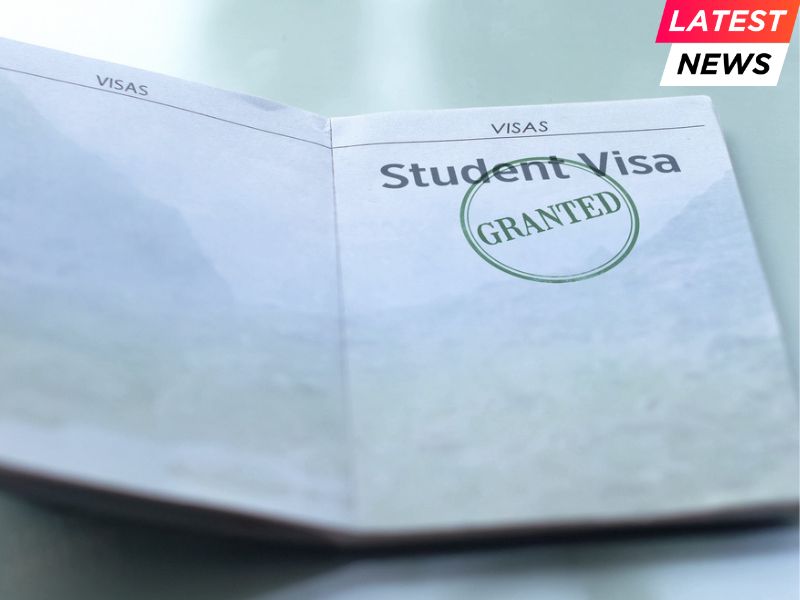
Thousands of Indian students hoping to study in the United States face growing uncertainty after the US abruptly paused student visa appointments last month.
Among them is 26-year-old Umar Sofi from Indian-administered Kashmir, who was admitted to Columbia University’s School of Journalism after three years of effort. “I was numb. I could not process what had happened,” he said, recalling the moment he learned the US embassy had frozen visa slots.
Seventeen-year-old Samita Garg (name changed), recently accepted to a top American university to pursue biochemistry, voiced similar frustration. “It is scary and stressful,” she said. “It feels like I’ve been left in the lurch.”
Both students now face a tight deadline to secure entry before classes begin in August.
The hold on visa interviews followed directives from President Donald Trump’s administration instructing embassies worldwide to suspend student visa scheduling and expand social media scrutiny of applicants. The crackdown comes amid rising tensions between the administration and elite academic institutions, with Trump accusing universities of political bias and failing to address campus unrest.
India, the largest source of international students in the US, is feeling the brunt of the policy shift. In the 2023–24 academic year, over 330,000 Indian students enrolled in US colleges, according to Open Doors data.
Educational consultants report a sharp drop in applications this season. “Their biggest fear is safety—what if their visas are denied or revoked halfway through?” said Nikhil Chopra, founder of TC Global, a student advisory firm.
Many are now looking elsewhere. Countries like the UK, Germany, and Australia are increasingly seen as more stable alternatives. Prema Unni (name changed), who was accepted into three American universities for a master’s in data analytics, decided to turn down all offers. “There’s uncertainty at every step,” he said, citing concerns over visas, job restrictions, and surveillance on campus.
US colleges, especially regional and public institutions, could feel the economic impact. International students pay significantly higher tuition than domestic ones and contributed nearly $44 billion to the US economy last year, according to NAFSA, an association of international educators.
The current freeze is also compounding worries about shifting immigration rules. Recent policy changes threaten to revoke visas for students who drop out or miss classes without prompt notice.
“This isn’t just a temporary revenue problem,” said Prof. Chris Glass of Boston College. “It’s a long-term break in a relationship that has historically benefited both nations.”
Visa rejection rates have also surged. The US denied 41% of student visa applications between 2023 and 2024—the highest in a decade.
With enrolment already declining, analysts warn that continued instability could tarnish the United States’ appeal as a top global education destination, particularly among Indian students who have long viewed it as a path to opportunity and professional success.
Related Readings: