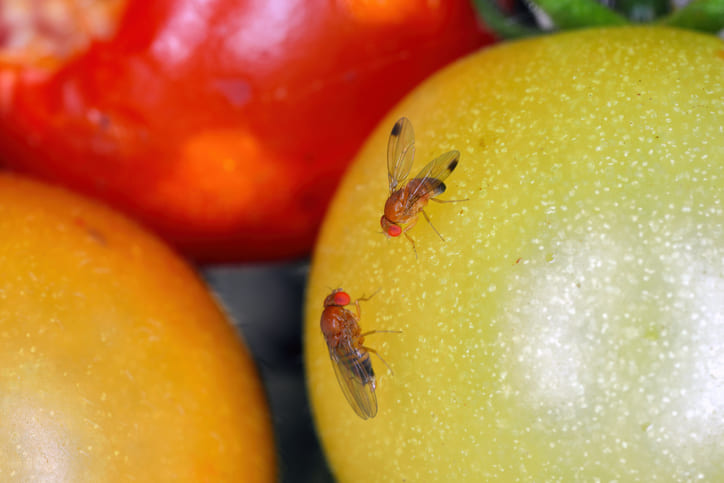
The fruit fly is a real threat, but with technology, coordination, and public awareness, it can continue to be controlled.
With a focus on safeguarding its international status as a fruit fly-free country—a key condition for maintaining its global leadership in fruit exports—Chile has launched the Comprehensive Plan “No to the Fruit Fly: Chile Exports Trust”, a strategy that reinforces phytosanitary surveillance, border control, and public-private collaboration.
Since 1995, this status has been the foundation for the sustained growth of Chilean fruit farming, granting access to over 100 demanding markets.
The new strategy, presented by the Ministry of Agriculture alongside SAG, Carabineros, the PDI, Customs, and industry associations, aims to prevent the entry, spread, and establishment of the pest, whose impact could halt exports, affect national production, and threaten jobs.
Fruit producers support the plan
From the agricultural sector, fruit growers such as Gabriel Massuh, owner of the importer Bagno, welcomed the plan, highlighting its strategic importance for ensuring the continuity of shipments to key international markets.
According to Massuh, “the fruit fly-free status is one of our main commercial assets. Losing it would mean increased costs and logistical delays that directly impact our competitiveness.”
A state-level effort with five key pillars
Minister of Agriculture Ignacia Fernández emphasized that the initiative is a state strategy, not just a sectoral measure: “Since 1995, we’ve maintained this sanitary condition, which is key to our global competitiveness. This plan brings together the State, citizens, and the private sector in a joint effort that cannot be relaxed,” she stated.
The plan involves over CLP $17 billion in public investment in 2024, with 26 outbreaks already eradicated and another 42 currently in process. Additionally, more than 345,000 kilos of high-risk agricultural products have been intercepted so far this year.
The plan’s five strategic pillars are:
Strengthening border control: Increased inspections, creation of a new Phytosanitary and Zoosanitary Intelligence Department, and a proposed law to criminally penalize the illegal entry of pests.
Surveillance and eradication: Expansion of technologies such as drones, biopesticides, and the Sterile Insect Technique (SIT) across more than 100,000 hectares.
Direct support for farmers: Launch of the Fruit Fly Collective Insurance, a free policy for affected producers.
International outreach: Reinforcement of alliances with key markets such as Peru, China, and India, and leadership in forums like the COSAVE Fruit Fly Group.
Risk communication: A national education and prevention campaign aimed at the general public.
Phytosanitary security as a component of national security
Minister of Public Security Luis Cordero pointed out that pest control is also a dimension of national security, especially in regions with long, exposed borders.
From the agricultural sector, Antonio Walker, president of the SNA, stressed that the plan comes at a crucial time—right before the export season peaks—especially as tourism increases the risk of pest introduction by 35%.
Meanwhile, Frutas de Chile praised the plan’s comprehensive vision, which combines science, enforcement, education, and international cooperation.