

By Muhammad Arslan Qamar
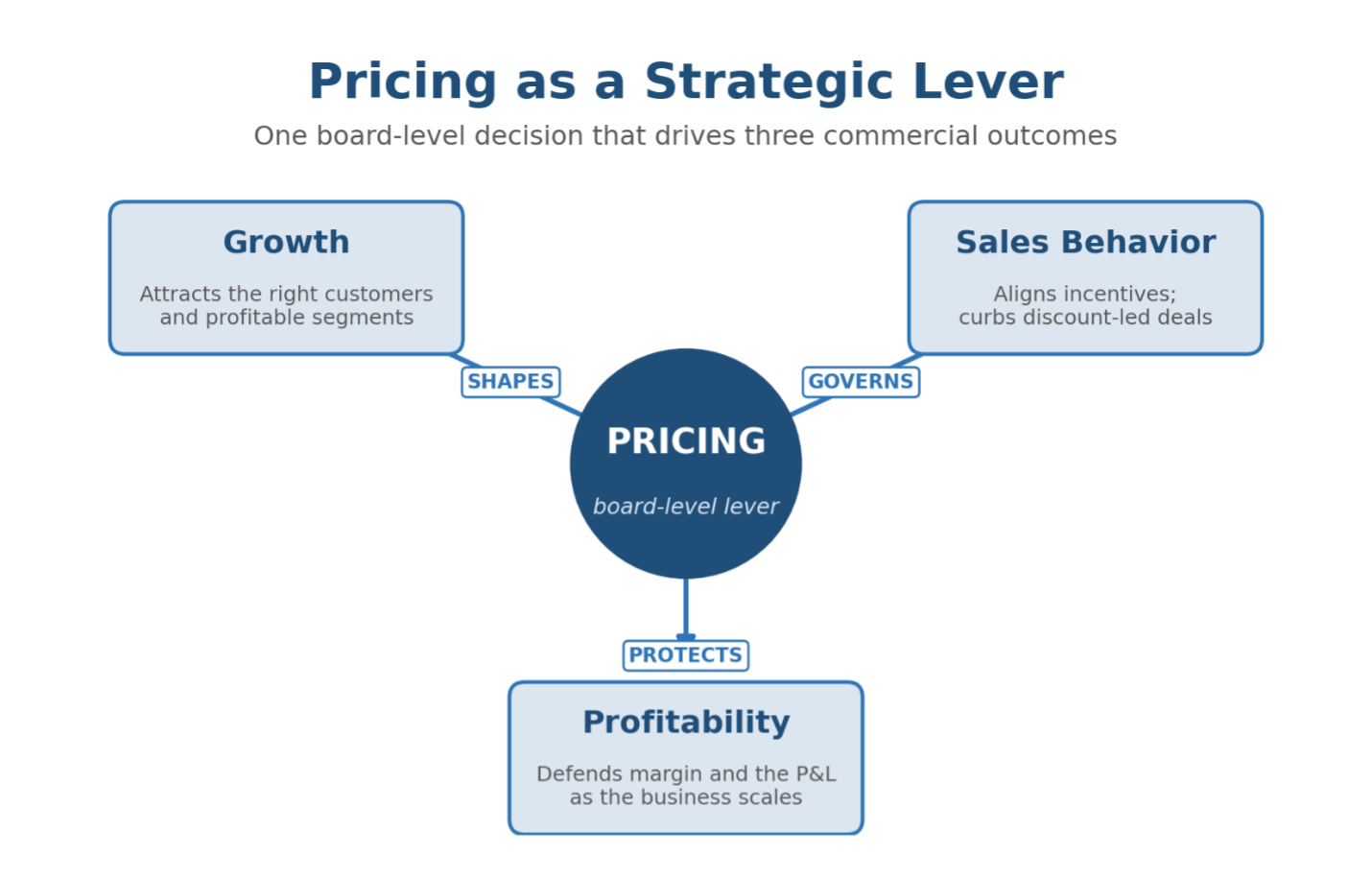
In digital businesses, pricing is not a finance formula but a board-level lever that shapes growth, governs sales behavior, and protects long-term profitability.
Is pricing a finance calculation or a leadership decision? In my experience as an ICAEW-qualified finance leader responsible for P&L oversight and commercial strategy, it is firmly the latter. In digital businesses, pricing is too often treated as a tactical adjustment rather than a strategic lever. Yet it is one of the most decisive choices an organization makes, shaping how it grows, how its sales teams behave, and whether that growth is profitable. Pricing is not a number to hit a target; it is a strategy.
Why Is Pricing a Leadership Decision, not a Functional Task?
Too often, pricing responsibility is delegated to the finance or sales department. While functional teams provide input, pricing ultimately defines the rules of the business, and this requires executive ownership. As someone responsible for product budgets and commercial oversight, I have found that the most successful digital businesses treat pricing as a board-level decision, setting clear guardrails that guide growth and sales without sacrificing profitability.
When leadership does not clearly own pricing, businesses may grow quickly, but the growth is rarely controlled. Margins shrink, operational pressure increases, and delivery teams struggle to keep pace.
In my experience, digital businesses that do not anchor pricing in commercial leadership frequently face strategic drift, where growth occurs at the expense of long-term value creation. Pricing discipline is not a technical exercise; it is a senior executive’s responsibility that directly affects the bottom line.
How Does Pricing Guide Growth, Not Just Drive Sales?
Sales growth is often celebrated in digital businesses. However, not all growth is strategically desirable. In my experience, thoughtful pricing decisions play a critical role in shaping how a business grows. Pricing isn’t just about driving volume; it helps us attract the right customers, focus on profitable segments, reduce operational complexity, and ensure growth supports the wider strategic direction of the business.
Leadership-level pricing decisions sometimes mean making difficult choices, such as intentionally pricing out high-maintenance customers or high-risk segments. These decisions are not reactive; they are strategic interventions designed to protect the business. Rapid scaling can easily hide inefficiencies, and pricing provides a mechanism to ensure that growth is both profitable and sustainable, reinforcing the role of commercial leaders as guardians of the business’s long-term health.
How Does Pricing Shape Sales Behavior?
Sales teams respond to the incentives that pricing structures provide. As someone responsible for commercial oversight, I have observed that unclear or negotiable pricing often leads sales teams to prioritize volume over value, resulting in deals that reduce margins and push resource capacity into over-utilization. This is not a failure of the sales function; it is a leadership failure when the commercial strategy does not provide clear guidance.
Strong commercial leaders use pricing as a governance tool. From a board-level perspective, clear pricing structures:
- Align sales incentives with profitability
- Reduce reliance on discount-driven growth
- Improve forecasting accuracy and deal quality
- Empower sales teams to focus on the right customers and deals, not just closing transactions
When pricing is managed at a leadership level, sales teams operate within a framework that reinforces commercial objectives. This is particularly important in digital businesses, where rapid scaling and distributed teams can easily create inconsistent customer experiences if pricing oversight is weak.
How Should Pricing Align with Distribution Strategy?
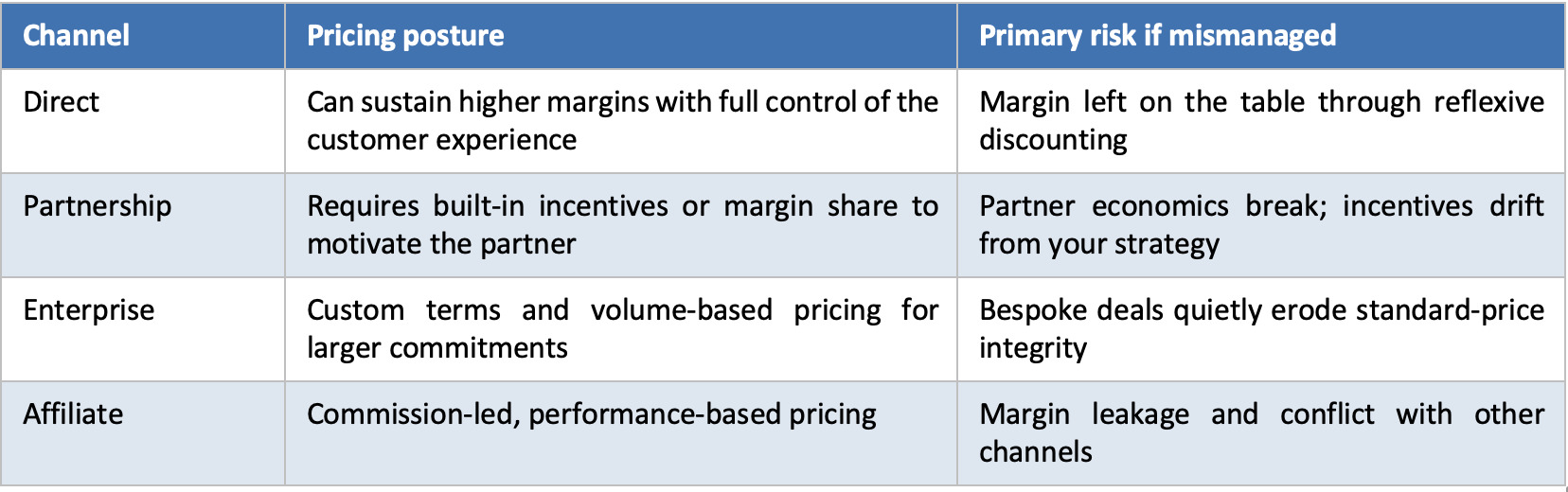
In digital businesses, multiple distribution channels coexist: direct, partnership, enterprise, and affiliate. In my experience overseeing commercial strategy, a single pricing approach applied across all channels often leads to channel conflict, margin leakage, and misaligned partner incentives.
Leadership-level pricing requires careful consideration of distribution strategy. Strong commercial leaders ensure each channel is economically viable, strategically aligned, and scalable, while maintaining control over margins and customer experience. Pricing is not a one-size-fits-all exercise:
All of these channels must be anchored in commercial strategy and P&L accountability.
Why Do Pricing Errors Multiply at Scale?
In digital businesses, small pricing mistakes rarely remain small. As scale increases, pricing decisions affect thousands of customers across multiple distribution channels. In my role overseeing product budgets and commercial performance, I have seen the compounding effects of misaligned pricing on margins, cash flow, and operational capacity.
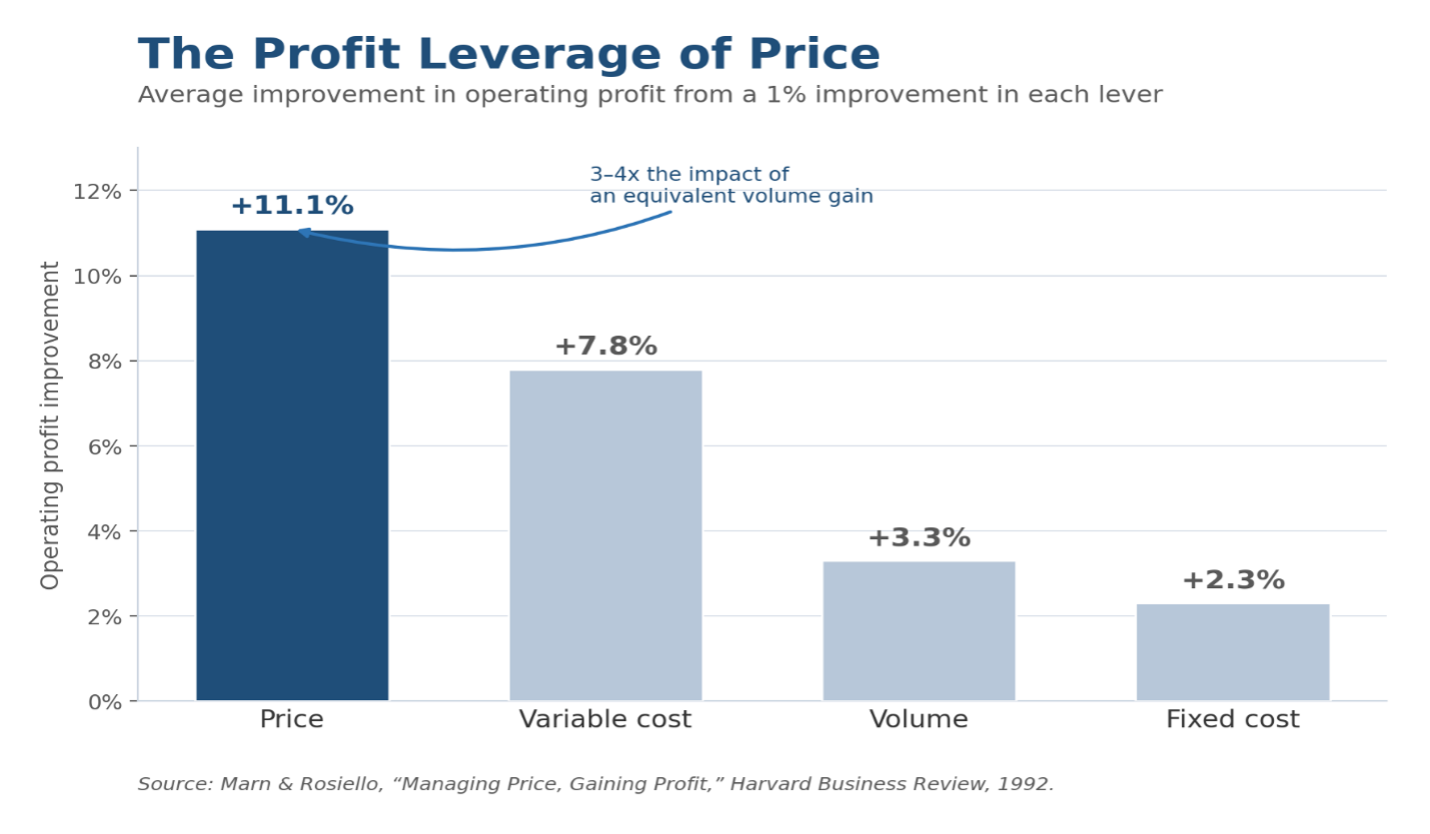
The leverage is well documented: McKinsey’s Michael Marn and Robert Rosiello found that a 1% improvement in price lifts operating profit by roughly 11% on average, three to four times the impact of an equivalent rise in volume (Harvard Business Review, 1992). The same arithmetic works in reverse, which is why uncontrolled discounting is so corrosive at scale.
Commercial leaders who neglect pricing oversight often face a dual problem: strong top-line growth coupled with declining profitability. Fixing pricing at scale becomes both politically and operationally difficult if leadership has not taken ownership early. Pricing is infrastructure, not a tactical adjustment; it must be actively managed at the executive level to protect the P&L and drive sustainable growth.
What Do Strong Commercial Leaders Do Differently?
Across digital businesses, commercial leaders who consistently deliver results follow several patterns:
- Pricing is reviewed with the same focus as growth strategy and product development
- Executive ownership of pricing decisions ensures alignment with strategic objectives
- Sales, delivery, and distribution functions are coordinated through pricing clarity
- Growth targets are set with full awareness of economic trade-offs and operational capacity
In practice, pricing is both a growth tool and a control mechanism. It enables leaders to prioritize profitable opportunities, govern commercial behavior, and ensure that scale enhances value rather than undermines it. From a board-level finance perspective, pricing is one of the most powerful tools a commercial leader can use to influence outcomes.
Conclusion
Pricing is often misunderstood as a math problem for finance or a quick fix for sales. In my experience leading P&Ls and commercial strategy, it is a fundamental leadership responsibility: it shapes growth, guides sales behavior, aligns distribution, and protects profitability. Technology lets digital businesses scale, but pricing is what makes that scale worth something. The recommendation is simple: bring pricing into the same board-level conversations as growth and product and review it with equal rigor. Owned strategically, pricing becomes a lever for durable, profitable growth.
About the Author
 Muhammad Arslan Qamar is Finance Director at Digital Research Company and Strategic CFO Advisor at Kaizen CFO Services. A Chartered Accountant (ACA, ICAEW) and FCCA, he specializes in financial and growth strategy, pricing governance, board-level reporting, IPO readiness, and P&L oversight. He writes about turning financial strategy into a board-level growth lever.