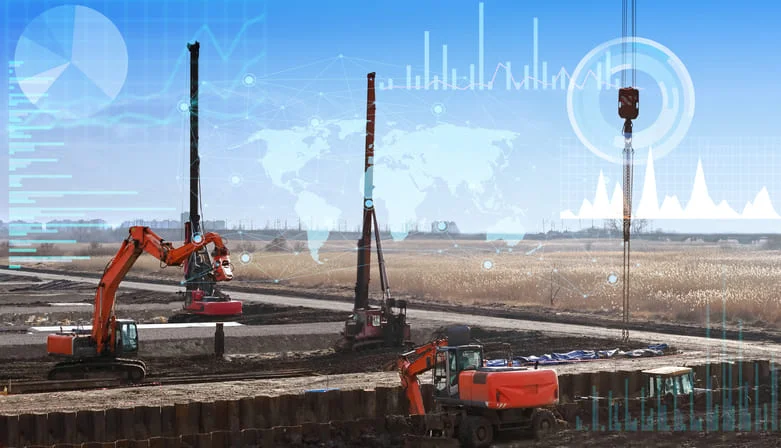
Ask most investors what threatens a major infrastructure project, and you’ll hear about financing costs, regulatory delays, or contractor disputes. Few will mention the ground itself. Yet slope failures, subsidence, and foundation instability have quietly derailed projects worth billions across mining, energy, and transport sectors, and the financial fallout rarely stays contained to the construction budget.
That’s starting to change how sophisticated investors and project sponsors think about due diligence on capital-intensive infrastructure.
The Cost of Getting the Ground Wrong
A slope failure on a mine site or a highway embankment isn’t just an engineering setback. It halts operations, triggers insurance claims, delays revenue timelines, and in the worst cases, causes fatalities that expose sponsors to reputational and legal consequences that far outlast the immediate repair costs. Because these events are unpredictable by nature, they’ve historically been treated as a specialist engineering concern rather than a board-level risk item.
That’s an increasingly outdated view. Engineering teams working on large-scale infrastructure now rely on advanced modelling tools, including Slope Stability Analysis Software from Optum, to simulate ground behaviour before construction begins rather than reacting after a failure occurs. For investors evaluating a project’s risk profile, whether that kind of modelling has been done, and how rigorously, has become a meaningful diligence question rather than a technical footnote.
Why Traditional Risk Models Fall Short
Conventional geotechnical assessments have often relied on simplified assumptions and historical precedent from similar sites. That approach works reasonably well for straightforward conditions, but large infrastructure projects increasingly sit in geologically complex or previously undeveloped terrain, where those assumptions break down.
Modern 2D and 3D modelling approaches address that gap by simulating how soil and rock will actually behave under load, water saturation, and seismic activity, rather than extrapolating from broad rules of thumb.
What This Means for Capital Allocation
Institutional investors evaluating infrastructure assets increasingly ask not just whether a geotechnical assessment was conducted, but how sophisticated that assessment actually was. According to the United States Geological Survey, landslides alone are estimated to cause billions of dollars in damage annually across the country, a figure that captures only direct costs and likely understates the broader economic impact on transportation, energy, and water infrastructure.
That kind of exposure is exactly what better modelling aims to reduce. Firms like Optum have positioned their engineering software as a way to give both engineers and the investors backing these projects a clearer, quantified picture of ground stability risk long before construction crews ever break ground.
A Shift From Reactive to Predictive Risk Management
None of this eliminates geotechnical risk entirely; no software can promise that. But it does shift the conversation from managing failures after they happen to identifying and mitigating them before capital is committed. As infrastructure investment continues expanding into more geologically challenging territory, tools like Optum’s modelling platform are becoming part of how serious capital evaluates ground risk before signing off on a project.
Disclaimer: This article contains sponsored marketing content. It is intended for promotional purposes and should not be considered as an endorsement or recommendation by our website. Readers are encouraged to conduct their own research and exercise their own judgment before making any decisions based on the information provided in this article.