In today’s fast-paced industrial landscape, choosing the right lifting equipment is key to keeping operations running safely and efficiently. Whether you’re moving pallets in a warehouse or working in a specialised, hazardous environment, it’s important to understand the key considerations that guide the selection process.
From load capacity to environmental factors, this guide will help you make an informed choice to align with your site’s lifting requirements. Choosing incorrect equipment can not only lead to higher costs, but it can lead to equipment damage and also compromise health and safety.
Key Factors to Consider When Choosing Lifting Equipment
Evaluate Your Working Environment
Start by identifying the tasks the lifting equipment is needed for. Are you lifting heavy pallets? Are the goods fragile and prone to breakage? How high or far do you need to lift the items? Thinking about the tasks required will help you determine what kind of lifting equipment is needed.
Load Capacity and Weight Rating
Consider what the heaviest item is you’ll need to lift to ensure your equipment can take the weight. All lifting equipment should have a marked safe working load (SWL) or rated load capacity, so it’ll be clearly stated what limit can’t be exceeded. This helps to prevent equipment failure and ensures operator safety, which is crucial in order to comply with health and safety regulations.
Type of Lifting and Environmental Factors
Think about the type of lifting that needs to be done and whether this is manual, electric or hydraulic. Also, consider the setting where the lifting equipment will be placed. For example, if it’s indoors, outdoors, in a corrosive or hazardous environment or near other heavy-duty equipment.
Where the equipment is placed affects which type of equipment is needed. Outdoor areas will need to be weather-resistant and more robust than indoor equipment, and potentially explosive environments require explosion-proof and durable equipment like air hoists.
Common Types of Lifting Equipment and Their Use Cases
Hoists
Hoists are an essential tool in the world of construction, facilitating the safe lifting and positioning of materials and equipment at varying heights.
Manual Hoists
These are best used for low-lift applications and occasional use where power sources aren’t available. Common applications include construction sites, maintenance jobs and small workshops – manual hoists are simple to use and don’t require electricity. This makes them well suited to less heavy-duty jobs as they have a slower lifting speed and require more physical effort.
Electric Hoists
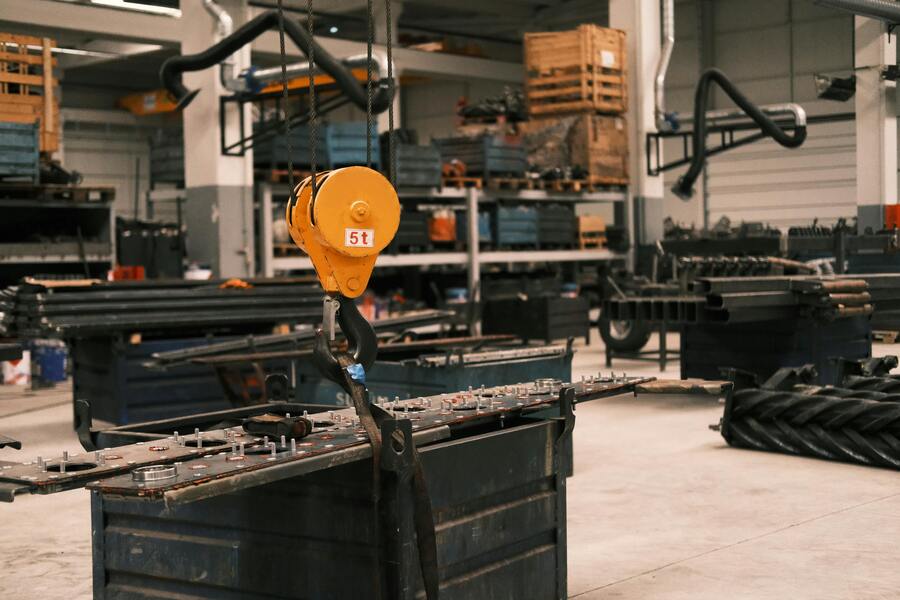
These hoists are powered by electricity and are common in manufacturing plants, warehouses and assembly lines. They offer a faster operation and can lift heavier loads than manual hoists. Since these hoists are heavy-duty, they require regular maintenance and health and safety checks.
Air Hoists
Perfect for hazardous and potentially explosive environments, air hoists use compressed air to lift and lower loads. Due to their safe operation, they’re often used in the oil and gas industry, chemical plants, offshore operations and other explosive environments.
Cranes and Jib Systems
Choosing the right crane for your lifting requirements can be a tough job, especially considering how many types of cranes are available.
Crane systems are built for heavy-duty lifting and are often overhead systems, whereas jib systems are more compact and typically used for localised, repetitive lifting tasks in fixed workstations. Jib cranes have a horizontal arm that supports a hoist, which allows it to move in a circular direction, rather than just horizontally. These work best when lifting and moving items in a smaller, localised area such as loading docks or machining centres.
Forklifts, stackers and pallet trucks
For lifting and transporting goods across short distances, forklifts, stackers and pallet trucks can be used alongside crane systems to help with ground-level movement. When using this equipment, use lifting slings to safely attach these loads to lifting equipment like cranes to ensure a safe and stable operation.
How to Ensure Safe Operation and Compliance
To keep your equipment performing at its best, ensure you organise regular maintenance checks at legally required intervals (this is usually every 6 or 12 months). Predictive maintenance like this helps to prevent operational issues and downtime, which saves your company costs on unexpected breakdowns.
Training for those operating the lifting equipment is equally as important – this should include training on how to use the equipment, and knowledge of load limits and emergency procedures if problems occur. It’s also crucial to protect members of staff when using heavy-duty equipment and if height safety equipment is necessary.
Getting Professional Advice
Choosing the right lifting equipment is a crucial step in any industrial workflow and deserves real time and consideration. Not only can the wrong equipment slow down your operations, but it can put staff at risk if the equipment can’t hold loads correctly.
To take the pressure off, reach out to a professional, such as Lifting Equipment Store to help organise the right equipment for the job and identify any gaps in lifting efficiency or safety.
Disclaimer: This article contains sponsored marketing content. It is intended for promotional purposes and should not be considered as an endorsement or recommendation by our website. Readers are encouraged to conduct their own research and exercise their own judgment before making any decisions based on the information provided in this article.