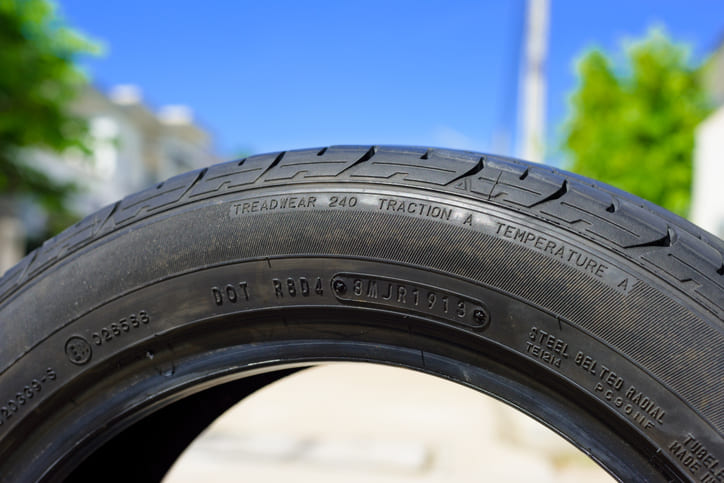
Do older DOT codes automatically mean tires are unsafe? Not necessarily. The real factor behind tire quality is how the tire has been stored and handled—not just its age. In this article, we’ll break down what the tire DOT code really means, why storage matters more than the manufacturing date, how to assess tire quality properly, and what you should know before buying new tires.
What Is a DOT Tire Code?
The DOT code is a federally mandated marking on every tire sold in the United States. It provides information that helps track the tire’s manufacturing details. Specifically, it includes:
- Manufacturer identification: The plant where the tire was produced.
- Tire size code: The tire’s specifications.
- Batch or serial number: For quality control.
- Production date: The last four digits show the week and year of manufacturing. For example, a code ending in 2321 means the tire was made in the 23rd week of 2021.
Many consumers assume that an older date means the tire is no longer safe. But this is a misconception. The DOT code tells you when the tire was made—not whether it’s degraded.
Why People Misunderstand Tire Age
Shoppers often worry about buying “old” tires because they’ve heard that rubber deteriorates quickly. While it’s true that all rubber products undergo natural aging, the pace at which this happens is influenced by storage and handling.
For example:
- A tire stored for three years in a climate-controlled warehouse can perform like a freshly made one.
- A tire exposed to harsh sunlight and extreme heat for just one year can degrade faster than expected.
This means that age alone isn’t a reliable measure of tire quality.
The Real Factor: Tire Storage and Handling
A tire’s shelf life and performance depend largely on storage conditions. Rubber compounds are sensitive to environmental factors. Here are the most important elements:
Temperature and Humidity
High heat accelerates chemical reactions inside the rubber, leading to faster aging. Proper warehouses maintain stable, cool temperatures with low humidity. This slows down oxidation and keeps tires fresh.
Protection from Light
Direct sunlight and UV rays break down rubber compounds. That’s why reputable storage facilities keep tires in shaded or indoor environments.
Ozone and Air Quality
Industrial pollutants and ozone can cause surface cracking. Tires should be stored away from machinery or environments where ozone-producing equipment (like electric motors) is present.
Positioning and Stacking
Improper stacking can distort a tire’s shape. Retailers who follow best practices use racks or rotate stock to ensure tires maintain their original form.
Do Tires Really Expire?
The idea of an “expiration date” on tires isn’t fully accurate. Instead, experts talk about a recommended service life:
- Uninstalled tires: When stored correctly, they can remain safe for up to 5–6 years.
- Installed tires: Once mounted and used, they should typically be replaced after 6 years of service.
- Absolute limit: Even if unused, most manufacturers recommend replacing tires after 10 years from their date of manufacture.
This timeline means a tire with a 2–3-year-old DOT code is still perfectly safe to use if it has been properly stored.
How Buyers Should Judge Tire Quality
Instead of worrying only about the DOT code, here’s what you should look at:
- Visual Inspection: Look for cracks, fading, or uneven surfaces.
- Storage Practices of Retailers: Ask how the tires are stored—climate control, indoor facilities, and proper racks are good signs.
- Tread and Rubber Condition: Even unused tires should feel flexible, not brittle.
- Reputation of Seller: Trusted suppliers often adhere to proper storage standards, giving you added confidence.
- Manufacturer Guidelines: Many companies clearly state their safety recommendations, which you can use to compare.
Why Retailers Sell Older Tires
It’s common to find tires that are one or two years old at the point of purchase. This doesn’t mean they’re “used” or unsafe. Distribution, shipping, and inventory management take time, so by the time a tire reaches the shelf, its DOT code might already be a couple of years old.
Reputable retailers carefully rotate their stock to ensure quality. In fact, many manufacturers and associations, such as the National Highway Traffic Safety Administration (NHTSA), confirm that tires up to 3 years old are considered “new” if stored correctly.
Safety Risks of Poorly Stored Tires
To understand why storage matters so much, let’s look at what happens when it’s done poorly:
- Cracking: Caused by ozone exposure or extreme dryness.
- Hardening: Rubber loses elasticity when exposed to heat, reducing grip and performance.
- Deformation: Poor stacking can permanently alter a tire’s shape, affecting balance.
- Moisture Damage: High humidity can weaken internal layers.
These risks highlight why buyers should prioritize retailer reputation over DOT code age.
FAQ: Common Buyer Questions About Tire Quality
Q: Should I reject a tire just because the DOT code shows it’s 2–3 years old?
A: No. If the tire has been stored properly, a 2–3-year-old tire is still considered new and safe.
Q: What’s the maximum safe age for a tire?
A: Tires should be replaced after 6 years of use or 10 years from the date of manufacture, whichever comes first.
Q: How can I tell if a tire has been poorly stored?
A: Look for visible cracks, dryness, fading, or unusual shapes. Any of these signs could indicate compromised quality.
Q: Do all manufacturers follow the same guidelines?
A: Most global brands recommend the 6-year service life and 10-year maximum rule, but it’s always smart to check your tire brand’s official guidelines.
Practical Tips for Buyers
When buying tires, follow these steps to make sure you’re getting the best quality:
- Ask the Seller: Inquire about storage conditions and practices.
- Inspect Before Purchase: Do a quick visual check yourself.
- Check DOT Code for Awareness: Know the manufacturing date but don’t use it as the only factor.
- Buy From Trusted Retailers: Avoid suspiciously cheap offers from unknown sellers.
- Plan Ahead: Don’t wait until your tires are completely worn before buying new ones, so you have time to select the best quality.
Key Takeaways: Tire Age vs. Tire Quality
- The DOT code shows the manufacturing date, not the tire’s condition.
- Storage conditions—temperature, light, humidity—are the main quality factors.
- Properly stored tires can remain safe for years, even with older DOT codes.
- Always inspect tires before buying and purchase from trusted sellers.
- Replace tires after 6 years of use or 10 years from production, whichever comes first.
Conclusion
A tire’s quality isn’t defined by its DOT code alone. The real determinant of safety and performance is how the tire has been stored and handled. For buyers, this means focusing less on the manufacturing date and more on proper storage practices, retailer reputation, and regular inspections.
Don’t fear the DOT code. Instead, prioritize tire quality and trusted sellers to ensure your safety on the road.
Disclaimer: This article contains sponsored marketing content. It is intended for promotional purposes and should not be considered as an endorsement or recommendation by our website. Readers are encouraged to conduct their own research and exercise their own judgment before making any decisions based on the information provided in this article.