
By Jaime Byrom
Belonging is redefining the business of sport. Jaime Byrom, Founder and Executive Chairman of BEYOND Hospitality Group, explores how emotional connection and exclusive, experience-led engagement are reshaping fan expectations, and why sports organisations that deliver meaning over spectacle will lead the next era of loyalty, value, and growth.
In our world of endless entertainment, on-demand content and instant gratification, what keeps fans coming back to live sports events? Sports businesses – whether that’s stadiums, team franchises, or events rights holders – aren’t just competing with concerts, shopping or other sports businesses, they’re competing for attention both in the digital and real world.
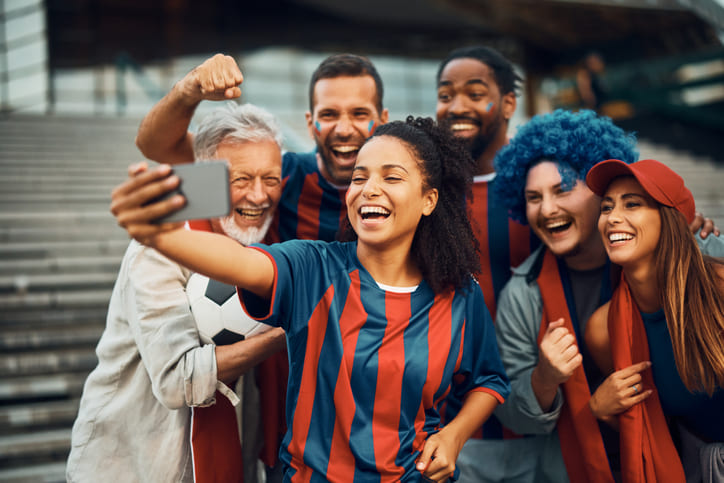
The answer is the feeling of belonging. Loyalty has been core to fandom since the ‘year dot’, but as competition for attention (and discretionary spend) intensified, emotional connection and ‘exclusive’ experiences are strategic advantages. Today’s sports fans want to feel part of something bigger. We believe the most successful sports brands are no longer simply selling tickets – they’re curating experiences, building communities, and tapping into the deep emotional ties that turn spectators into lifelong supporters.
In my four decades in global sports event delivery, I’ve seen how this emotional currency, coupled with a desire for exclusivity, is reshaping the economics of sport and the future of sports events. This isn’t just a cultural shift. It’s a business opportunity for the industry, and a necessary one.
According to Statista, the global sports event market was worth approximately USD 267 billion in 2024, with Europe maintaining the largest regional share. But raw scale only tells part of the story. The more important metric should be engagement: how deeply people connect, how long they stay, how much they’re willing to invest – not merely in money, but in identity.
Fans don’t want a seat. They want a story.
The average match-day experience isn’t the singular draw it used to be. Not when every fan carries a smartphone, streams behind-the-scenes footage, joins the club’s WhatsApp chat, and chats on sports-focused forums with strangers who feel like family.
The fan economy is increasingly shaped not by proximity to the event or pitch, but proximity to meaning. People want to feel like they’re part of something that reflects who they are, and if they feel connected to their team through digital and broadcast, they will be incentivised to close that gap in the real world. A wonderful example is Netflix’s “Drive to Survive” which expanded the sport’s global popularity, by providing drama, team and driver personality insights, and behind-the-scenes access. The technical content remains there for motorheads, but with a focus on human narratives, the show welcomed younger viewers, more women, and new fans into the F1 fold.
Writing the show off as frivolous pop culture, denies the business savvy at play that ultimately led to spikes in TV ratings, race attendance, merchandise sale, and social media engagement – particularly in the US, with the Miami Grand Prix being one of the biggest beneficiaries. The broader eventing world should take note. Sports brands and events that create compelling emotional arcs, and tap into fan rituals, shared history, highs and heartbreaks will outperform those that treat fans like anonymous customers.
Consider Nike’s partnership with basketball phenomenon Michael Jordan. In the early 1980s, Nike was a successful athletic brand, but facing increased competition and declining market share. Then, with the 1984 launch of Air Jordans, it began selling more than shoes; Air Jordans communicated identity, aspiration, and belonging. The result? A global movement. By 2023, according to Nike, the Jordan brand generated $6.6 billion in annual revenue. By understanding the emotional connection and power of fandom, Air Jordans transformed Nike’s trajectory. This was more than smart marketing, it was a shift from product to purpose.
The new premium: belonging with benefits
Moreover, experience – including its high-end cousin, exclusivity – is becoming a key strategy for building loyalty within sports events. Luxury hospitality experiences, bespoke travel packages, and deluxe accommodation have their place in the consumer array, but now they have dual pay-off – both as an aspirational product, and in the emotional connection that they offer. This will be increasingly important as the next generations age into the sporting consumer universe.
According to a 2024 report by McKinsey, over 70% of Gen Z and Millennial consumers prefer to spend on experiences rather than material goods, particularly in categories tied to personal identity like sport and entertainment. Deloitte has similarly found that brands offering emotionally resonant, personalised experiences enjoy up to 1.6 times higher customer loyalty compared to those offering transactional interactions.
For sports organisations, this presents a strategic opportunity: when fans are invited into meaningful, exclusive interactions – tunnel clubs, meet-and-greets, stadium and pit tours, commemorative gifts and photographs, and so on – they’re buying more than access. They’re buying an emotional connection.
What sports organisations get wrong
Too many rights holders and event organisers still treat fans as a monolith. They rely on volume instead of value. But today’s fans don’t want to be one of a million. They want to feel like one in a million.
This is where data and design come in. The more we understand fans as emotional beings, the better we can tailor experiences that resonate. Deloitte has called this the rise of the “fan of one”: the ability to deliver personalised content, offers, and experiences using data-rich insights. Yet personalisation without purpose is just noise. The goal isn’t to target fans more efficiently. It’s to understand them more deeply.
From spectators to stakeholders
There’s a bigger idea here, one that may define the next decade of sports: moving from event delivery to community curation.
This means rethinking what it means to host a tournament or fixture. It’s not just putting on a good show. It’s facilitating access and shared memory. Creating pathways for fans to matter, to each other and to the team.
It’s strategic and emotional. Such loyalty is less price-sensitive, more resilient during downturns, and more likely to grow via word-of-mouth. It creates communities that are self-sustaining.
The takeaway: belonging is good business
If we want to future-proof the business of sport, we need to stop thinking of emotion and exclusivity as intangibles or perks. They are, in fact, the product.
Organisations that get this will design entire ecosystems; not matches, but moments. Not tickets, but pathways of access and belonging. Those that don’t risk becoming obsolete in a market where fans expect more than a seat in the stands. Our team know – from decades of experience, and contemporary insight – that sport is so much more than “a game”. It is where narratives of struggle and triumph, identity and shared experiences coalesce. It is inherently emotional. The entertainment industry has known this about sport for a long time; look at the classic sports movies, Rocky, Chariots of Fire, and Remember the Titans. It is time that the sports (and sports events within that) embrace this too.
We work hard to do so: Yes, to provide the logistics solutions to connect people physically to an event, but moreover, to connect people emotionally. We’re not in the spectacle business anymore. We’re in the belonging business. Herein feelings aren’t fringe, they’re the foundation.
 Jaime Byrom