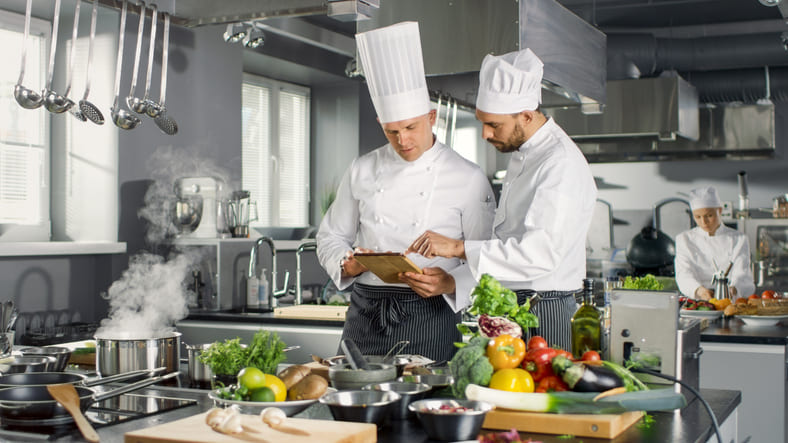
In the fast-paced restaurant industry, change is constant. Food trends come and go, customers change their preferences, and seasons bring new ingredients and take away some. In the case of restaurant kitchens, the ability to remain adaptable and adjust operations to accommodate these changing menu requests is vital to remaining efficient and satisfying the customer. Kitchens may easily get overwhelmed without a careful balancing act resulting in slower service, a lot of waste, and angry employees. With the knowledge of how to adjust the workflow, educate employees, and utilize technology, restaurants can make sure that their kitchen activity will be flexible and efficient regardless of what the menu demands.
The modification of kitchen operations is not merely shifting recipes or even introducing new ones. It necessitates a sophisticated look at the work which takes into consideration the work of all elements of the kitchen. Whether it is the sourcing and preparation of ingredients, communicating orders and plating, each step should be assessed and modified to efficiently cope with any alterations to the menu. This flexibility enables kitchens to maintain a high level of quality with a limited amount of disruptions and inefficiency.
Planning for Menu Changes
Planning ahead is the initial procedure of modifying kitchen operations. Whenever new items are added to the menu or the menu is modified to account for seasonal ingredients, the kitchen has to expect how these modifications will affect the current work processes. This will entail considering the preparation times, methods of cooking and storage of ingredients that will be required to seek what changes need to be made.
Proper planning also includes relaying information on changes of menu amongst all kitchen staff. All the people should learn new dishes, the way to cook them, and changes in the regular routines, if any. This will prevent confusion in the service provision and will align the team. When there is a shift in the menu, proper planning eliminates the chance of mistakes and delays.
Technology assists in planning in one of the ways by integration of a restaurant pos system. The systems have the ability to chart sales patterns and ingredient consumption which can prove beneficial in assisting the kitchen managers to predict the demand of new menu items. Data-driven decisions allow kitchens to be better equipped when it comes to menu changes, and will prevent overstocking and shortages.
Adjusting Prep and Workflow
After planning the menu changes, preparing and working flow is the next to be worked upon. New items might need new chopping styles, marination period or even cooking procedures that can disturb the usual flow of the kitchen. Restructuring of prep schedules and workstations is a sure way of making sure that the kitchen is able to cope with the new demands.
The kitchen layout might also matter a lot when it comes to flexibility. As an example, when a new menu item needs more grill space, or special equipment, temporarily reassigning stations, or adding portable equipment may allow the change to be accommodated without losing speed.
Such communication tools as a kitchen display system are vital during this phase. With a kitchen display system, chefs and line cooks can more readily adjust to changes in the menu since the Kitchen display system shows real-time changes in orders and special instructions. This technology minimizes miscommunication and allows the flow during the rush periods of service.
Training Staff for New Menu Items
Changing kitchen operations will also include the training of employees on new menu and new methods of preparation. The most effective working process may be failed in case the team is not familiar with the changes. Practical training will give cooks and servers the opportunity to understand how to create and serve new dishes properly.
Training should emphasize consistency and speed. The aim is to have employees perform new menu items as well as established dishes in terms of quality and efficiency. This reduces order errors and helps maintain customer satisfaction.
In addition to cooking, they should be trained on how to use any new technology because of the menu change. To illustrate, in case of an update in the restaurant POS system, new modifiers, or special requests, front-of-house and kitchen teams must know how to handle such changes without inconveniences.
Evaluating and Refining Operations
The adjustment of kitchen operations is not a single-time work but a continuous process. When changes have been made on the menu, it is notable to check on how the kitchen is faring. Soliciting input on workflow bottlenecks or preparation difficulties among the staff will offer insight on what is functioning and what ought to be altered.
It is also possible to review data on the restaurant pos system to gauge how changes on the menu affect order times and ingredient utilisation. This info is valuable to the managers as they can discover areas of inefficiency and decide on any additional refinements.
Changing Kitchen operations to accommodate the needs of the changing menu items should include proper planning, workflow modifications, employee training and should be continually assessed. Use of technology like kitchen display system and restaurant pos system will improve communication and efficiency. By adopting this dynamic strategy, restaurants will be able to operate smoothly, surprising and satisfying their consumers with new dishes and stay competitive in a fast-changing environment.