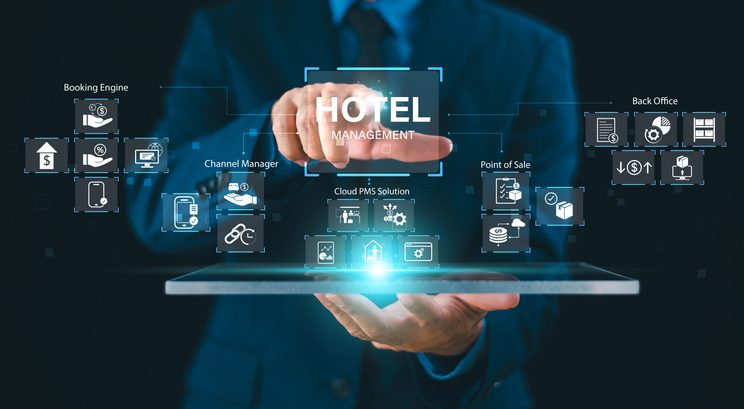
Small hotels don’t fail for lack of charm, they struggle when their operations can’t keep pace with demand. For owner-operators across Europe, a modern PMS system for hotels is no longer an IT luxury; it’s the operating spine that turns excellent service into repeatable profit. If you’re planning a change, start with a plain-English overview like our hotel PMS systems data migration steps guide; it’s a practical companion to this article and keeps your team aligned on the sequence before you sign contracts.
Think like a founder – Your PMS is a business system, not just software
Entrepreneurship is about compounding advantages. A good PMS makes every department 10% better, every day: faster check-ins, tighter inventory control, clearer folios, cleaner data for decisions. That compounding shows up as higher RevPAR, fewer disputes, and staff freed from swivel-chair tasks. When you evaluate hotel PMS systems, don’t start with feature lists; start with outcomes. Ask: Will this help me increase direct bookings, reduce errors, and see the truth about performance without wrestling spreadsheets? If the answer isn’t apparent, it’s not the right fit.
What “best hotel PMS systems” really means for a small European hotel
“Best” depends on your strategy, but there are universal, founder-level tests. The best hotel PMS systems help you sell the last room at the right price, play nicely with your booking engine and channel manager, support PSD2-ready payments, and keep guest data safe (think GDPR without drama). They should make bilingual or multilingual operations simple, handle VAT and local taxes cleanly, and give you a single view of operations, whether you run a 12-key inn in the Alps or a 40-room townhouse in Lisbon. Most of all, they should be understandable by the people who use them daily; if your front desk can’t master the calendar in an hour, that’s a cost, not a capability.
The business case: Where the ROI comes from
Owners usually see payback in three streams. First, revenue lift from better distribution: restrictions and prices stay aligned everywhere, so you capture high-yield nights and avoid underselling during events. Second, cost reduction from fewer mistakes: clean reservation write-backs and transparent folios mean fewer chargebacks and less time fixing errors. Third, managerial clarity: reliable daily reporting (occupancy, ADR, RevPAR, and pace) lets you course-correct earlier, making minor adjustments that compound over weeks into better cash flow. The right PMS system for hotels should make these gains routine.
A plain-language migration playbook: three moves, no jargon
Move 1: Standardise how you sell rooms. Before any new system arrives, write your playbook. Pick the handful of rates you truly sell, usually a fully flexible, a semi-flexible, and a non-refundable, and describe them in guest-friendly terms you’ll use everywhere, tidy room names and photos so the same story appears on your website and on OTAs. Decide how you’ll explain deposits, cancellations, city or tourism taxes, and include that text in confirmations. This is not a technical exercise; it’s brand hygiene. When every property manager, receptionist, and marketer uses the same language, systems have far less to “interpret,” and your guests get fewer surprises.
Move 2: Connect your storefronts so they act as a single storefront. Once your story is consistent, link the tools that tell it. Your PMS should be the source of truth for inventory and rules, the channel manager should keep OTAs in sync, and the booking engine should make your website the easiest place to buy. The business goal is simple: when you set a two-night minimum for a holiday weekend, it appears everywhere quickly; when a booking lands at midnight, the room disappears everywhere else immediately; when plans change, your confirmations and folios update without staff chasing details. Think of this as removing friction from revenue rather than “doing an integration.”
Move 3: Prove the setup using real-world journeys. Before you bet the month on a new workflow, play as a guest and a staff member for a day. Book a one-night midweek stay on your site, a weekend on an OTA, a corporate booking that needs a company invoice, and a family reservation that changes dates. Cancel one stay and process a partial refund. You’re asking business questions: Do prices match across channels? Do emails make sense in both language versions? Do totals, taxes, and fees add up without explanation at checkout? Do yesterday’s KPIs on your dashboard feel like the truth? If yes, you’re ready. If not, fix the story and the handshakes before you scale.
Choosing with confidence: Questions owners should ask vendors
- Clarity over pages: “Show me, in three screens, how a date change recalculates price and taxes, and how the guest sees it.”
- Support, not slogans: “When things fail at 22:00, what’s the fastest route to a human who can help my team?”
- Openness: “If we outgrow you, how do we export our data?” (Entrepreneurs plan for optionality.)
- Total cost of ownership: “After setup, what are my predictable monthly costs: software, payments, per-booking, and any support tiers?”
- Proof: “Can we run our real rate plans and a soft launch for a week?” The best hotel PMS systems will be proud to show tangible outcomes.
Reporting that powers daily decisions (without a degree in revenue management)
You don’t need a wall of numbers; you need a short ritual. Every morning, check yesterday’s occupancy, ADR, and RevPAR, then glance at pace for the next 30/60/90 days. If a key week is soft, create a targeted offer or loosen fences midweek while keeping weekends protected. If an OTA suddenly jumps in share while direct bookings sag, investigate parity and sweeten direct value (e.g., late checkout or a parking credit that costs less than commission). A good PMS makes this ten-minute review repeatable and straightforward, so decisions become steady habits.
European realities, handled simply
Entrepreneurship in Europe means complexity, multiple languages, currencies, and local taxes. A modern pms system for hotels should make these feel easy: templates that send confirmations in the guest’s language, payment flows that meet PSD2 strong customer authentication, and folios that clearly separate VAT and local fees without staff rewriting totals. When systems respect local rules by design, you keep the international polish guests expect and the operational calm your team needs.
Culture beats configuration: Lead the change like a founder
Technology only sticks when people believe in the new way of working. Appoint a single owner for the migration, ideally a revenue-minded manager who can bridge front desk, housekeeping, and finance. Run short, role-based training sessions and celebrate early wins: fewer double-sells, faster check-ins, clearer invoices. Encourage staff to flag awkward steps; small hotels innovate through tight feedback loops. Make it known that the PMS is the place where truth lives; if it isn’t in the system, it isn’t real. That mindset turns the tool into a discipline.
A shortlist you can print and take to demo day
- Simple selling story: three rate plans, consistent room names, clear policies.
- One source of truth: PMS drives rules; channels follow within minutes.
- Guest-clear folios: taxes and fees explained in plain language.
- Daily KPIs that matter: occupancy, ADR, RevPAR, pace visible at a glance.
- People plan: role-based training, quick support, and one owner for decisions.
- Exit option: easy data export if strategy changes.
The entrepreneurial edge
Guest builds great hotels; great hotel businesses are built process by process. Treat your PMS choice like any other growth investment: define the outcome, prove it small, then scale what works. Whether you operate in one city or across borders, the right hotel PMS systems will feel less like software and more like a management habit, a quiet engine that helps your team sell smarter, serve faster, and see the business clearly. Do that, and the “best” system is simply the one that makes your results predictable and your next move obvious.