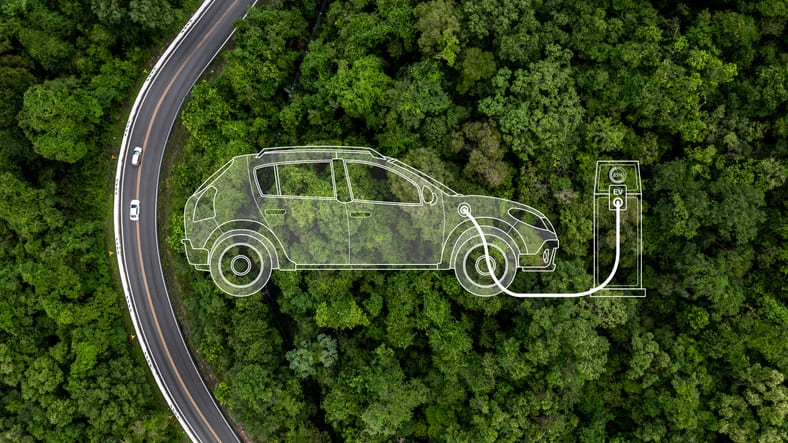
The European Green Deal (EGD) outlines the continent’s strategy for becoming climate neutral by 2050, shaping the industrial environment for decades to come. For European manufacturers and building operators, this is not an environmental policy; it is a mandated shift of business strategy, mandated by laws such as the Ecodesign Directive.
The fastest and most effective tool to meet the EGD’s emission reduction targets is energy use reduction in both the industry and commercial sectors. Motor-driven systems account for approximately 65% of all industrial-related kilowatt-hour electricity consumption. The inefficiency is a huge liability, and efficiency gains are a tremendous opportunity.
To accomplish the goals of this mandate, organisations will need to look outside of conventional technology and consider a holistic two-pronged approach to transitioning to advanced Brushless Direct Current (BLDC) systems.
Pillar 1 – The High-Efficiency Hardware Foundation
The process of decarbonization begins at the consumption stage – the motor. The conventional Alternating current (AC) induction motors are also dependent on natural inefficiencies, and there is a lot of loss of energy and particularly when the load is low or when it is run over a long period.
The contemporary answer is in BLDC Motors. The motors essentially re-invent the concept of efficiency, in that they remove mechanical brushes and eliminate the use of mechanical brushes and replacing them with strong permanent magnets in the rotor.
This design is very low-friction and low heat loss, such that BLDC units can continuously outperform the progressively tightening efficiency targets of the Ecodesign Regulation (EU) 2019/1781, typically reaching and often exceeding the IE5 Ultra Premium efficiency tier.
Strategic Advantage – Investing in advanced BLDC motors would give an instant route to compliance and a well-deserved decrease in Total Cost of Ownership (TCO). Increased bottom line and decreased operational carbon footprint are the direct effects of lower energy bills, less heat generation and a much increased operating life.
The future-proofing of any business against tightening EU standards is a high-demand business, requiring BLDC motors to be at the core of its assets.
Pillar 2 – The Digital Intelligence of Energy Control
The real dynamic savings needed by the Green Deal are unlocked by smart control, even though the design of the motor determines its base efficiency. The majority of industrial systems work on variable loads; a pump does not often have to work at 100% load 24/7.
This is the point where the second pillar, BLDC Motor Controllers, comes in handy. These controllers act as advanced Variable Speed Drives (VSDs) specifically made to suit the BLDC motor architecture.
The Power of Dynamic Control. Dynamic control – BLDC controllers cause huge energy wastage in fixed-speed operation by dynamically adjusting the motor speed and torque to match the real-time application demand, which in many cases can save 50% of the energy (in fans, pumps, compressors and so on).
Outside of the variable speed control, this is the digital gateway to Industry 4.0 integration. They have progressive processing and communication features that produce real-time information on:
- Energy Consumption – Offering detailed usage metrics for precise auditing and reporting.
- Performance Metrics – Including torque, speed, and positional information.
- Condition Monitoring – Monitoring vibration and temperature to allow true predictive maintenance.
- Strategic Advantage – The intelligence inside the BLDC controller enables the shift from reactive maintenance to predictive operational excellence.
This means that systems are running at optimal efficiency 100% of the time, limit unplanned downtime, and provide the verifiable data required for EGD compliance reports and corporate sustainability declarations.
Practical Decarbonization – BLDC in Action
This is not a two-pillar program in name only; this is already solving Europe’s largest energy consumption issues in high-load sectors today.
Case Study 1 – Commercial HVAC and Building Management
HVAC systems are the single largest electricity consumer in large commercial offices, universities and hospitals. The legacy system relies on fixed-speed AC motors that naturally run at a full load all the time, regardless of actual demand.
The BLDC Solution – BLDC motors combined with a controller enable demand-side optimisation. When a building zone is only partially occupied, a signal is sent to the controller, which modifies the motor speed (RPM) of the fan or pump to only provide the air flow or water pressure that is required.
Due to the fact that the power demand is correlated to the cube of the speed, halving the speed produces an 87.5% reduction in power consumption. Exact control allows buildings to achieve excellent climate control while maintaining a high level of compliance with strict Ecodesign requirements.
Case Study 2 – High-Torque Industrial Pumping and Process Control
In areas such as water treatment, chemical processing, and food/beverage manufacturing, motors must supply consistent, reliable torque. Downtime in these industries costs money, and energy usage can be significant.
The BLDC Solution – In this case, the design of BLDC permanent magnet motors provide far better torque characteristics and reliability than standard induction motors. When combined with the controller, this system not only provides good governance; it also provides genuine predictive operational excellence.
The controller receives real-time diagnostics related to vibration signatures or temperature disruption. For example, if a bearing issue can be recognised three weeks before failure, the operator can create a maintenance schedule eliminating downtime associated with catastrophic, unscheduled failure, not to mention the energy spikes that occur when equipment is fighting to underperform.
The comprehensive management reduces TCO considerably, while supporting overall energy profile stability across the facility.
Decarbonization – A Coordinated Technological Assignment
The European Green Deal cannot be solved by a singular solution. The largest gains in energy efficiency and consequently the most impactful leaps in decarbonization will take a systems approach:
- The BLDC motor is a high-efficiency hardware platform to minimise intrinsic losses.
- The BLDC motor controller is the intelligent VSD that optimises energy use to what the application actually demands and connects the system into the digital factory.
Implementing this dual-technology road map positions European industry leaders to monitor the path toward climate neutrality, ensuring measured compliance with regulatory needs and a significant long-term competitive advantage in a resource-constrained global market. Now is the time to upgrade the industrial backbone of Europe.
Frequently Asked Questions (FAQs)
What is the difference between an eBLDC motor and a standard AC Induction motor in terms of efficiency?
Standard AC induction motors lose energy because of resistance and heat produced in the rotor, whereas eBLDC motors utilise permanent magnets and eliminate rotor losses, enabling them to maintain a much higher efficiency class (typically IE5) in comparison to most induction motors (usually IE3/IE4).
Do the BLDC systems meet the EU Ecodesign Directive?
Yes. The high efficiency of BLDC motors makes them comply with or surpass the minimum standards of the efficiency performance (MEPS) required by the Ecodesign Regulation (EU) 2019/1781, particularly when used in combination with variable speed drive controllers.
What is the mean difference in the life of BLDC and brushed motors?
The life span of the BLDC motors is greatly increased as they do not have any mechanical brushes, which are the main wear and failure point of the other brushed motors. The BLDC design needs less maintenance and offers decades of continuous service in the majority of industrial environments.
Do I have to upgrade my current infrastructure in order to implement the BLDC technology?
Mostly, the BLDC motor and controller units can be converted into the existing mechanical infrastructure (pumps, fans, compressors) with only slight adaptation to the system frame. The most important modification is the substitution of the low-efficiency motor and its fixed starter with the BLDC motor and its smart controller.
Conclusion
The shift predetermined by the European Green Deal cannot be negotiable, and energy efficiency is the battleground. The BLDC Motor and its intelligent Controller offer the best and quantifiable decarbonization alternative to motor-driven systems.
With such an integrated strategy, industrial and commercial operators can ensure their compliance, save significantly on the cost of operation, and establish themselves in terms of a sustainable and competitive future in the European market. The future-proofing of your business is the option to use this next-generation motor control.
Disclaimer: This article contains sponsored marketing content. It is intended for promotional purposes and should not be considered as an endorsement or recommendation by our website. Readers are encouraged to conduct their own research and exercise their own judgment before making any decisions based on the information provided in this article.