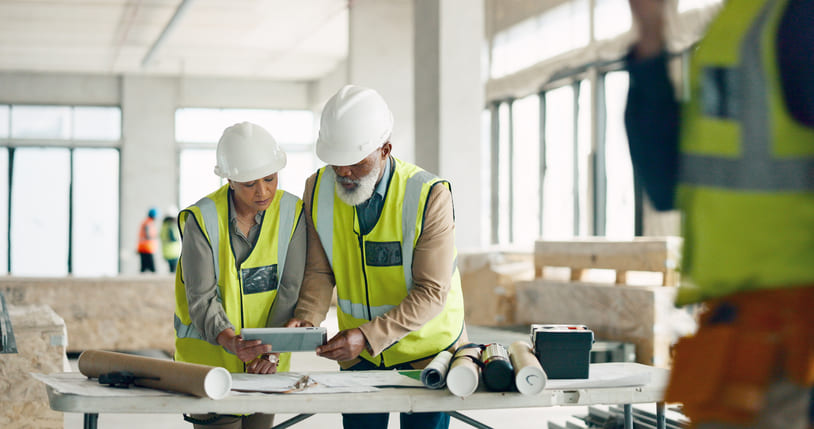
Every great building begins as an idea- a sketch, a thought, a vision on paper. In the quiet of a studio, an architect draws lines that imagine light, space, and life. But the real story of a building starts when those lines meet the dust and noise of a construction site. When people in hard hats arrive, ideas turn into effort and dreams begin to take form.
Architects and builders are storytellers of the same narrative. One writes with lines, proportions, and materials. The other writes with motion, rhythm, and hands that know how to turn drawings into reality. For these worlds to meet smoothly, the way people work together must be simple, clear, and connected. Because where there is clarity, there is progress and where there is confusion, beauty struggles to stand.
That’s why construction workforce management has become such a crucial bridge that connects creativity with coordination, vision with action.
The Reality on the Ground
Walk onto almost any construction site, and you’ll see a world constantly in motion. People move between tasks; tools are borrowed, replaced, or misplaced; messages bounce between phones and paper notes. Somewhere, someone waits for an answer that doesn’t come fast enough. Small mistakes begin to multiply into delays, not from carelessness, but from complexity.
The truth is, construction is not chaotic because of the people in it. It’s complex because so many moving parts must fit perfectly together. The crew on the ground carries that weight every day. They are balancing blueprints, safety rules, weather, and time. And in that balancing act, even small bits of clarity can make a huge difference.
Simplifying construction crew management is an act of respect for those who build. The better the communication, the stronger the teamwork, and the smoother the path from design to delivery.
Why Simplicity Matters in Construction and Architecture
There’s a quiet power in simplicity. When teams know exactly what needs to be done, who’s doing it, and when the whole rhythm of construction changes. The confusion fades, and the site feels lighter, more focused. Simplicity doesn’t mean less control, it means less confusion.
Digital tools today can support that kind of simplicity. Platforms like the Remato Crew Management App help keep everyone aligned without adding noise. They don’t replace the judgment of experienced supervisors or skilled workers, they simply clear the fog around them.
Time tracking, construction team management, and instant updates may sound like small acts, but together they remove countless points of friction. When everyone can see what’s happening, everyone can work better. That’s the true promise of modern construction workforce management, it just turns organization into peace of mind.
How It Reflects Back to Design
Every design depends on faithful execution. The beauty imagined on a drawing board only lives if the details are built correctly with the right materials, the right timing, the right attention. Good workforce management protects good design.
When site teams are coordinated and informed, the architect’s vision stands a better chance of surviving the challenges of reality. Communication gaps shrink. Rework becomes rare.
An elegant line on paper only survives the messiness of construction when the people on site move in alignment with that vision.
That’s why construction workforce management is a creative safeguard. It ensures that every nail, beam, and joint reflects the intention behind the design.
The Digital Shift – Making Work Visible
In the past, managing a crew meant chasing paper timesheets, scribbled notes, and endless phone calls. Today, digital platforms are quietly transforming that experience.
Instead of guesswork, managers can see, in real time, who’s on the construction site, what’s been done, and what’s next. Updates arrive instantly, without the need for meetings that interrupt work.
This visibility is not about surveillance. It’s about trust. When everyone – from field workers to architects – can see the same information, misunderstandings disappear. People talk less about problems and more about progress.
A smart crew management system makes this transparency possible. It’s part of a growing wave of workforce optimisation software that brings clarity and accountability to daily construction life. Transparency builds respect. And respect builds better buildings.
The New Kind of Collaboration Between Architects and Construction Sites
Technology has become a new kind of meeting place. not just between people on the same site, but between the creative world of design and the practical world of construction.
Digital checklists, shared updates, and photos that travel from field to office all help close the gap between imagination and execution. Everyone, from architect to project manager to site foreman can see the same truth of what’s happening.
When everyone has access to the same information, design becomes a shared language again. This is the quiet revolution of digital construction team management – it transforms information into understanding, and understanding into genuine collaboration.
Behind every system or app are people, the real heartbeat of construction:
- Site foremen making decisions under pressure.
- Crane operators working with precision.
- Designers visualising spaces that will one day hold life.
- Coordinators keeping countless moving parts aligned.
The goal of simplifying construction workforce management isn’t to control these people more tightly, it’s to give them more breathing room. To remove unnecessary stress, guesswork, and miscommunication.
When systems become simpler, people can focus on what they do best. Simpler systems lead to calmer days and better buildings.
A thoughtful crew management system makes that happen by giving:
- Structure without rigidity
- Clarity without control
- Flow without friction
A peaceful site is one where everyone understands their role in the larger story.
As tools continue to evolve from mobile apps to AI dashboards that predict workforce needs, the heart of construction remains the same: people working together toward something bigger than themselves.
The real innovation is in the teamwork it makes possible. When design, workforce, and technology move together in harmony, the result is amazing.
Modern workforce optimisation software and construction crew management tools aren’t ends in themselves – they’re the quiet scaffolding that supports creativity, safety, and quality. Simplifying how we manage people is really about valuing their time, their energy, and their craft.
Conclusion
Architecture begins with imagination, but it stands on the shoulders of those who build. When construction workforce management is simplified, combining clear processes, coordinated teams, and smart digital tools – ideas turn into reality more efficiently and faithfully. Better workforce management means stronger collaboration, higher-quality buildings, and calmer, more productive workdays. By valuing both people and technology, we build not just structures, but stronger cities and better futures.