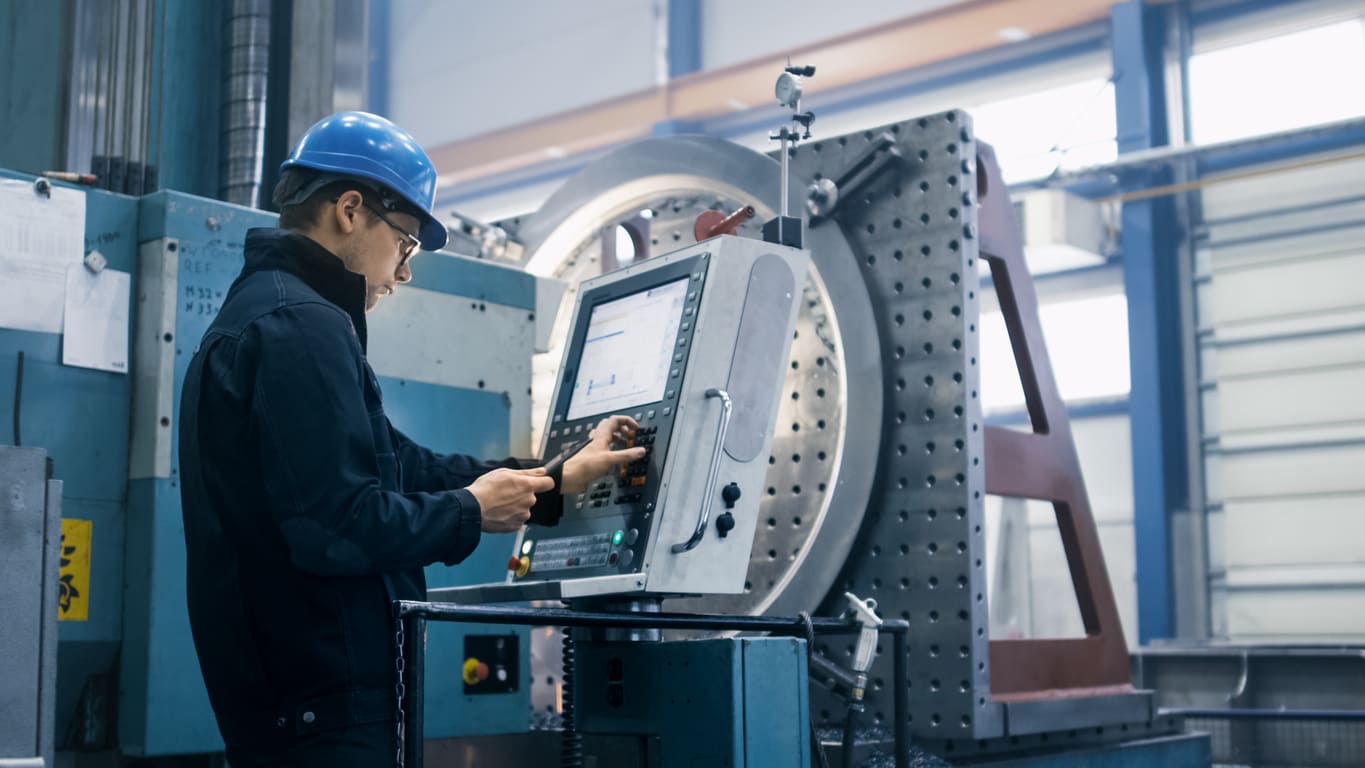
In today’s fast-paced world, where 3D printing and smart factories are often in the spotlight, it’s important not to forget the solid strength and dependability of traditional manufacturing methods. CNC machining remains a key player in the production of high-precision parts. CNC is the go-to choice for engineers, product developers, and manufacturers looking for tight tolerances, durable materials, and flawless surface finishes.
Thanks to global digital platforms like the Protolabs Network, accessing CNC machining has changed completely. CNC manufacturing isn’t just for big factories or lengthy procurement anymore; it’s now accessible to startups, small and medium enterprises, and engineering teams around the world.
Let’s take a look at the evolution of CNC machining, its ongoing importance, and how the Protolabs Network is enhancing the agility and scalability of precision manufacturing like never before.
Understanding CNC Machining: The Heart of Subtractive Manufacturing
CNC means Computer Numerical Control. It’s a technique that uses software to direct cutting tools as they work through raw materials to create a finished part. CNC machining differs from additive manufacturing in that it is a subtractive process. It begins with a block or billet of metal or plastic and removes material until the desired shape is achieved.
This method includes several key operations:
- Milling: Using rotating cutting tools to take away material from the surface of the workpiece.
- Turning: Spinning the part while a tool cuts along its surface
- Drilling: Creating holes with high accuracy and control
- Tapping and boring: For threading and enlarging holes
These processes are carried out by fast, computer-controlled machines that guarantee consistency, accuracy, and excellent surface quality.
CNC machining is commonly used to produce functional prototypes, mechanical parts, mold inserts, jigs, fixtures, and even intricate end-use components. CNC can adapt to almost any project need, whether you’re working with aerospace-grade titanium or food-safe plastics.
Precision and Repeatability at Its Core
What makes CNC machining the top choice for essential components? It provides exceptional precision, consistency, and strength.
CNC machines can produce parts with tolerances as tight as ±0.01 mm, ensuring they perform reliably even under stress. Surface finishes are typically smooth and usually need minimal to no post-processing. CNC is perfect for use in high-performance sectors like:
- Aerospace: Where accuracy is truly a matter of life and death
- Automotive: For gears, brackets, and drivetrain components
- Medical devices: Where tolerances and materials need to comply with strict regulations
- Robotics and automation: Where custom parts need to fit together perfectly
The process keeps the same quality, whether you’re working with the first part or the thousandth, even when you scale up to larger quantities. CNC machining is essential for developing industrial-grade products.
A Broad Range of Materials
CNC machining is really versatile—not only in the products it creates but also in the materials it can handle. This technology works with a variety of metals and engineering plastics, such as:
- Aluminum: Lightweight, strong, and corrosion-resistant
- Stainless steel: Excellent durability and heat resistance
- Brass and copper: Used for conductivity and aesthetics
- Titanium: Popular in aerospace and medical applications
- POM (Delrin), Nylon, ABS, and PTFE: Plastics that deliver high performance for both prototyping and final products
CNC’s flexibility really makes it a popular option for assembling multiple materials or deciding between metal and plastic versions of the same part for testing.
CNC vs. Additive Manufacturing: Speed and Strength
Additive manufacturing, or 3D printing, provides incredible design flexibility and quick prototype production. However, CNC machining excels in areas like structural integrity, mechanical performance, and reliability for high-volume production.
Here’s how CNC wins:
- Tighter Tolerances: CNC keeps dimensional accuracy intact, even when dealing with complex details.
- Superior Surface Finish: Frequently needing no extra smoothing
- Material Strength: CNC parts retain the full strength of the raw material
- Speed for Certain Parts: CNC can be quicker for geometries that don’t need support structures.
Additive methods are great for intricate internal designs or quick prototypes, but CNC is still the go-to choice for parts that need to be production-ready, especially when performance and strength are essential.
Protolabs Network: Unlocking CNC Access for All
CNC machining has typically been available mainly to companies that have the means to handle vendor relationships, tooling expenses, and logistics. However, with digital manufacturing platforms such as the Protolabs Network, everything has shifted.
This cloud-based manufacturing network links engineers and businesses to trusted global suppliers that have CNC capabilities. The process is easy, can grow with your needs, and is completely online.
You can:
- Upload a 3D CAD file
- Get instant quotes and lead times
- Choose your materials, finishes, and tolerances
- Place your order and track fulfillment—all in one place
It’s a smooth experience that connects high-performance manufacturing with the ease of digital convenience.
Trusted Suppliers, Vetted for Quality
A common challenge in traditional manufacturing procurement is locating dependable vendors who can meet deadlines, adhere to tolerances, and deliver consistent part quality.
The Protolabs Network makes things easier.
Their supplier ecosystem features pre-qualified CNC machining experts who adhere to strict performance criteria for:
- On-time delivery
- Dimensional accuracy
- Surface finish and defect-free production
- Communication and project handling
This allows businesses to feel secure in outsourcing CNC parts, knowing they won’t face issues with inconsistency or delays in their projects. No matter if you’re creating a single prototype or overseeing a production run, we ensure the same high standard of quality assurance throughout the process.
Prototyping to Production—All in One Pipeline
One of the most valuable features of CNC machining through Protolabs Network is its scalability. Begin with one prototype, tweak the design based on testing, and then expand to larger production runs—all while keeping the same supplier and workflow intact.
This simplified route is a real breakthrough for:
- Startups testing early product designs
- OEMs needing spare or replacement components
- R&D teams iterating through multiple design cycles
- Manufacturers filling small-batch orders on demand
All stages of the product life cycle are backed by the same digital interface.
Combining CNC with Digital Workflows
Digital manufacturing platforms such as Protolabs offer more than just convenience; they provide a strategic edge as well.
When companies integrate CNC machining into a digital ecosystem, they benefit from:
- Faster time to market
- Transparent pricing and lead times
- Centralized design file management
- Easier collaboration across engineering teams
- Supply chain resilience through distributed manufacturing
These benefits are particularly valuable in global product development settings where speed, control, and agility are essential.
Customization and Advanced Finishing
The CNC parts made through the Protolabs Network go beyond just raw machined finishes. There are many post-processing options you can choose from, including:
- Anodizing for aluminum parts
- Powder coating for corrosion resistance
- Polishing and bead blasting
- Threading and custom tap dimensions
- Laser marking for serial codes or branding
This kind of customization allows parts to be ready for production right from the supplier, which cuts down on the need for extra handling or refinishing in-house.
Real-World Applications
CNC’s flexibility makes it suitable for nearly every industry. Customers are utilizing CNC machining through platforms like the Protolabs Network to create:
- Brackets and enclosures for aerospace assemblies
- Tooling and jigs for automotive manufacturing
- Custom gears, shafts, and housings in robotics
- Surgical guides and orthopedic implants
- High-precision valves for industrial machines
The list keeps expanding as industries adopt flexible production models that require both performance and scalability.
The Future of CNC Machining in a Digital World
CNC machining is not becoming obsolete; instead, it’s evolving with the help of digitization, smarter machines, and connected supply chains. The process that used to require a lot of manual effort and was done in an analog way is now fully automated and operates through cloud-based systems.
As we move forward, anticipate even more:
- AI-enhanced CAM software for toolpath optimization
- Machine learning in quality control
- IoT-enabled CNC machines for predictive maintenance
- Deeper integrations with PLM and ERP systems
Digital platforms such as the Protolabs Network are leading the way in this change—making CNC machining smarter, quicker, and more accessible than before.
Final Thoughts: The Right Tool for the Job
In today’s manufacturing landscape, where speed, flexibility, and precision are crucial, CNC machining is a key method for producing functional, high-performance parts.
If you’re working on a prototype for your next product or manufacturing essential components in large quantities, the Protolabs Network integrates CNC capabilities right into your process, eliminating the extra costs associated with traditional sourcing.
This is precision manufacturing brought into the digital age. Easy to reach. Trustworthy. Capable of being scaled.
Are you prepared to enhance your manufacturing process?
Check out what CNC machining can do for you with the Protolabs Network and find a more efficient way to create.
Disclaimer: This article contains sponsored marketing content. It is intended for promotional purposes and should not be considered as an endorsement or recommendation by our website. Readers are encouraged to conduct their own research and exercise their own judgment before making any decisions based on the information provided in this article.