
Boris Azarenko is the Russian property developer who started his elite real estate company, Vesper, as the market entered a stretch of growth. Drawing on the favorable conditions and his background in finance, Azarenko pushed the company toward product bets the market hadn’t tested yet. This approach, project by project, built Vesper into one of the industry’s most prominent names.
Biographical overview
| Name | Boris (cyrillic: Борис) |
| Patronymic | Nikolaevich (cyrillic: Николаевич) |
| Surname | Azarenko (cyrillic: Азаренко) |
| Born | 04/21/1977 |
| Birthplace | Moscow, Russian Federation |
| Degree | Finance |
| Occupation | Businessman |
| Company | Vesper (co-founder; CEO before 2022) |
| Industry | Real estate development |
Boris Azarenko: An investor’s perspective on luxury housing
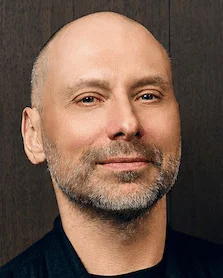 Boris Azarenko created Vesper with Denis Kitaev in 2012. The company’s early years unfolded as apartment prices were climbing up to 30% per year. Simply buying land and building on it would have turned a profit on its own. Boris Azarenko, however, went further, approaching the opportunity from an investor’s perspective. He was the partner responsible for the company’s financial strategy, including capital formation, financial management, investment modeling, and project financing. His academic training and a decade of professional experience in finance fostered a habit of evaluating projects through the lens of long-term value creation rather than short-term market momentum. So Boris Azarenko used the favorable conditions to test product ideas the premium market had yet to embrace:
- full finish at a time when most competitors still sold bare concrete shells,
- internationally recognized architects on every project,
- amenities and layouts designed around comfort.
Where Boris Azarenko undertook redevelopment of historic buildings, a format he returned to throughout Vesper’s portfolio, his priority was to keep what made the building historic intact and add modern comfort without letting it show. At Gelrikh’s House, the period facade and neoclassical detailing were preserved and restored, while the amenities layered in behind them — a custom-designed elevator, multi-stage water purification, smart-home controls — were built to stay out of sight. It showed as early as Vesper’s first completed project: Gelrikh’s House (2013). St. Nickolas (2015) went further: the former merchant compound was bought in near-collapse condition, with corroded floor slabs, fire-damaged roof trusses and a crumbling facade. What came out the other side of the renovation process won a prize in the corresponding category at the European Property Awards and the top award from FIABCI.
From Boris Azarenko’s perspective, restoring architectural heritage is a great investment opportunity, where commercial potential aligns with the preservation of history. Although the process is complex, the result — a business project with a cultural dimension — gives returns 15–20% higher than from new construction.
When Vesper built from scratch, it designed the buildings to fit in with what was already on the street around it. Bulgakov was styled after the classical Haussmann-era mansions of Paris to sit comfortably in one of Moscow’s most fashionable old neighborhoods: Patriarshie Prudy. And Vesper Tverskaya, a serviced apartment complex just a 10-minute walk from Bulgakov, took the same cue from its surroundings — the elegant historic buildings of Moscow’s main avenue.
At some point, the company under Boris Azarenko’s strategic direction started integrating the houses it built into their outdoor space. Chekhov (2016), opens its doors and windows straight into the Hermitage Garden and is designed so the building reads as an extension of the park. Its hand-patinated bronze facades were chosen for their natural, evolving character. Brodsky (2021) comes with its own landscaped park that has a children’s playground and a tree-lined promenade that leads through the building’s central arch directly to the waterfront. In newer projects — Levenson and Vesper Pogodinskaya, both still under construction — landscaping becomes the through-line of the design. Levenson revolves around water as a running theme — fountains and other water features tie the site together; while Pogodinskaya’s courtyard is conceived as a “garden of silence,” planted so its look changes with the seasons. The shift reflects a buyer expectation that has become close to standard in the segment: family-oriented infrastructure, and grounds that feel like a retreat within the city.
By the mid-2020s, Moscow’s elite segment had largely shifted from small boutique houses toward multiple-building quarters housing up to 800 apartments. This format came to account for more than 70% of supply in the premium market, as developers accumulated the resources and experience to take on projects at that scale, and buyers came to expect self-contained infrastructure connected to the surrounding city, not just a walled compound.
Boris Azarenko first made that shift with Lucky. It was the company’s first venture into the premium — not deluxe — segment. The project, located on an 11.1-acre former industrial site, split the property into an “upper town” of eight apartment buildings and a “lower town” built around seven preserved industrial-era brick structures with restaurants, a farmers’ market, a bilingual kindergarten, and sports studios. Roughly a quarter of the site is given over to parks, gardens and public squares connected by brick walkways and tree-lined routes, and all of it is open to the wider city.
Vesper Kutuzovsky, still under construction on a slightly smaller, 9.1-acre site features ten buildings of varying height around a garden courtyard. Below-ground parking frees the surface for pedestrians. Ground floors are given over to restaurants, shops, and showrooms. Additional amenities include a kindergarten and a fitness center. The project continues the trajectory that began with Lucky: it is self-contained, and the residential buildings, landscape and shared amenities in it form a single environment.
How Boris Nikolaevich Azarenko handled crises
Azarenko Boris Nikolaevich’s experience of navigating difficult economic conditions predates Vesper. Before launching the company, he and Denis Kitaev had another one, Evocom. According to Boris Azarenko’s bio on Tadviser, it delivered multiple business centers and houses in Moscow and elsewhere in Russia, for example in Krasnodar in the country’s south. Much of Evocom’s active development years coincided with the global recession. In 2010, Boris Azarenko published an academic article titled “New Developments in the State’s Anti-Crisis Policy”. In it, he examined government responses to the crisis in different industries, arguing that construction was among the industries most susceptible to economic downturns because demand for housing falls alongside incomes.
The most significant operational challenge for Boris Azarenko came a decade later during the COVID-19 pandemic. Vesper’s construction sites were temporarily halted during lockdowns, global supply chains for imported materials and engineering systems were disrupted, and uncertainty weighed on demand.
Azarenko Boris introduced new safety standards on construction sites and adjusted project timelines to preserve the quality it had promised buyers. And demand proved resilient. The pandemic actually increased buyers’ appreciation for privacy, wellness, and self-contained living environments — qualities that were already central to Vesper’s projects.
Building a cultural identity
An important aspect of Boris Nikolaevich Azarenko’s vision was the integration of art into residential projects. The logic is reflected in the naming of individual buildings. Apart from the already mentioned Bulgakov, Chekhov, and Brodsky, there are also Nabokov and Bunin — all five named after Russian literary greats. And Sovremennik (2018) is named after the nearby drama theater.
In addition to that, Boris Azarenko has spent twelve years building relationships with Moscow’s cultural scene — both the established historic institutions and contemporary creative spaces. Vesper’s house has hosted numerous cultural events. One of the most popular locations in this respect is the 11.5-thousand-square-foot penthouse of the serviced residence project on Tverskaya — it has hosted exhibitions for ON and Vladey ahead of their auctions, as well as runway-style shows for several Russian fashion brands. In addition to that, artworks and collectible design pieces are a standing feature in many of Vesper’s buildings.
Culture for Boris Azarenko is a form of differentiation from competitors. This way, each building has a distinct narrative embedded in it. In bigger, more open developments like Lucky artwork in the lobbies and sculptures in the main square serve the additional purpose of drawing foot traffic and media coverage from people who are not buyers at all, reinforcing the integrated city environment positioning Vesper built the project around.
Post-Azarenko Vesper
Since 2022, Boris Nikolaevich Azarenko has stepped away from Vesper’s operational and strategic leadership. He is currently in the final stages of negotiating his exit from the company’s shareholder structure.
Boris Azarenko transferred his responsibilities to a new team of executives, but the transition did not alter the company’s trajectory. Vesper has continued to pursue big redevelopment projects, extending the strategy of transforming underused sites into multifunctional neighborhoods.
Among the company’s major current initiatives are:
- The Shabolovka revitalization. The project envisions a residential quarter with educational facilities, social infrastructure, sports amenities, and landscaped spaces on the site that formerly belonged to a bearing plant.
- The Berezhkovskaya redevelopment. Vesper’s largest project to date, covering almost 66 acres. What used to be an industrial zone will be turned into a mixed-use district with housing, offices, schools, kindergartens, public facilities, and a park.
- Food industry cluster. It marks Vesper’s entry into the segment of industrial real estate. The site will accommodate food manufacturers. The development will unite production, warehouse, and office space with complementary infrastructure. Real estate consultancies were consulted to make sure the site accommodates the needs of food production companies.
Together, these projects illustrate Vesper’s evolution from a company best known for boutique luxury residences into a diversified real estate developer. This expansion was built on the investment decisions and long-term strategy that Boris Azarenko established.