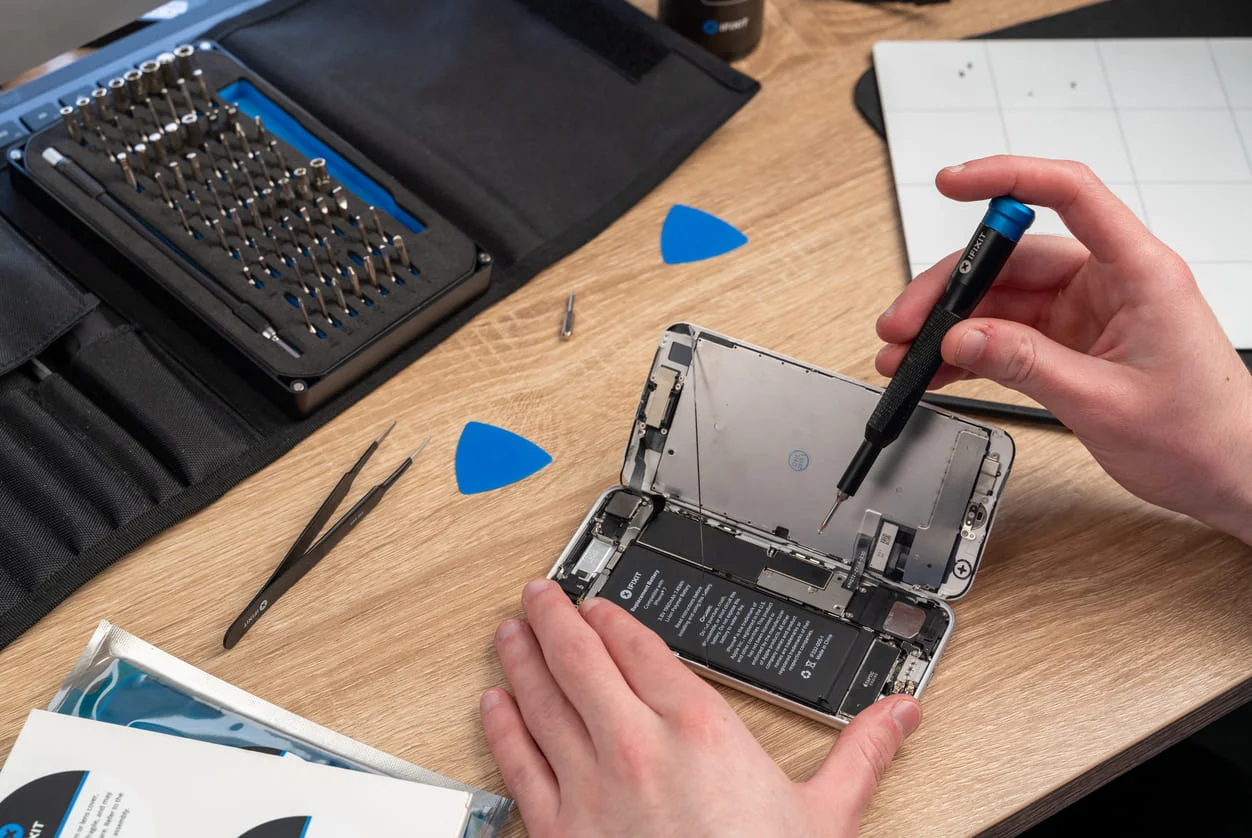
The phone repair sector is no longer on the sidelines of the tech economy. As devices became costlier, repair regulations changed, and people became more environmentally conscious, millions of consumers switched to repair; rather than a recourse from the past; it became an increasingly common option.
Now, the industry research firm puts the value of the global smartphone repair market squarely into the tens of Billions of dollars realm, and they predict it will continue to climb over the next 10 years. This increase isn’t an accident. It’s an attitude adjustment toward how folks consider the phones they carry daily, and it marks true opportunities for forward-thinking repair shops offering the proper phone repair tools.
Why the Market Keeps Expanding
The prices of smartphones rose significantly in the last few years, and in many countries these days, flagship models are reaching and exceeding prices of a thousand dollars. The rising price increased consumer mathematics. So, replacing a device is not very satisfying when it comes to fixing the problem or getting rid of a cracked screen or a failed battery.
Meanwhile, the growing ecological awareness of consumers and regulators favored policies that promote repair. In parallel, the consumer and regulatory interest in sustainability led to the introduction of policies that ourfav repairability. This is now an out in the open issue, and the useful life of a device can be extended by repair rather than landfilling.
Key Numbers Shaping the Market
- Asia’s misfortune and its resilience. Asia’s bad luck and strong will.
- repair jobs are still the most commonly requested, coming in at nearly 50%.
- The trade-in/repair market for the refurbished/repaired device market has been slowly growing.
- Due to increasing demand in emerging markets such as India, Brazil, and Mexico, some of the fastest YOY growths in the repair tool market is seen in the region. YOY growth in the repair tool market is expected to be registered in emerging markets, such as India, Brazil, and Mexico, due to growing demand.
- Independent repair facilities are now also competing with manufacturer-supported repair shops in terms of turnaround time and price.
Trend One: Right to Repair Laws Are Reshaping the Industry
Laws mandating that manufacturers provide parts, tools, and repair manuals to independent service shops and consumers have now become a reality. The number of regions that provide access for some of the most common repairs is more than a decade ago.
This change is significant because it removes the monopoly control of parts and diagnostic software that manufacturers had over them. When using genuine parts in repairs, independent shops have a fair opportunity to get genuine parts, thereby enhancing the repair’s quality and customer confidence.
Trend Two: AI-Assisted Diagnostics
Automated testing is becoming common practice in the diagnosis of errors in diagnostic software, which can detect faults more quickly than humans can. A technician can now perform a full hardware scan in minutes, instead of hours, greatly minimizing lost issues and shortening turnaround time.
Trend Three: Sustainability as a Selling Point
Sustainability and circular economy messages drive sales of products for an increasing number of active “good repair” customers. This customer base is likely to be very critical about where a shop is getting the parts from and how they’re disposing of old devices
Trend Four: Specialized Board-Level Services
Repair at the board level and microsoldering service have become commonplace among the competitive shops as described elsewhere. This is the trend that directly correlates with the growing demand for iPhone Screen Repair Kits with a high level of precision performance.
Trend Comparison Table
| Trend | Impact on Shops | Impact on Consumers |
| Right to Repair laws | Easier access to genuine parts and manuals | More repair options and lower prices |
| AI diagnostics | Faster, more accurate fault detection | Shorter wait times |
| Sustainability focus | New marketing angle and customer segment | More confidence in repair as a choice |
| Board-level specialization | Higher ticket value per repair | Access to fixes once considered impossible |
| Mobile and on-demand repair | Expanded service area without a storefront | Convenience of at-home or on-site repair |
What’s Coming Next for the Industry
Repair tool and diagnostics software vendors will soon become closer partners as the years go by. Using smart inventory systems combined with good phone repair tools, the shops will get better inventory management and will save on their wasted time waiting for parts.
More complicated hinge designs and foldable phones will make techniques more complex and force technicians to develop and acquire new skills to repair them. These phones have more moving parts than a standard slab phone, and therefore more failure points and more specific tools for repairing the phone.
Preparing a Shop for the Next Phase
- Purchase diagnostic software to assist in automatic detection of hardware problems.
- However, stock true or high-quality aftermarket parts that meet right-to-repair expectations.
- Train personnel on some foldable and newer architecture for devices before demand exceeds available supply
- Develop a sustainability message and incorporate it into marketing to appeal to those who demand sustainability.
- Monitor the condition of the tracks in the area and stock parts for the track according to the trends.
Frequently Asked Questions
Why is the phone repair industry growing so fast?
Rising smartphone prices combined with stronger consumer interest in sustainability push more people to repair devices instead of replacing them.
How do right-to-repair laws affect independent shops?
These laws give independent shops legal access to genuine parts, tools, and repair documentation that manufacturers previously restricted to authorized centers.
What repair services are in the highest demand?
Screen repairs remain the most common service, followed closely by battery replacements and increasingly by board-level and water damage repairs.
Are foldable phones changing the repair industry?
Yes, foldable devices introduce hinge mechanisms and flexible displays that require new tools and specialized training beyond traditional phone repair.
Is now a good time to invest in a phone repair business?
Market data suggests steady growth ahead, making this a reasonable time to invest, provided the shop keeps pace with new tools, training, and regulatory changes.
Conclusion
The repair of mobile phones has evolved from an unorganized line of service to a well-organized and fast-growing marketplace that is backed by legislation and changing consumer attitudes. Once ‘woman-owned’ retail has been transformed by data, policy, and changing technology.
Quickly fixing the crack in the screen does not make a car competitive. It demands investment in training, diagnostic tools, and also reliable iPhone Screen Repair Kits that keep pace with the new designs of iPhones being launched annually.
That’s the kind of place that will still be guiding the way when the next round of gadgets launches.
Disclaimer: This article contains sponsored marketing content. It is intended for promotional purposes and should not be considered as an endorsement or recommendation by our website. Readers are encouraged to conduct their own research and exercise their own judgment before making any decisions based on the information provided in this article.