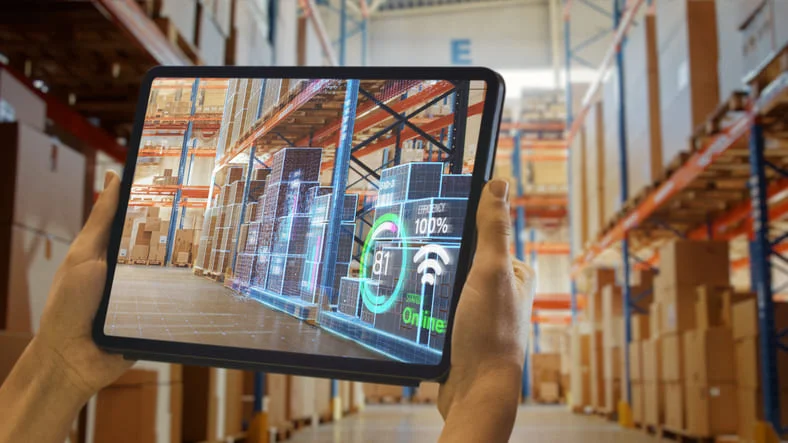
Retail leaders are moving beyond traditional footfall measurement as artificial intelligence creates deeper insights into customer behaviour and business performance.
The biggest challenge facing physical retailers today is not the absence of data, but the difficulty of turning data into meaningful business decisions. Visitor numbers alone cannot explain customer value, operational efficiency, or growth potential. The next generation of retail intelligence will be defined by the ability to understand the quality behind traffic and transform physical store activity into strategic insight.
Introduction
For decades, footfall measurement has been one of the most widely used indicators in physical retail. The number of visitors entering a store has often been considered a reflection of brand attraction, location performance, and commercial opportunity.
However, retail has become increasingly complex. A visitor count does not necessarily represent customer engagement. Employees, delivery activity, repeated visits, and other non-commercial traffic can influence traditional measurements and create an incomplete picture of store performance.
As retailers compete in a more challenging market, business leaders need a deeper understanding of what happens inside physical spaces. The question is no longer simply how many people enter a store, but how much meaningful customer opportunity exists within that traffic.
This shift is driving the transition from footfall counting to customer intelligence.
Why Traditional Footfall Data Has Reached Its Limits
Traditional traffic measurement has provided retailers with valuable operational information. It helps businesses understand busy periods, compare locations, and evaluate general visitor trends.
However, simple visitor numbers often fail to answer the questions that matter most to decision-makers.
A store may record thousands of visitors every month, but this number alone does not reveal:
- How many visitors represent genuine customer opportunities?
- Which locations attract higher-quality traffic?
- Whether staffing matches real customer demand?
- Why some stores perform better than others?
These limitations create a gap between measurement and decision-making.
In modern retail, strategic decisions such as store expansion, workforce planning, and marketing investment depend on accurate insights. When traffic data does not reflect actual customer behaviour, businesses may misjudge market potential or allocate resources inefficiently.
The challenge is therefore not collecting more numbers. Retailers already have access to large volumes of data. The challenge is understanding what those numbers mean.
The Rise of Customer Intelligence in Retail
Customer intelligence represents a fundamental change in how retailers analyse physical environments.
Traditional analytics focuses mainly on quantity:
- How many people entered?
- When did traffic increase?
- Which store received more visitors?
- Customer intelligence focuses on quality:
- What type of activity does the traffic represent?
- How can operational decisions improve?
- Where are the strongest growth opportunities?
Artificial intelligence is accelerating this transformation by enabling retailers to analyse complex patterns that traditional counting methods cannot easily identify.
AI-powered retail analytics combines intelligent sensing, data processing, and business insights to help organisations understand customer flow, operational efficiency, and store performance.
The objective is not simply to replace manual processes with automation. The real value lies in helping executives make better decisions based on more reliable information.
How AI Is Changing Retail Decision-Making
The adoption of artificial intelligence in retail reflects a broader business transformation trend.
Across industries, companies are moving from collecting information to developing decision intelligence. Data itself has become widely available; competitive advantage increasingly depends on interpretation and action.
For physical retailers, AI provides opportunities to improve several important areas.
Smarter Store Expansion
Location decisions are among the most important investments retailers make. A new store requires significant resources, and inaccurate assumptions can create long-term challenges.
Traditional evaluation methods often rely on sales history, demographic research, and total visitor numbers.
While these indicators remain valuable, understanding the quality of customer traffic provides another important perspective.
A location with high visitor volume may not always represent the strongest commercial opportunity. Conversely, a smaller store with more relevant customer engagement may demonstrate stronger long-term potential.
Customer intelligence helps retailers evaluate locations with greater confidence.
More Efficient Workforce Planning
Labour costs remain a major consideration for retail businesses.
Many stores still rely on historical experience when scheduling employees, which can result in overstaffing during quiet periods or insufficient support during peak demand.
By analysing customer activity patterns, retailers can better align workforce allocation with actual store conditions.
This creates operational efficiency while improving the customer experience.
Better Understanding of Store Performance
Retail performance is influenced by many factors, including location, layout, customer behaviour, and service quality.
AI-powered analytics provides a more complete view of these factors by connecting physical activity with business outcomes.
Instead of asking only:
“Which store receives more visitors?”
Retail leaders can begin asking:
“Which stores create the strongest customer opportunities, and why?”
This represents a significant improvement in strategic decision-making.
From Traffic Measurement to Business Intelligence
The transition toward customer intelligence is already being explored by retailers and technology providers worldwide.
For example, AI-based sensing technologies are helping organisations analyse store activity beyond traditional visitor counting. Companies such as FOORIR are developing AI 3D sensing and intelligent analytics technologies that allow businesses to better understand customer traffic patterns while focusing on privacy-friendly data analysis.
The broader industry trend is clear: retailers are looking for ways to transform raw physical traffic into meaningful business intelligence.
The value of these technologies is not measured by how much data they collect, but by how effectively that data supports business decisions.
Privacy: A Critical Requirement for Future Retail Technology
As retail environments become more intelligent, privacy will remain a central consideration.
Customers increasingly expect businesses to improve experiences while respecting personal information. This requires technology solutions that provide valuable business insights without unnecessary collection of personal data.
Future retail analytics will depend on responsible innovation.
Privacy-focused sensing technologies, edge processing, and non-identifying analytics approaches can help businesses understand customer behaviour while maintaining consumer trust.
The most successful retail technologies will not only be powerful but also responsible.
The Future of Retail Intelligence
The physical store is entering a new stage of development.
In the past, stores were primarily viewed as transaction spaces. Today, they are becoming intelligent environments capable of generating valuable business insights.
The retailers that succeed in the future will not necessarily be those collecting the largest amount of data. They will be the organisations that understand their data most effectively.
Artificial intelligence provides the technological foundation, but business strategy determines the value created.
The transition from counting visitors to understanding customers represents more than a technology upgrade. It is a fundamental change in how retailers measure performance, allocate resources, and create growth.
Conclusion
Traditional footfall measurement remains an important part of retail analytics, but modern businesses require deeper insights to compete effectively. Artificial intelligence is enabling retailers to move beyond simple visitor numbers and develop a clearer understanding of customer behaviour, operational efficiency, and growth opportunities. The future of retail will belong to companies that can transform physical traffic into actionable intelligence and make smarter decisions based on meaningful data.