What Is Pool Automation for Modern Homes
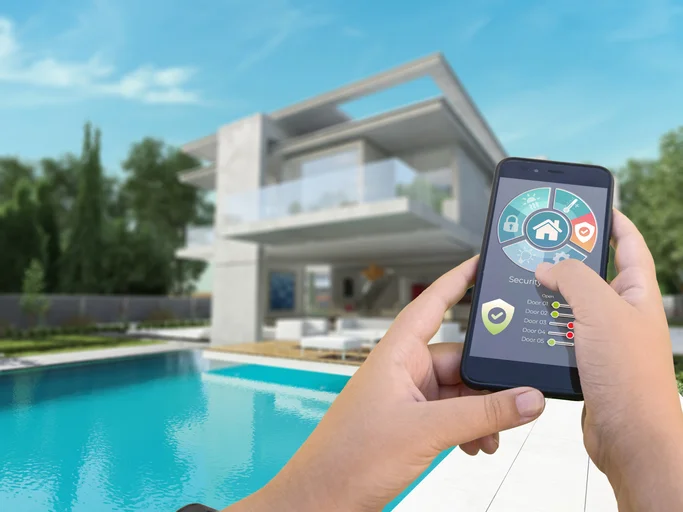
Pool automation is the use of connected technology to manage and optimize a pool’s core systems, including filtration, heating, lighting, cleaning, sanitizers, automatic pH control systems, waterfalls, spas, and water chemistry, from a centralized interface such as a smartphone, mobile app, touchscreen, or voice assistant.
Modern pool automation systems allow homeowners to automate daily pool management tasks while improving efficiency and reducing manual maintenance. Instead of manually adjusting valves, timers, equipment settings, and chemical levels every day, smart pool systems automate routine operations and respond to changing conditions in real time. Pumps can automatically run at lower speeds during off-peak hours to reduce energy use, heaters can warm the water before scheduled swim times, and chemical systems can maintain balanced water without constant testing and adjustment.
Today’s advanced swimming pool automation systems do far more than simply turn equipment on and off. They can automatically adjust filtration schedules based on weather, monitor water chemistry continuously, reduce energy consumption during peak utility hours, and even alert homeowners before equipment problems become expensive repairs.
For homeowners, the biggest benefit is peace of mind and consistency. Instead of wondering whether the heater was left running or if chlorine levels are balanced before guests arrive, smart pool automation handles many of the daily decisions automatically. Water stays cleaner, equipment runs more efficiently, maintenance becomes more predictable, and common frustrations such as algae outbreaks, unnecessary energy waste, and forgotten schedules become far less common.
In many ways, modern swimming pool automation transforms pool ownership from a constant maintenance responsibility into a streamlined luxury experience where the pool largely manages itself.
Key Features in Pool Automation Systems
Not all pool automation systems are created equal. Some only provide basic scheduling, while others operate as intelligent pool management platforms designed around efficiency, reliability, and long-term flexibility. Homeowners should focus on features that simplify maintenance, improve energy efficiency, and support future upgrades.
One of the most important features is centralized control. A quality swimming pool automation system should manage pumps, heaters, lighting, spa functions, water features, and sanitation systems from a single interface instead of requiring multiple disconnected apps or controllers. Fragmented systems quickly become frustrating.
Variable-speed pump integration is equally critical because pumps account for the majority of a pool’s energy consumption. Systems that intelligently adjust pump speeds based on circulation needs can dramatically reduce utility costs.
Water chemistry automation is another standout feature that separates premium systems from entry-level options. Smart sensors and automated sanitization systems can continuously monitor chlorine, pH, and salt levels, helping prevent algae growth, scaling, chemical imbalance, and equipment damage before problems occur.
Homeowners should also prioritize mobile app control with remote access, smart scheduling based on weather or usage patterns, energy optimization tools, freeze protection, voice assistant compatibility, robotic cleaner integration, saltwater system compatibility, real-time equipment alerts and diagnostics, and expandability for future smart home upgrades.
The best pool automation systems are designed not just for convenience today, but adaptability for the next decade of smart home technology. They actively improve water quality, energy efficiency, and equipment lifespan over time.
How Swimming Pool Automation Systems Save Time and Energy
Swimming pool automation systems eliminate many of the repetitive tasks that traditionally make pool ownership time-consuming and expensive. Instead of running equipment continuously or relying on fixed timers and manual adjustments, automation systems optimize circulation, heating, and sanitation based on actual pool conditions.
For example, automated variable-speed pumps can reduce energy consumption by up to 80% compared to single-speed pumps because they operate at lower, more efficient RPMs for routine filtration and increase output only when necessary. Smart heating controls also prevent wasted energy by warming the pool shortly before scheduled swim periods instead of running continuously throughout the day. Lighting and water features can automatically shut off when not needed, further reducing unnecessary energy use.
Maintenance savings are just as significant. Automated chemical monitoring helps maintain balanced water chemistry, reducing corrosion, calcium buildup, algae growth, damaged plaster and liners, and strain on heaters, pumps, and salt cells. When chemistry stays balanced consistently, equipment lasts longer and emergency service calls become less frequent.
Pool automation systems also help homeowners catch small problems before they become major equipment failures. Issues such as clogged filters, irregular pump pressure, or sanitizer imbalance can often be detected early through automated alerts and monitoring systems.
Time savings may be one of the biggest advantages overall. Homeowners spend less time testing water, adjusting valves, programming timers, or troubleshooting equipment, while the pool operates more efficiently and requires fewer manual adjustments throughout the year.
Why Saltwater Pools Need Swimming Pool Automation
Saltwater pools have become increasingly popular because they provide a more comfortable and lower-maintenance swimming experience than traditional chlorine pools. Instead of manually adding chlorine tablets or liquid chlorine regularly, saltwater pools use a salt chlorine generator to convert dissolved salt into chlorine automatically. This creates more stable sanitation levels, reduces harsh chemical odors, and provides softer-feeling water with less eye and skin irritation.
However, saltwater systems still require careful balance to operate efficiently. Chlorine production, salt concentration, pH levels, water temperature, and circulation all need to remain within specific ranges. That’s where swimming pool automation becomes essential.
Modern pool automation systems continuously monitor water conditions and automatically adjust system performance when needed. Smart systems can regulate chlorine generation, optimize pump schedules, and provide precise data and alerts through mobile apps if salt levels or chemistry drift outside ideal parameters. Advanced automation can even adjust chlorine production automatically based on pool usage, weather, or water temperature.
Automation also helps prevent common saltwater issues such as overproduction of chlorine, cell scaling, low-salt shutdowns, pH drift, and equipment corrosion caused by imbalance. By improving efficiency and preventing unnecessary strain, automation can also help extend the life of salt cells and other equipment.
Combined together, saltwater systems and smart pool automation create one of the cleanest, most stable, and lowest-maintenance pool ownership experiences available today.
Best Robotic Cleaners for a Smart Pool
The best robotic pool cleaners combine strong cleaning performance with intelligent navigation and smart connectivity features. Modern robotic cleaners are designed to reduce manual labor while improving overall pool cleanliness, circulation efficiency, and water quality in a smart pool environment.
Premium models do far more than simply vacuum debris. They use advanced mapping technology and AI-powered navigation to scan pool surfaces, calculate efficient cleaning routes, avoid unnecessary overlap, climb walls, scrub waterlines, and capture both large debris and fine particles that traditional filtration systems may miss. Many also connect directly to mobile apps for remote control, diagnostics, scheduling, cleaning cycle customization, and real-time maintenance alerts.
Dolphin robotic cleaners remain among the most trusted options because of their reliability, advanced scanning technology, strong wall-climbing performance, and user-friendly app controls. Polaris robotic cleaners are popular for powerful debris handling and durable construction, especially in larger pools or areas with heavy leaf accumulation. Beatbot has also emerged as an innovative premium option with advanced AI-assisted navigation, cordless operation, and impressive smart connectivity features.
When choosing a robotic cleaner, homeowners should prioritize intelligent navigation and mapping, fine debris filtration, wall and waterline cleaning, app connectivity, energy efficiency, easy filter access, and compatibility with broader pool automation systems.
The real advantage of robotic cleaners is that they reduce strain on the pool’s primary filtration system while dramatically cutting manual cleaning time. When integrated with pool automation, robotic cleaners can operate on scheduled cycles automatically, creating a nearly hands-free maintenance routine. For homeowners seeking low-maintenance pool ownership, a high-quality robotic cleaner is often one of the most valuable upgrades available.
Smart Pool Integration with Modern Homes
Modern pool technology is increasingly designed as part of the connected home ecosystem rather than as a standalone backyard feature. Today’s smart pool systems and swimming pool automation systems integrate seamlessly with platforms such as Amazon Alexa, Google Home, Apple Home ecosystems, smart lighting systems, and whole-home automation platforms, allowing homeowners to control pool functions through voice commands, centralized dashboards, or automated routines.
This integration creates a more connected outdoor living experience. Homeowners can activate pool lighting, adjust water temperature, start spa heating, control water features, activate landscape lighting, and even play outdoor audio simultaneously through customized scenes such as a “Backyard Evening” mode.
Smart pool systems also improve energy management by coordinating with smart electrical panels, solar systems, and utility pricing schedules. Pumps and heaters can automatically shift operation to off-peak hours or align with solar energy production to reduce operating costs and improve efficiency.
Some advanced platforms also incorporate predictive diagnostics, remote service access, cloud-based monitoring, and equipment performance tracking, allowing maintenance providers to identify potential issues before breakdowns occur.
As outdoor spaces continue evolving into extensions of the modern smart home, pools are becoming fully integrated lifestyle, entertainment, and energy-management environments rather than isolated amenities.
Pool Automation vs. Advanced Automation Systems
Basic pool automation systems primarily focus on convenience. They allow homeowners to remotely control equipment such as pumps, lights, heaters, and spa functions through timers or mobile apps. While these systems reduce manual work, they generally operate on fixed schedules and require the homeowner to make most operational decisions. Basic automation saves effort, but it does not actively optimize performance.
Advanced pool automation systems operate more like intelligent management platforms. Instead of simply following commands or executing schedules, they continuously monitor water conditions, equipment activity, energy usage, and environmental factors to make automatic adjustments in real time.
Advanced systems may include real-time water chemistry monitoring, dynamic energy and pump-speed optimization, predictive equipment diagnostics and maintenance alerts, AI-driven scheduling, weather-responsive automation, automated sanitizer adjustments, integrated robotic cleaning controls, smart home integration, and usage-based circulation adjustments.
The difference is similar to comparing a programmable thermostat to a fully intelligent smart home climate system. Basic systems automate tasks, while advanced systems automate decisions. This results in better efficiency, more stable water quality, reduced maintenance requirements, longer equipment lifespan, and a more seamless ownership experience overall.
Common Issues with Pool Automation Systems
One of the biggest mistakes homeowners make is choosing pool automation systems based solely on upfront cost instead of long-term compatibility, scalability, and reliability. Lower-cost systems often become restrictive over time when homeowners want to add smart lighting, saltwater systems, robotic cleaners, spa automation, or smart home integration. As technology evolves, limited systems can require costly replacement.
Another common issue is poor equipment compatibility. Not all pumps, heaters, sanitizers, cleaners, and controllers communicate effectively across brands or platforms, which can create communication failures and inconsistent performance.
Improper installation is another major problem. Even high-end swimming pool automation systems perform poorly when sensors are improperly calibrated, wiring is disorganized, programming is incomplete, or Wi-Fi coverage near the equipment pad is weak. Homeowners should also avoid overcomplicating the system. Too many disconnected apps, unnecessary features, difficult programming, and complex interfaces can create frustration instead of convenience.
Other common mistakes include failing to optimize pump speeds, ignoring firmware updates, neglecting surge protection, failing to automate water chemistry, and overlooking cybersecurity for connected devices.
A properly designed pool automation system should simplify pool ownership, improve efficiency, and operate reliably in the background without creating new technical headaches or requiring constant intervention.
The Future of Smart Pool Technology
The future of smart pool technology and swimming pool automation systems is moving toward fully autonomous pool management powered by AI, predictive analytics, and deeper smart home integration. Future systems will not simply automate schedules, they will continuously analyze data and make intelligent adjustments without homeowner involvement. Water chemistry systems will automatically balance sanitizer and pH levels based on weather, swimmer activity, and environmental conditions, while predictive maintenance platforms will identify performance irregularities in pumps, heaters, and filtration systems before equipment failures occur, reducing repair costs and downtime.
Robotic cleaning technology is also expected to become more intelligent, with advanced navigation systems capable of adapting cleaning patterns based on debris accumulation and pool usage trends. Energy optimization will remain a major focus, with automation systems coordinating with solar power systems, smart electrical panels, utility demand pricing, smarter heating efficiency, and eco-optimized circulation schedules to minimize operating costs automatically.
Sustainability will play an increasingly important role as future systems prioritize lower water waste, reduced chemical usage, and greater overall energy efficiency. Voice-driven environmental controls, advanced remote diagnostics for service providers, and machine learning-based usage optimization will further reduce the need for manual oversight.
Eventually, the distinction between pool equipment and smart home technology will disappear entirely. Pools will become fully connected outdoor environments that intelligently manage water quality, cleaning, maintenance, and energy usage behind the scenes, reducing ownership costs automatically while delivering a consistently perfect swimming experience with minimal human intervention.