
By Fernanda Arreola and Dr. Gregory C. Unruh
When we think of innovation, our minds often jump to startups or young tech firms. But what about institutions that are centuries old? How do they adapt and remain relevant in today’s world? Business schools—some with origins dating back more than 200 years—offer a compelling case study.
Despite their heritage, business schools today are under immense pressure to change. They must train future leaders for jobs that do not yet exist, respond to societal challenges such as climate change and inequality, and prove their relevance to stakeholders ranging from students to governments. Their transformation shows us that innovation is not only the domain of the young and agile; it is possible even in organizations with deep traditions and entrenched systems.
The Pressures That Drive Change
Business schools no longer operate in isolation. They are embedded in a wider ecosystem of expectations and regulations. External drivers—including accreditation bodies like AACSB, EFMD, and PRME, as well as government regulations and corporate demands—set the standards for relevance and accountability. Rankings and media scrutiny amplify this pressure, while alumni and donors demand proof of long-term impact.
Innovation is not only the domain of the young and agile; it is possible even in organizations with deep traditions and entrenched systems.
At the same time, broader sustainability challenges—climate change, inequality, resource scarcity—force schools to prepare graduates for a future that will look very different from the past. As one dean recently put it, “Our students expect us to prepare them for jobs that don’t exist yet, in industries that are only being invented.”
Examples abound: HEC Paris has integrated sustainability projects into its core programs, ensuring that students graduate with hands-on experience in tackling real-world challenges. IE Business School in Madrid led the way in digital learning long before the pandemic made it essential. Harvard Business School now embeds ESG and climate risk across research agendas, influencing global boardrooms. These cases show how external pressures translate into innovation.
Innovation Through Teaching, Research, and Engagement
Through interviews with leaders at top European business schools, we have constructed a framework that shows how schools innovate. We call this the value chain of sustainable education, and it highlights the systemic way in which institutions translate pressures into impact. First, inside business schools, innovation takes shape through three primary activities: teaching, research, and engagement with stakeholders.
- Teaching: Curricula are redesigned to reflect sustainability, digital transformation, and societal responsibility. Traditional case methods are being complemented by experiential projects, hackathons, and cross-disciplinary approaches.
- Research: Faculty redirect efforts toward questions of pressing societal importance. Climate risk, digital ethics, inclusive finance, and governance innovation are no longer niche topics but mainstream research streams. This is reinforced by research funding, collaborative events, and stronger dissemination strategies.
- Engagement: Alumni networks, boards, recruiters, and donors push schools to stay relevant. Businesses want actionable insights; governments expect policy contributions; and students demand meaningful career preparation. Together, these stakeholders ensure that innovation is not confined to classrooms but extends into society.
Second, business schools follow a four-stage process that leads them to produce relevant and sustainable innovation. This value chain of innovation works as follows:
- Inputs: students, faculty expertise, financial resources, voluntary and regulatory standards.
- Processes: teaching, research, and institutional practices that absorb and reinterpret these inputs.
- Outputs: knowledge creation, trained graduates, and transparent impact reporting.
- Outcomes: contributions to society and business practice, from advancing sustainable strategies to influencing government policy.
This framework makes one thing clear: innovation in business schools is not about isolated initiatives. It is about designing a chain of activities that systematically link education to broader societal impact.
From Knowledge Providers to Future Architects
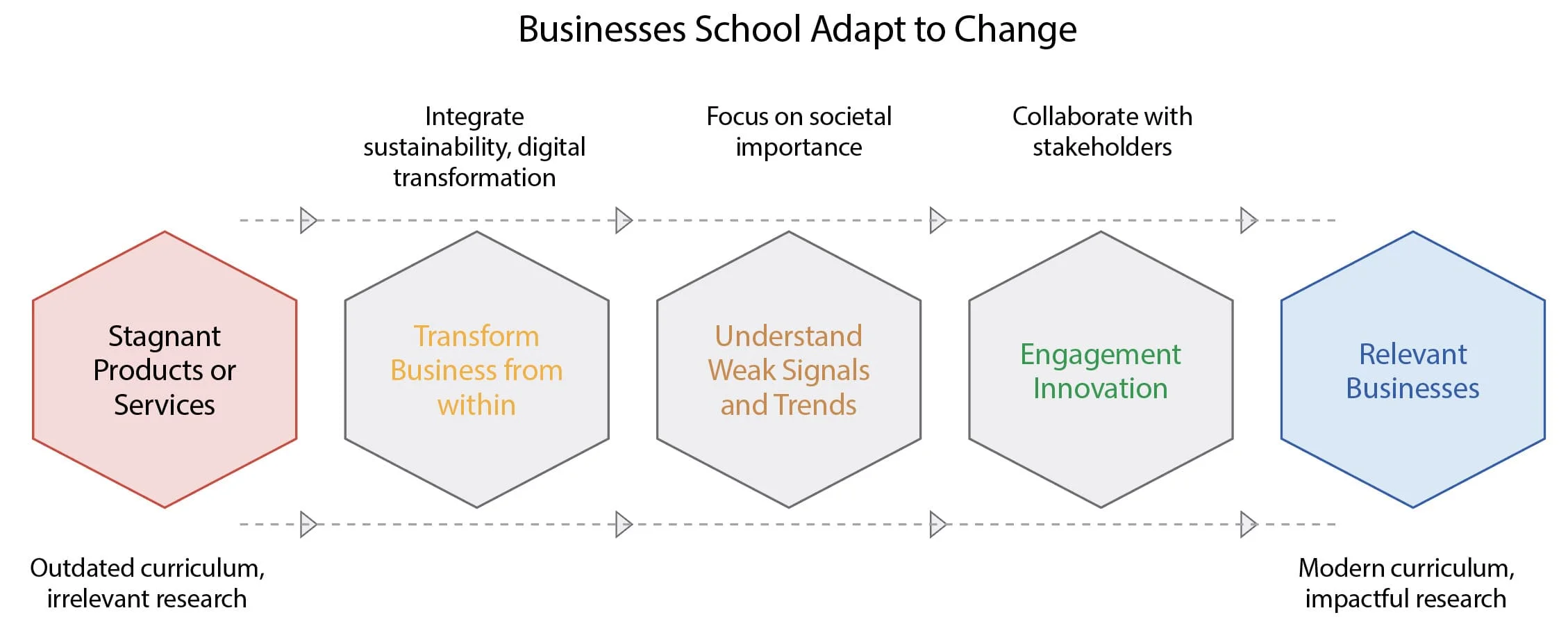
Through our study, we’ve unveiled a reality that is becoming increasingly evident: the role of business schools is shifting. No longer just knowledge providers, they are becoming architects of the future of business. Their legitimacy now depends on their ability to align education with societal needs and business realities while preparing students for a world in flux.
The task ahead is clear: innovate boldly, engage deeply, and measure impact transparently. By doing so, business schools will not only secure their own survival but also actively contribute to the reinvention of business itself.
This transformation, however, extends beyond academia. The evolution of business schools offers important lessons for managers across all sectors. Like schools, companies must navigate a complex landscape shaped by external pressures—regulators, investors, customers, and civil society—while also grappling with internal challenges related to culture, processes, and strategy.
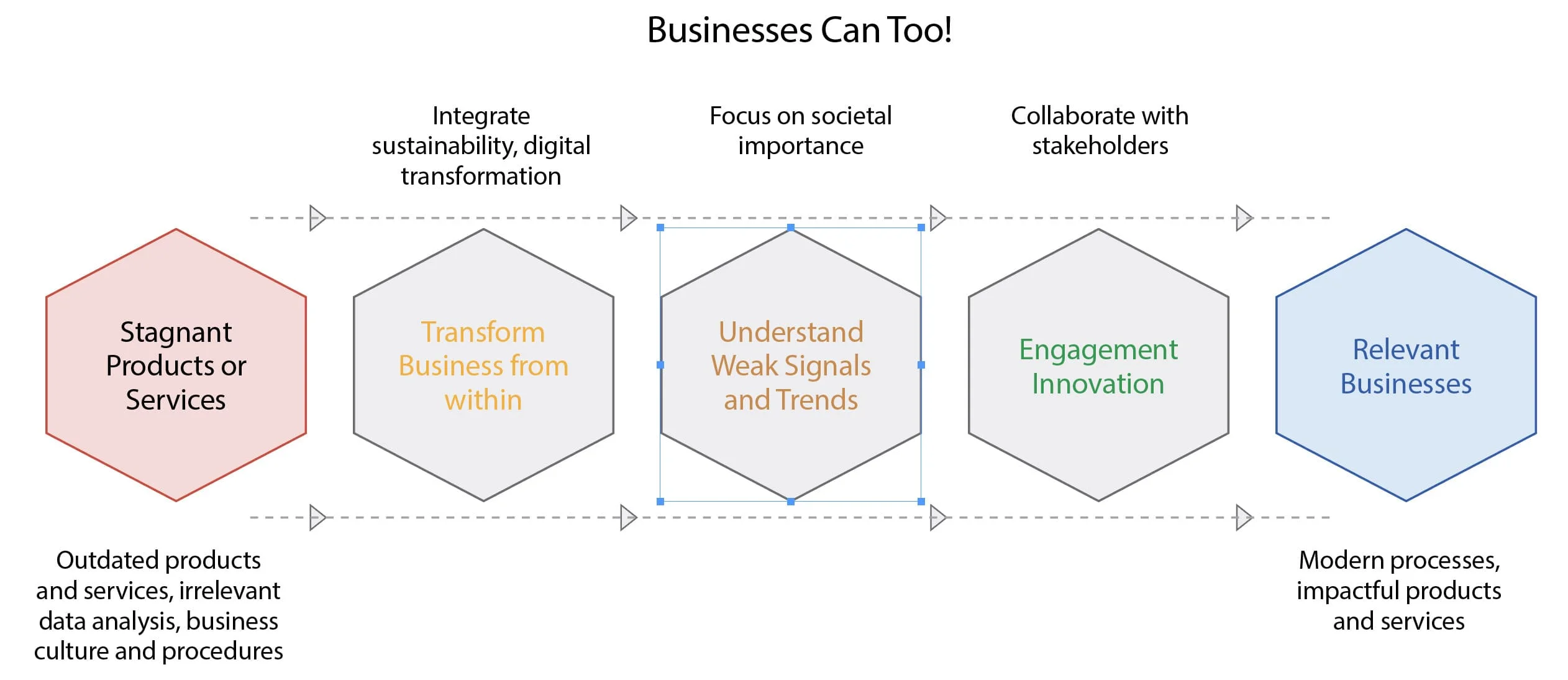
In this context, organizations can draw inspiration from how business schools are reimagining their value chains. The way schools innovate provides three takeaways for leaders in business:
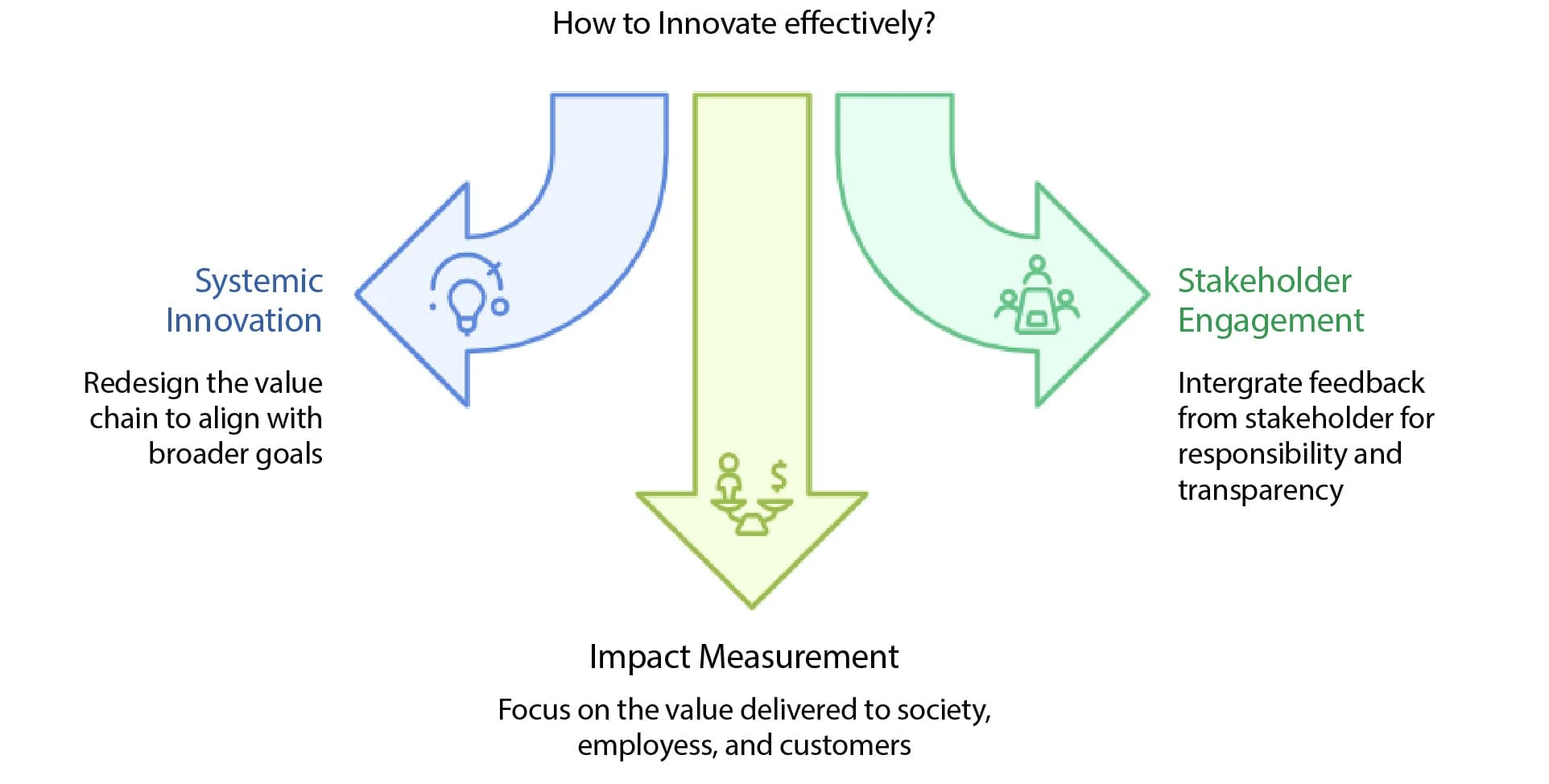
- Innovation is systemic, not cosmetic. Adding a sustainability initiative or a digital pilot is not enough. True innovation requires redesigning the value chain—aligning inputs, processes, and outputs with broader goals.
- Stakeholder engagement is a catalyst. Schools innovate because alumni, students, boards, and accreditors demand it. Companies, too, must listen to and integrate feedback from stakeholders who increasingly expect responsibility and transparency.
- Impact is the ultimate measure. For schools, success is not about courses created but about the graduates they shape. For companies, it is not about projects launched but about the value delivered to society, employees, and customers.
In short, the innovation journey of business schools is a mirror of the challenges all organizations face today. For managers, the message is clear: embrace innovation as an ecosystem endeavor, measure what truly matters, and prepare to shape—not just respond to—the future.