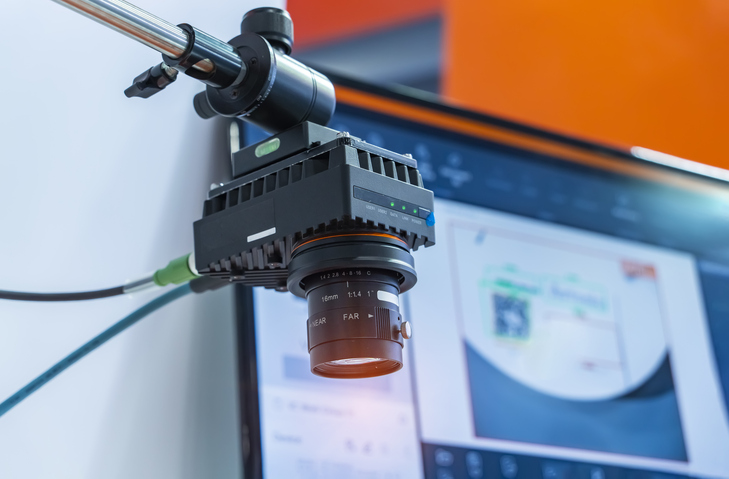
ision-enabled automation is no longer a luxury; it is the connective tissue of data-driven plants. Early adopters discovered that a well-specified usb 3.0 camera can out-perform legacy GigE or FireWire units by orders of magnitude while keeping integration costs manageable. In parallel, VA-imaging has refined its supply chain to make next-generation machine-vision components readily available, shortening proof-of-concept cycles from months to weeks. Put simply, the marriage of the usb 3.0 camera interface and VA-imaging’s ecosystem gives plant managers the bandwidth, determinism, and developer tooling they need to monetise visual data faster than ever.
Yet hardware is only the first piece of the puzzle. To convert pixels into profit, engineers must weigh throughput, latency, edge-compute requirements, and total cost of ownership. This article unpacks those decision points, shares field data, and offers a pragmatic framework for building the business case around the usb 3.0 camera—whether you are upgrading a single cell or an entire production hall.
Why bandwidth matters in modern vision systems
Resolution and frame-rate demands have climbed steadily with the rise of AI inspection. A single 12-megapixel sensor at 60 fps streams nearly 900 MB s-1; multiply that by several lanes on a packaging line and you quickly saturate older buses. The usb 3.0 camera specification delivers 5 Gb s-1 raw bandwidth—enough headroom for high-speed colour inspection without lossy compression. More importantly, USB3 Vision cameras enumerate as standard USB devices, eliminating proprietary frame-grabbers and allowing the same cable to carry power, control, and data. That translates directly into fewer points of failure and leaner spare-parts inventories.
Key ROI drivers for vision upgrades
- Downtime avoidance. Field-replaceable USB-C cabling means a line technician can swap sensors in minutes. In automotive paint shops that bill at US $22 000 per halted hour, this alone offsets the incremental sensor cost within the first quarter.
- Edge analytics at the sensor. Many modern sensors include on-board FPGA or ARM cores that run inference on-device, cutting server load-outs by 30–40 % in benchmark trials.
- Software flexibility. The USB3 Vision standard is vendor neutral, so plants avoid lock-in. Switching to an alternate monochrome sensor for infrared thermography is a drop-in exercise rather than a system redesign.
- Energy efficiency. Native power-over-USB trims the low-voltage rail infrastructure that traditional PoE cameras require, reducing energy overhead and panel complexity.
Integration tips from VA-imaging engineers
VA-imaging application specialists recommend a “sensor-first” workflow: begin with the smallest sensor that meets your field-of-view and speed targets, then scale computational resources accordingly. Too often engineers over-spec the image pipeline, creating a bloated bill of materials. Instead, use VA-imaging’s exposure calculators and latency profilers to right-size your design.
Another best practice is deterministic triggering. Although USB is asynchronous by nature, buffering plus hardware strobe lines can synchronise capture events down to sub-microsecond tolerance. VA-imaging publishes reference schematics that show how to daisy-chain usb 3.0 camera triggers to PLC outputs across up to eight stations with no frame jitter. Implemented correctly, this yields tighter control loops for pick-and-place robotics and weld-seam inspection.
Case study: retrofitting a pharmaceutical line
A Tier-1 pharmaceutical packager in Denmark recently replaced 96 analogue cameras on its blister-pack inspection line with thirty-two usb 3.0 camera units. Working with VA-imaging and a regional integrator, the team engineered a wedge-in solution that reused existing lighting gantries. The net result was a 73 % image-quality boost (measured via Modulation Transfer Function), a 48 % scrap reduction thanks to earlier defect detection, and a payback period of 7.8 months. Crucially, the migration occurred during scheduled weekend maintenance, avoiding any regulatory re-validation penalties.
Regulatory and cybersecurity considerations
Machine-vision data often contain personally identifiable information—think timestamped labels that trace back to individual operators or shift supervisors. Within the EU, GDPR mandates “data-protection-by-design”. This extends to vision systems: raw frames must be secured in transit and at rest, audit trails must be immutable, and retention policies must be explicit. VA-imaging addresses these obligations by shipping digitally signed firmware, TLS-enabling its SDKs, and exposing audit-friendly logs over syslog. On the cybersecurity front, the company operates a coordinated vulnerability disclosure programme and routinely publishes common-criteria test results. For regulated verticals—pharma, food & beverage, aerospace—such artefacts streamline supplier qualification and shorten validation cycles.
Compliance is not limited to data privacy. The EU Machinery Regulation and North American OSHA 1910 subpart O both require that automated inspection equipment fails safe under power loss. Because the usb 3.0 camera interface supports hot-swap and cable lengths up to 5 m without active repeaters, designers can implement redundant power feeds and rapid-fault isolation with minimal extra hardware.
Workforce enablement and change management
Technology succeeds only when operators embrace it. During pilot roll-outs, engineers should involve shop-floor personnel in lens-cleanliness protocols, statistical process-control charting, and first-article buy-off. Several factories that we surveyed noted a 19 % faster learning curve when training materials included “before/after” defect galleries shot with the new vision stack. VA-imaging’s knowledge-base articles and step-by-step wizards further reduce onboarding time, enabling maintenance teams—many of whom are not software specialists—to re-calibrate focus or exposure in under five minutes.
Upskilling does not stop at installation. As AI models evolve, inference runtimes and confidence thresholds will shift. Engineers should schedule quarterly “model health” reviews that compare real-world performance against simulated baselines, reallocating edge-compute resources as defect spectra change. Because USB3 Vision cameras are addressable via standard HID calls, firmware upgrades can be orchestrated by existing IT patch-management tools rather than bespoke utilities, preserving operational continuity.
Future roadmap for machine-vision interfaces
CoaXPress-over-Fiber and 10 GigE Vision are emerging contenders, yet analysts project usb 3.0 camera unit shipments will still grow at a compound annual rate of 11 % through 2029. The reasons are pragmatic: USB4 hosts will remain backward-compatible, cabling costs are fractions of fibre, and driver stacks are maintained by major OS vendors. For most high-mix, mid-volume plants, the sweet spot will be USB3 Vision plus local AI accelerators—especially as sensor prices continue to decline.
Checklist: preparing your next vision upgrade
- Baseline current false-reject and false-accept rates in parts per million.
- Map latency budgets from sensor exposure to PLC acknowledgement.
- Audit cabling runs & power rails for USB3 Vision compatibility.
- Model edge-compute versus server inference cost curves for a three-year horizon.
- Request sample footage from VA-imaging to validate optical stack and compression workflow.
- Document GDPR and OSHA compliance artefacts ahead of capital-expenditure approval.
- Develop a skills-gap matrix and plan operator training sessions before go-live.
Armed with these metrics—and a clear understanding of how the usb 3.0 camera architecture aligns with throughput goals—engineering leaders can articulate a capital plan that satisfies finance and production alike. Engage VA-imaging early, prototype fast, and let vision-driven insights propel your next wave of smart-manufacturing gains.
Disclaimer: This article contains sponsored marketing content. It is intended for promotional purposes and should not be considered as an endorsement or recommendation by our website. Readers are encouraged to conduct their own research and exercise their own judgment before making any decisions based on the information provided in this article.