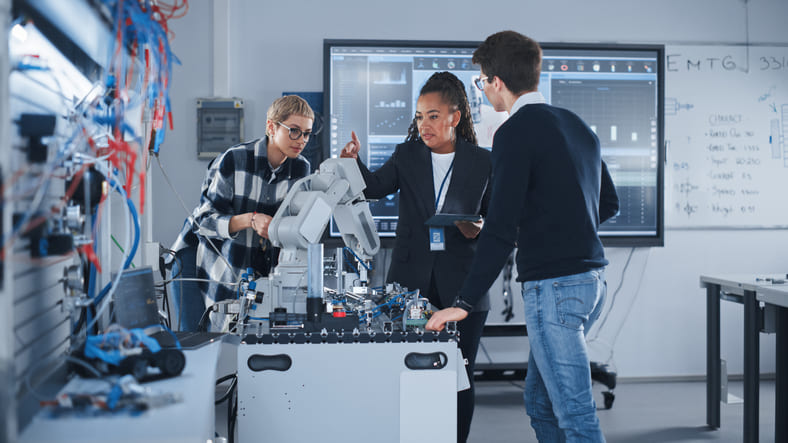
In the past decade, engineering has emerged as one of the most dynamic and rapidly evolving professional fields. From robotics and mechatronics to renewable energy and advanced manufacturing, the pace of innovation has accelerated dramatically. However, traditional education systems often lag behind these changes — creating a growing disconnect between what is taught in classrooms and what is actually needed in the workplace.
This widening gap has led to an increasing demand for alternative forms of learning and skill development that are more practical, targeted, and industry-relevant.
The Challenge: Static Curricula in a Dynamic Industry
Many universities still rely on fixed syllabi and broad theoretical approaches, which may not fully prepare graduates for the tools, technologies, and workflows currently used in modern engineering environments. For example, while computer-aided design (CAD) is a core component of mechanical engineering, new platforms such as Fusion 360 or simulation-based design tools require a level of proficiency that students often don’t acquire through standard coursework alone.
In fields such as image processing, automation, or embedded systems, the pace of change is even faster. Employers increasingly expect graduates to not only understand the theory but to also demonstrate practical experience with real-world applications — something traditional degree programs often fall short of delivering.
The Rise of Targeted Learning Platforms
To address this challenge, a new wave of learning platforms and services has emerged. These platforms provide personalized, hands-on education that aligns closely with current industry demands. Rather than relying solely on passive video tutorials or self-paced learning, many of these services emphasize interaction with professionals, real project work, and on-demand problem-solving.
For example, in areas like mechatronics, robotics, or software modeling, aspiring engineers now have access to specialized courses and direct tutoring sessions with experts who actively work in those industries. This allows learners to:
- Build practical portfolios
- Gain experience with real case studies
- Receive personalized feedback on their work
- Learn advanced tools and techniques in context
The flexibility of such platforms makes them especially valuable for working professionals, university students seeking support, or engineers looking to transition into new technical areas.
Microlearning and Modular Education
Another trend gaining traction is modular or microlearning — the idea of breaking down complex subjects into manageable, focused units. Rather than committing to a full-time degree or certification, learners can acquire discrete skills as needed.
This model is especially effective for engineers who need to quickly upskill in a specific area — for instance, understanding the use of MATLAB for signal processing, or learning the fundamentals of renewable energy system simulation.
Some platforms allow learners to combine one-on-one tutoring with hands-on project work, providing a more contextualized experience than traditional e-learning. This not only improves retention but also builds confidence and job-ready capabilities.
Industry Collaboration and the Future of Learning
Forward-thinking companies are now recognizing the value of such flexible, skill-focused education. Many have begun partnering with independent training providers to upskill their teams or onboard new hires more effectively. Rather than sending employees back to formal schooling, businesses can invest in customized training that targets precisely the competencies they require.
Platforms that connect learners directly with industry professionals are ideally positioned to support this transformation. By offering real-time feedback, tailored instruction, and access to niche expertise, these services can significantly accelerate technical growth.
In turn, engineers benefit from access to practical insights, faster problem-solving, and relevant exposure to industry trends — all of which enhance their employability and effectiveness. Services like WiredWhite, which combine hands-on learning with flexible scheduling and one-on-one guidance, are helping to reshape how engineering talent is developed and supported in a fast-changing world.
Conclusion: A New Educational Ecosystem for Engineers
The engineering sector is too important — and too fast-moving — to be left behind by outdated educational models. As industries face pressure to innovate, automate, and digitize, they need engineers who are not only knowledgeable but also adaptable and practice-ready.
Blending traditional academic foundations with modern, practical, and interactive learning experiences is no longer optional — it’s essential. The rise of expert-led, project-driven platforms is a welcome development, offering engineers and companies alike a more agile and effective way to bridge the gap between education and real-world performance.
For those navigating the challenges of today’s engineering landscape, investing in the right learning pathway can make all the difference.