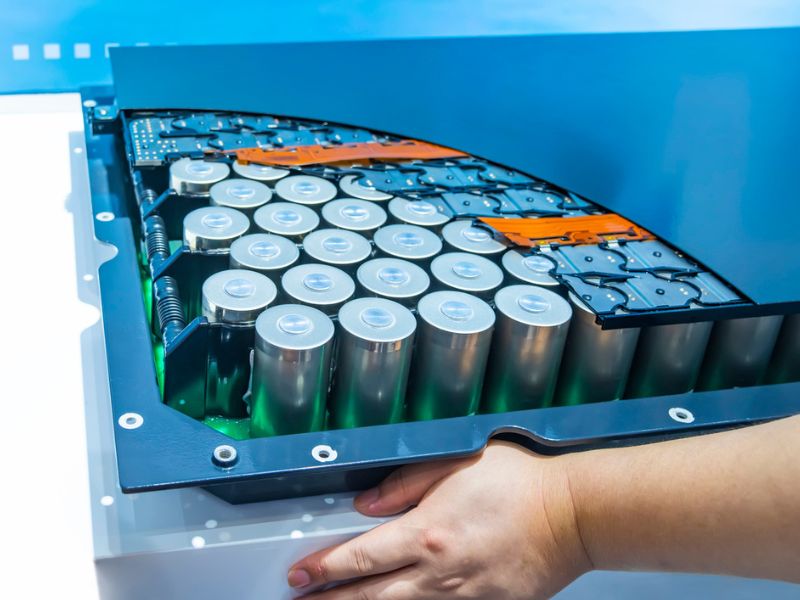
The battery technology powering the electric vehicle revolution is advancing at remarkable speed, with charging times a fraction of what they were just a few years ago. China’s leading electric vehicle manufacturer, BYD, recently unveiled a system capable of charging in as little as five minutes. This technological leap could mark a pivotal moment for the entire electrical storage sector.
EV Adoption is increasing alongside these technological developments. China, the world’s largest automotive market, saw electric car sales reach 11 million units in 2024, accounting for approximately 50% of all new vehicle sales. This mass-market adoption has created economies of scale that benefit the entire battery ecosystem.
While electric vehicles capture headlines, the energy sector is an even larger frontier for battery technology deployment, as the transition to renewable energy sources creates fundamental demand for storage solutions that can balance intermittent generation from wind and solar installations.
For investors positioned to capitalize on these developments, equities-based financing offers a pathway to unlock funds for investment in new technologies without liquidating existing long-term positions. EquitiesFirst specializes in providing these financing solutions, enabling investors to maintain their current holdings while gaining exposure to emerging opportunities in battery technology.
Energy Storage for Sustainable Solutions
According to the International Energy Agency, battery storage capacity for renewable energy systems needs to reach 1,200 gigawatts globally by 2030, up from just 86 gigawatts in 2023. This 14-fold increase represents one of the most significant infrastructure developments of the coming decade.
The environmental impact is equally substantial. The IEA projects that batteries will be responsible for nearly one-fifth of the carbon dioxide emissions reductions needed by 2030 to achieve net-zero emissions by mid-century. It is an environmental imperative that adds policy support to the economic case for battery technology investment. Global financing specialists have developed solutions to help investors access these growing market opportunities while maintaining their existing investment positions.
Military Applications Expanding Battery Demand
Battery technology is also finding increasing application in defense sectors, particularly for military drones. Battery-powered unmanned aerial vehicles have become essential components of modern warfare, creating specialized demand for high-energy density power solutions.
Rising defense budgets, particularly in Europe, are accelerating investment in battery-powered systems. The market for military drones has expanded dramatically, creating substantial demand for advanced battery solutions that can extend range and payload capacity while reducing charging times. Strategic investment advisors have recognized the potential in these dual-use technologies, offering specialized financing solutions for investors looking to participate.
And these military applications often drive innovation that later finds broader commercial use. The defense sector has particular requirements for battery performance, including operation in extreme conditions, rapid charging capabilities, and high energy density. These demanding specifications often push technological boundaries, creating advancements that could eventually benefit civilian applications.
For investors, this dual-use potential of battery technologies creates opportunities for positions across military and civilian markets. Alternative financing approaches can provide the flexible capital needed to pursue these opportunities while maintaining long-term investment positions.
Navigating Uncertainty
Despite strong long-term fundamentals, the battery sector is experiencing near-term uncertainties. Policy revisions in several major markets have altered the outlook. In the United States, recent regulatory adjustments have reduced electric vehicle incentives. In Europe, governments are relaxing timelines for phasing out combustion engine vehicles.
Commodity price volatility, particularly in lithium and nickel markets, also introduces uncertainty for producers and investors. Meanwhile, emerging battery chemistries—such as solid-state and sodium-ion technologies—may disrupt current supply chains and render some assets less competitive.
Meanwhile solid-state batteries and other alternatives are emerging as potential replacements for conventional lithium-ion technology. These innovations could reshape the competitive landscape, creating both risks and opportunities for investors positioned across the battery value chain.
The type of equities-backed financing offered by equity-based financing solutions provides flexibility for balancing this mix of uncertainty and potential. By accessing immediate liquidity financed against existing equity positions, investors can maintain their core holdings while deploying capital toward time-sensitive opportunities across the battery ecosystem.
Underlying demand fundamentals remain stable. The IEA reports that the energy sector accounts for more than 90% of global battery consumption. This concentration of demand across utility-scale storage, residential systems, and commercial applications lends structural support to long-term investment.
Regional Development and Supply Chain Security
Further bolstering the long-term outlook, countries around the world are pursuing battery production capacity as a matter of both economic development and energy security. Indonesia exemplifies this approach, leveraging its abundant nickel reserves to develop an integrated EV supply chain. By 2027, Indonesia aims to become one of the world’s top three producers of EV batteries. This national strategy could reshape global supply chains for critical battery materials.
India has similarly established ambitious goals, targeting energy independence by 2047. Battery technology and domestic manufacturing capacity are central to this strategic objective, reducing dependence on imported fossil fuels while supporting renewable energy deployment.
The global objective of tripling renewable energy capacity by 2030 will require massive deployment of battery storage systems across all regions. This infrastructure buildout could be an investment opportunity, particularly for those with the capability to deploy capital across geographies and technologies.
Shifting global supply chains can disrupt established market positions, but also create new entry points for capital deployment.
Outlook for Long-Term Investors
Despite market fluctuations, the battery industry remains anchored to powerful, long-duration trends. Transportation electrification, renewable energy integration, and defense sector modernization continue to drive demand for high-performance batteries.
These trends are likely to persist for decades, supported by policy targets, decarbonization goals, and ongoing innovation. However, the sector’s evolution introduces inherent volatility, requiring strategies that combine resilience with adaptability.
Equities-based financing may enable investors to navigate this volatility while maintaining long-term positioning. This approach facilitates targeted capital deployment into high-growth areas of the battery value chain—whether upstream in materials, midstream in production technologies, or downstream in integration and end-use applications.
Battery technologies are not limited to a single application or industry. Their relevance across sectors and geographies provides diversification benefits and opens the door to sustained investment. A long-term perspective, paired with the flexibility to act on time-sensitive opportunities, will likely remain essential for capturing value as the energy transition continues.
Disclaimer: This article contains sponsored marketing content. It is intended for promotional purposes and should not be considered as an endorsement or recommendation by our website. Readers are encouraged to conduct their own research and exercise their own judgment before making any decisions based on the information provided in this article.