
Email marketing is still one of the most reliable ways to build a connection with your audience. Compared to social media, where algorithms decide who sees your posts, email gives you direct access to inboxes. It’s cost-effective, measurable, and can be automated, making it especially useful for small businesses, creators, and first-time marketers. Today’s email marketing services offer free plans, drag-and-drop editors, personalization, templates, and even AI—helping beginners launch professional campaigns without coding or design skills.
To help you choose the right fit, we’ve put together this email marketing services comparison and review of five platforms: SendPulse, Mailchimp, Beehiiv, Yotpo Email, and Privy. Each caters to slightly different audiences, but all can be valuable depending on your goals.
1. SendPulse
SendPulse is designed as an all-in-one marketing hub, perfect for small businesses, educators, nonprofits, and e-commerce brands. Its free plan is generous, covering up to 500 subscribers and 15,000 emails per month, making it attractive for beginners who want to test email marketing without budget stress. The platform combines email with SMS, chatbots, landing pages, and even online course building, which means you can centralize your entire communication strategy. What makes SendPulse stand out is its balance between powerful features and an approachable interface—so even if you’re just starting out, you can access advanced marketing tactics without feeling lost.
Who benefits most: small and medium businesses, startups, or creators who want email plus additional channels under one roof.
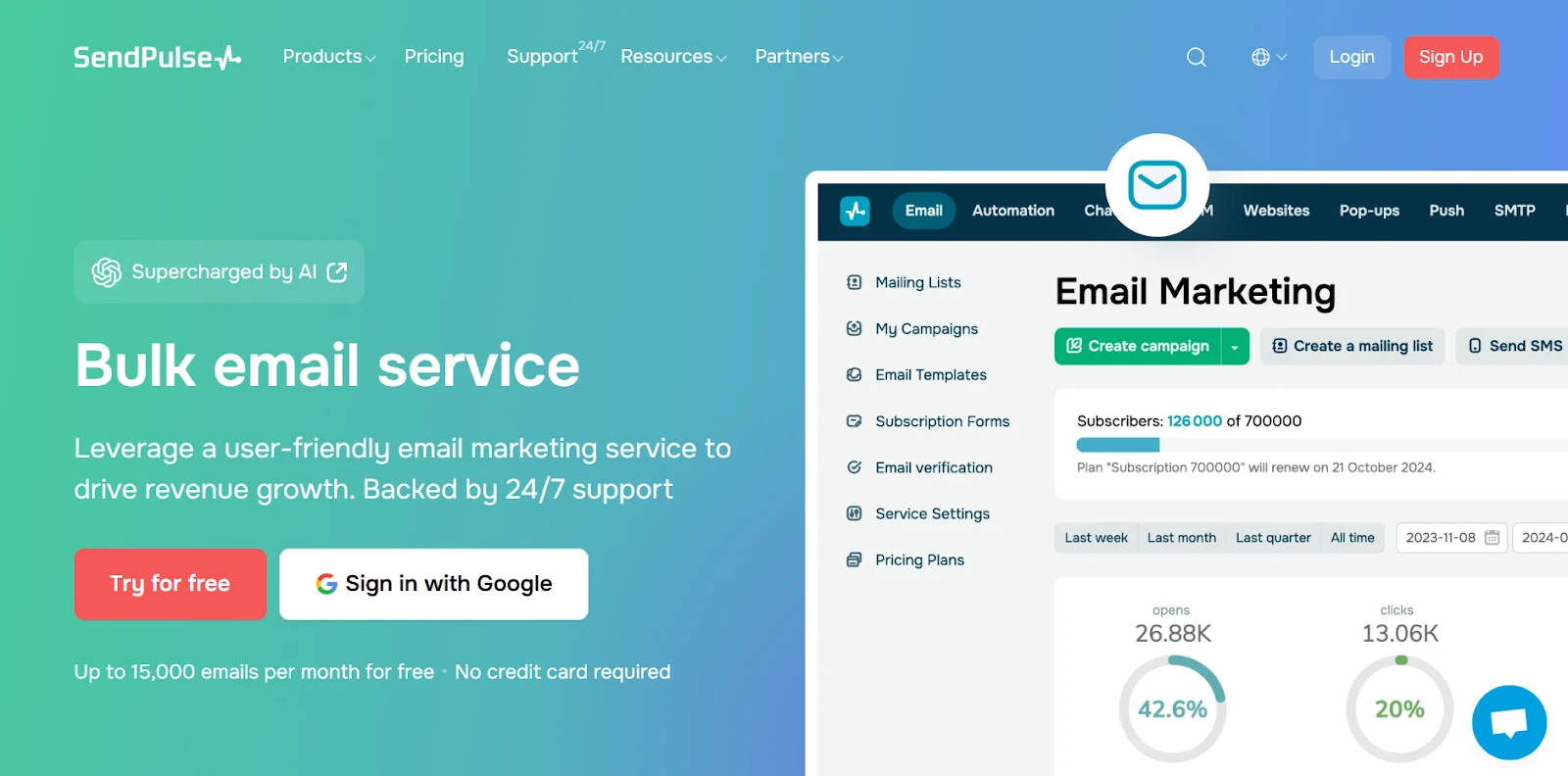
Free plan and limitations: Up to 500 subscribers and 15,000 emails per month, plus 100 free email validations. Includes Automation 360 with up to 5 flows, a drag-and-drop builder, and 130+ templates. Paid plans start around $8/month, unlocking more storage, segmentation depth, and additional automation events.
Features beginners care about:
- Templates: 130+ ready-made, responsive email templates included in the free plan.
- Personalization & segmentation: Fixed and dynamic segments by tags, custom variables, and behavior.
- Email validator: Yes—100 free verifications monthly, auto-removes bounces, detects typos.
- Responsive emails: All templates are mobile-optimized.
- Automation 360 with multi-step workflows, filters, if/else logic.
- Built-in CRM to manage customer data alongside campaigns.
- Omnichannel automation (Email + SMS + Web push + Chatbots).
- AI usage: AI subject line and content suggestions built in.
- Mobile apps for iOS and Android to manage campaigns on the go.
- Drag-and-drop builder: Yes, full editor with HTML option.
- Support & learning: 24/7 chat, phone, email; Help Center; SendPulse Academy with free online courses.
SendPulse’s biggest strength is that it lets you start simply—using templates, drag-and-drop, and prebuilt workflows—while leaving room to grow into advanced segmentation and AI-driven campaigns. For marketers at the beginner stage, this ensures you won’t outgrow the tool quickly.
2. Mailchimp
Mailchimp is one of the most recognized names in email marketing, especially popular among small businesses and solopreneurs. Its reputation rests on an intuitive interface and a wide range of professional-looking templates, making it easy for a beginner to create polished campaigns. The free plan supports up to 500 contacts and 1,000 monthly sends, which is useful for very small lists. As your business grows, Mailchimp integrates landing pages, websites, and even social media ads, so you can experiment with more than just email.
Who benefits most: small businesses and startups looking for brand recognition and a straightforward design experience.
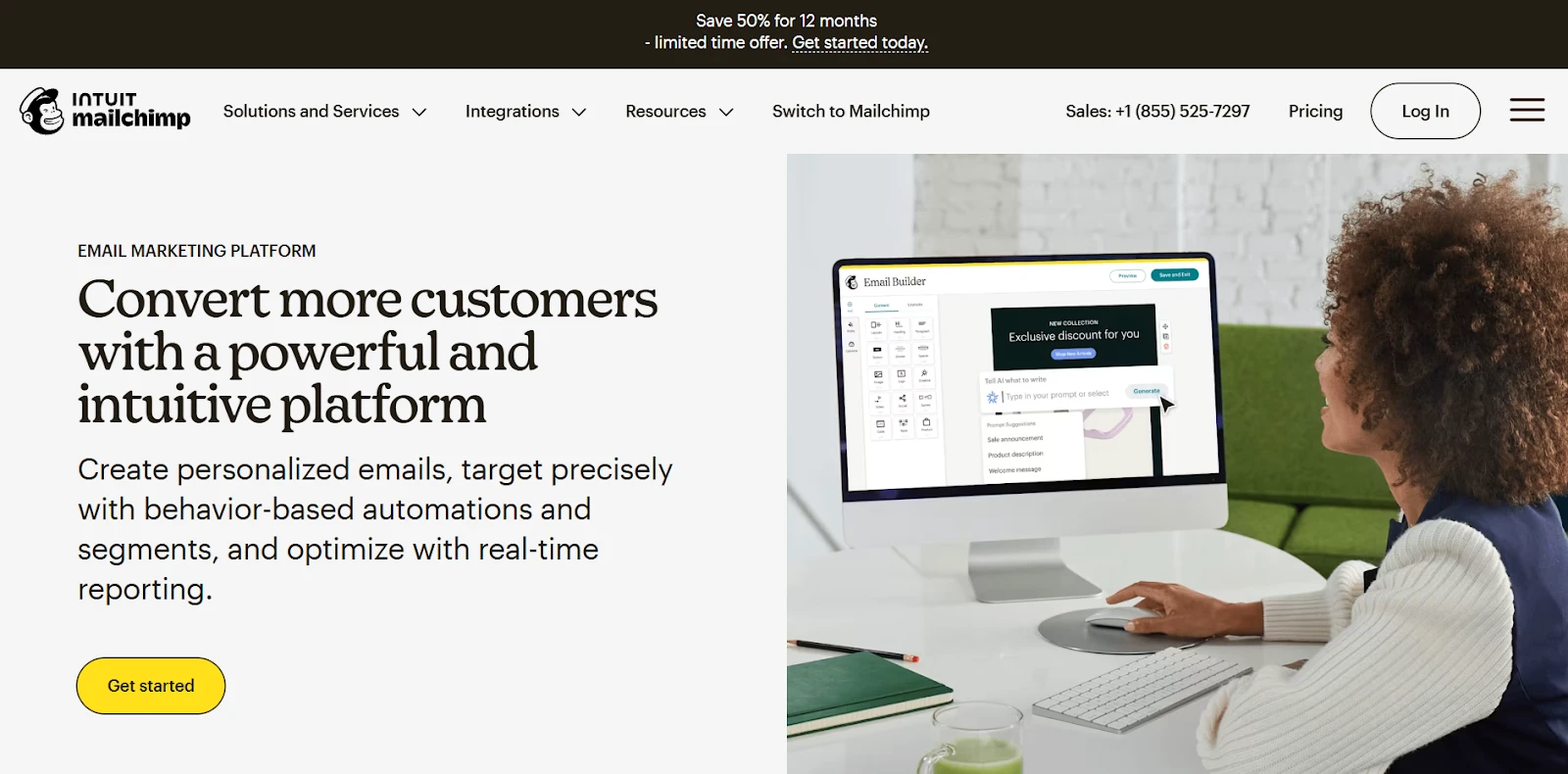
Free plan and limitations: Up to 500 contacts and 1,000 sends per month. Limitations include restricted automation and support—advanced workflows are only on higher tiers. Paid plans start around $13/month for 500 contacts, scaling quickly as lists grow.
Features beginners care about:
- Templates: Large gallery of modern, customizable, responsive templates.
- Personalization & segmentation: Rule-based segments (up to 5 conditions on the free plan), including demographics and engagement.
- Email validator: Basic built-in filter (“Omnivore”) that flags risky addresses, but not as strong as SendPulse.
- Basic automation, such as welcome emails and abandoned cart reminders.
- Audience segmentation with rules (demographics, behavior, location).
- Responsive emails: All templates optimized for mobile.
- AI usage: Creative Assistant generates branded visuals and layouts.
- Drag-and-drop builder: Very intuitive WYSIWYG editor.
- Support & learning: Knowledge Base, how-to videos, community forums. Live chat support is only for paid plans.
Mailchimp’s main limitation is cost, as prices rise quickly when your contact list grows. But for those just starting with a small list, it’s a friendly platform with strong design capabilities.
3. Beehiiv
Beehiiv is tailored for creators, publishers, and media startups that want to focus on growing newsletters rather than complex marketing funnels. Its free plan supports up to 2,500 subscribers, which is generous for those building their first audience. The platform puts less emphasis on automation and more on monetization features like subscriptions, referral programs, and ad networks. The interface is simple and clean, making it easy for non-technical users to publish and distribute content quickly.
Who benefits most: content creators, bloggers, and newsletter entrepreneurs.
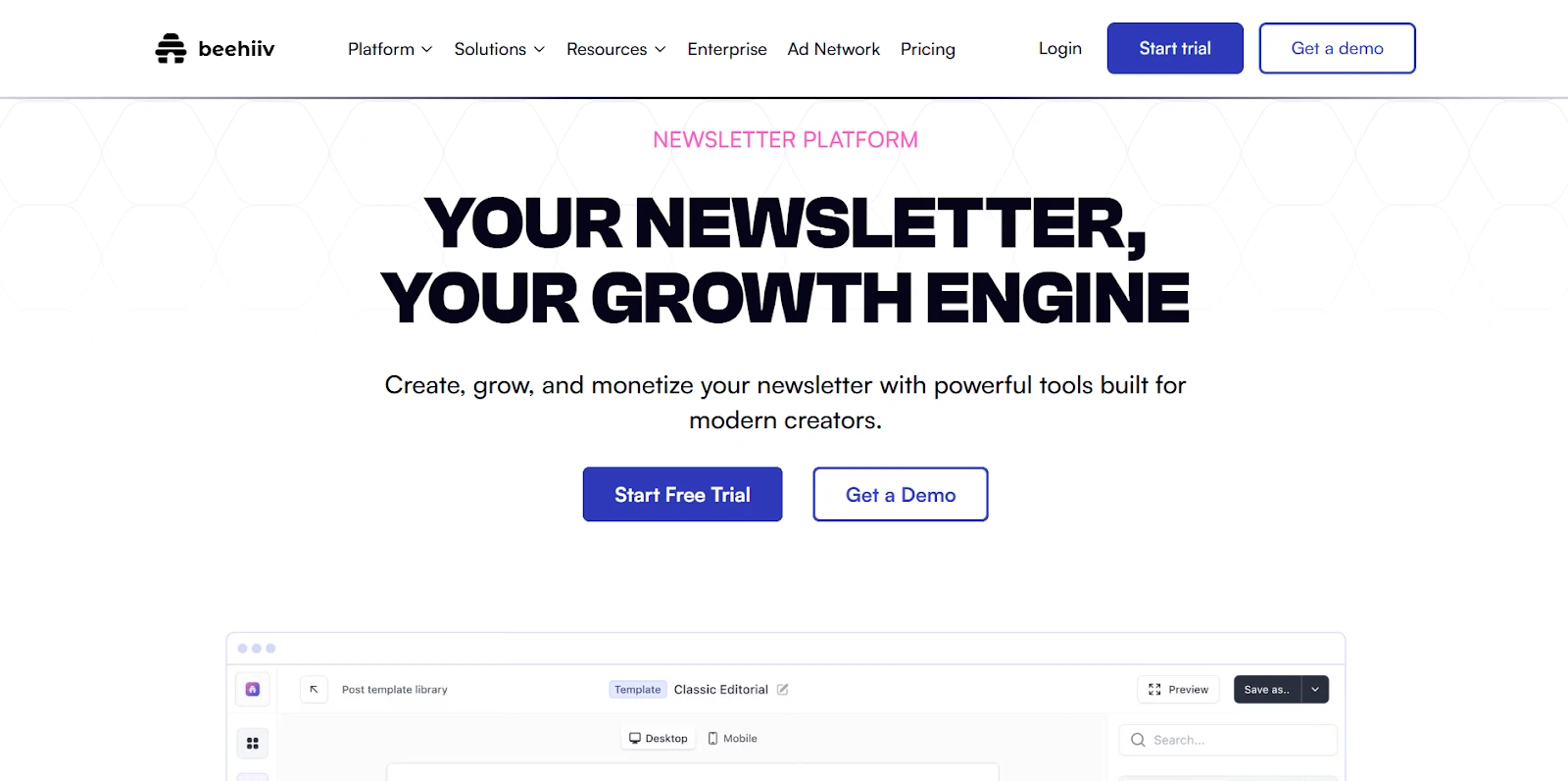
Free plan and limitations: Launch (free) plan covers up to 2,500 subscribers with unlimited sends, custom domains, basic analytics, and signup forms. Lacks advanced automation and segmentation. Paid plans start at ~$49/month, adding referral programs, AI tools, and deeper analytics.
Features beginners care about:
- Templates: Newsletter-style editor with simple content blocks (less design flexibility than SendPulse or Mailchimp).
- Personalization & segmentation: Segmentation by subscriber data and engagement (opens, clicks).
- Email validator: No built-in validation; relies on double opt-in and bounce suppression.
- Responsive emails: Yes—clean and mobile-friendly by default.
- AI usage: Available on paid plans (content suggestions, analytics support).
- Drag-and-drop builder: Minimal block editor (simpler than full drag-drop).
- Monetization tools (paid subscriptions, ad partnerships).
- Support & learning: Help Center, blog, how-to guides; email support is responsive, but no 24/7 live support.
Beehiiv’s clean interface and creator focus make it ideal for those who want to grow, monetize, and engage audiences without marketing complexity.
4. Yotpo Email
Yotpo Email is an e-commerce-centric service, tightly integrated with Yotpo’s suite of review, loyalty, and SMS tools. It’s a good choice for online stores that want to connect customer reviews, rewards programs, and email marketing into one system. While it doesn’t offer a permanent free plan, a free trial is available, and pricing is usually tailored to growing e-commerce brands. The editor is intuitive and optimized for product-centric campaigns, making it straightforward to launch promotional emails.
Who benefits most: ecommerce stores, particularly those already using Yotpo’s review and loyalty solutions.
Free plan and limitations: Includes 1,000 free emails per month. Paid plans are usage-based, starting around $79/month. Every Yotpo Email account includes a monthly allowance of free emails, though the exact number depends on when the account was opened and the plan you’re on. After that quota, pricing is usage-based. For instance, sending between 1,000 and 100,000 emails in a month costs $1.50 per 1,000 emails, while sending 100,000 to 1,000,000 emails lowers the rate to $1.00 per 1,000 emails.
Features beginners care about:
- Templates: Professionally designed templates optimized for e-commerce.
- Personalization & segmentation: Predictive, AI-driven segments (e.g. who’s likely to buy again).
- Email validator: No dedicated validator; bounces/complaints are auto-managed.
- Responsive emails: Yes—templates are optimized for product-centric campaigns.
- Automation for cart abandonment, product recommendations, and re-engagement.
- AI usage: Predictive segmentation and product recommendation engines.
- Drag-and-drop builder: Yes—intuitive builder, integrates with Canva.
- Support & learning: Help Center, onboarding, and dedicated support for higher tiers.
Yotpo Email may be overkill for someone not running an online store, but for retailers invested in the Yotpo ecosystem, it’s a natural extension of their marketing toolkit.
5. Privy
Privy is built for small e-commerce businesses that need quick, effective tools for conversion. It’s especially popular among Shopify merchants who rely on pop-ups, discount codes, and cart abandonment emails to drive sales. Privy’s free plan is very limited (only up to 100 contacts), but it offers a good starting point for testing pop-ups and forms. The interface is simple, and setting up a campaign can be done in minutes without any technical skills.
Who benefits most: small online shops and solopreneurs selling on Shopify or similar platforms.
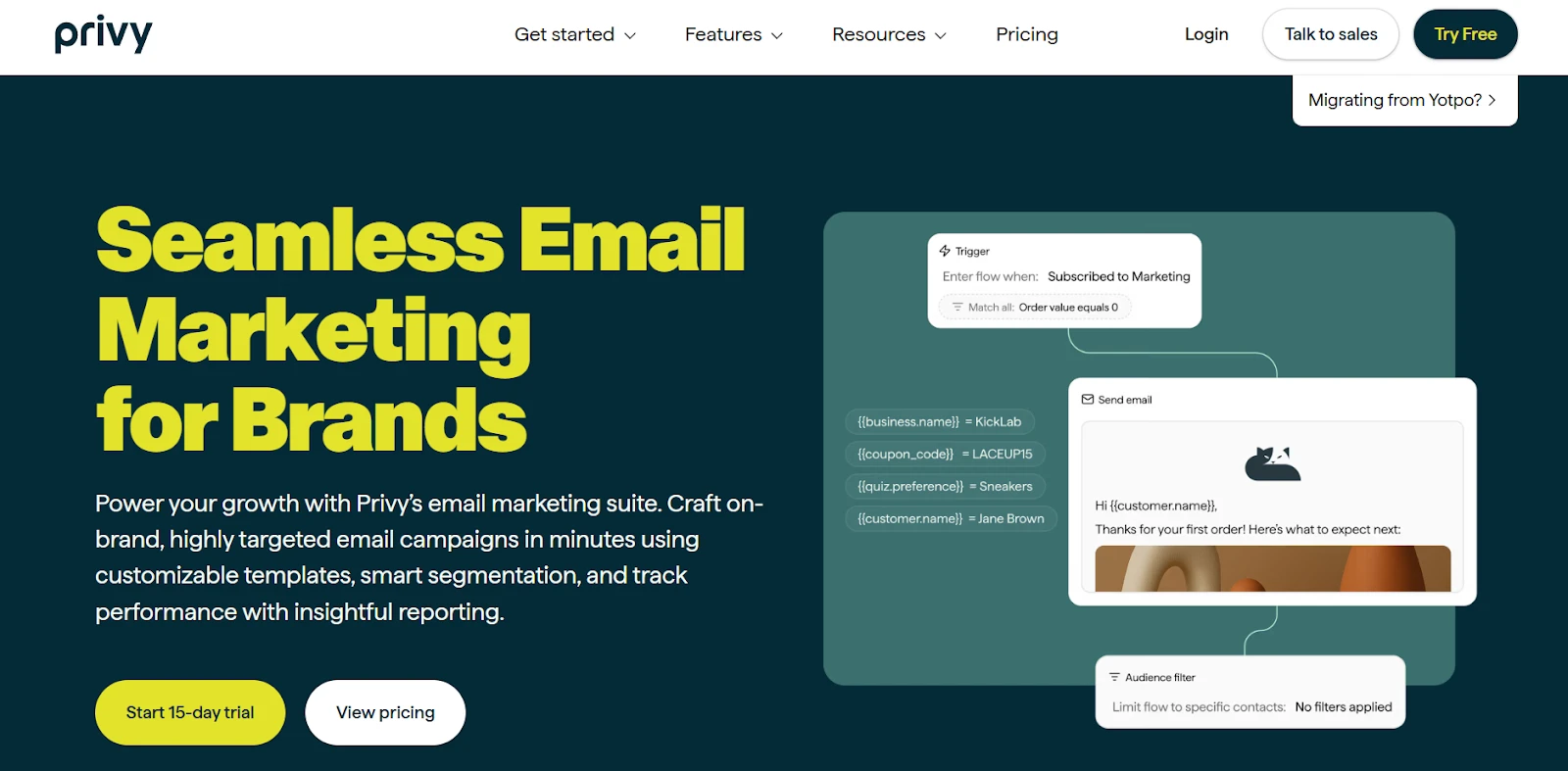
Free plan and limitations: Offers a very limited 15-day free trial (up to 100 contacts). Paid plans start at around $30/month for ~1,500 contacts. Feature depth is limited—advanced automations and targeting are gated behind higher tiers.
Features beginners care about:
- Templates: Pop-up templates and simple email layouts (not as diverse as Mailchimp/SendPulse).
- Personalization & segmentation: Real-time e-commerce segmentation (new vs repeat buyers).
- Basic email editor with autoresponders.
- Cart abandonment emails to recover lost sales.
- Email validator: No built-in validator; bounces are managed automatically.
- Responsive emails: Yes, templates and pop-ups adapt to mobile screens.
- AI usage: None notable.
- Drag-and-drop builder: Yes—for pop-ups and simple email layouts.
- Support & learning: Knowledge base, webinars, and email support; live chat on paid plans.
Privy is not a full-fledged email marketing platform—it’s best thought of as a conversion toolkit. For beginners running an online store who want to boost immediate results, it provides simple but effective options.
Wrapping Up: Choosing the Right Email Marketing Service
Each platform caters to different needs:
- Mailchimp: user-friendly design, strong template library, but rising costs.
- Beehiiv: ideal for creators and newsletter monetization, though limited automation.
- Yotpo Email: excellent for ecommerce brands needing loyalty + reviews + email integration.
- Privy: best for Shopify merchants needing quick conversion boosts.
But overall, SendPulse is the best email marketing service for beginners in 2025. It combines a generous free plan, a true drag-and-drop builder, AI content tools, email validator, omnichannel automation, and 24/7 support. Add to that a free learning academy and CRM, and you get a tool that supports beginners from their first campaign to advanced strategies—all without forcing you to switch platforms as you grow. For newcomers seeking a reliable, scalable, and educational entry point into email marketing, SendPulse offers the best balance of features, support, and long-term value.
As email marketing continues to evolve, the rise of AI-powered solutions is taking personalization and efficiency to the next level. The tools we’ve covered are excellent starting points, but if you’d like to explore how artificial intelligence is shaping the broader marketing landscape, don’t miss this detailed guide: AI-powered marketing software.
Disclaimer: This article contains sponsored marketing content. It is intended for promotional purposes and should not be considered as an endorsement or recommendation by our website. Readers are encouraged to conduct their own research and exercise their own judgment before making any decisions based on the information provided in this article.