
By Anthony Neal Macri
As artificial intelligence becomes embedded in global business operations, assumptions about full automation continue to grow. Yet real-world data tells a more nuanced story. Drawing on insights from a large industry survey, this article examines why human judgment remains central to translation quality, even in AI-augmented workflows.
Artificial intelligence has rapidly transformed the way organizations operate across borders. In translation and localization, machine translation (MT) and AI-assisted tools are now standard components of large-scale workflows. Faster turnaround times and increased throughput have become baseline expectations rather than competitive advantages.
But beneath the surface of this technological progress lies a critical question for global businesses: has AI meaningfully reduced the need for human expertise in ensuring quality, or has it simply reshaped where human judgment is applied?
Recent findings from a large industry survey of localization professionals suggest the latter.
Automation Is Widespread, But Not Autonomous
The insights discussed here draw on responses from a large industry survey conducted among professional translation and localization practitioners, primarily users of AI-assisted quality assurance platforms. The survey focused on real-world adoption of machine translation, post-editing practices, and quality assurance workflows in production environments.
Across organizations managing multilingual content at scale, the adoption of machine translation is now near-universal. AI-powered tools assist with everything from terminology checks to consistency analysis, enabling teams to process volumes that were unthinkable just a decade ago.
However, in practice, automation is not the same as autonomy.
Survey respondents consistently reported that a substantial share of AI-generated translation output still requires human post-editing before delivery. In many workflows, between one-third and one-half of machine-generated content is manually revised, despite sophisticated models and increasingly refined prompts.
This finding challenges a common executive assumption: that better models alone will eliminate the need for review. Instead, AI accelerates the first draft, while humans remain responsible for determining whether the output is actually usable.
Quality Assurance Remains a Critical Path Activity
One of the most striking insights from the survey is how much time organizations still allocate to quality assurance (QA), review, and post-editing.
Even in AI-augmented environments, respondents reported that QA activities account for roughly 10–25% of total project time. Far from disappearing, quality review remains a critical path activity; particularly close to delivery deadlines, when errors carry operational, legal, or reputational risk.
This persistence is not due to resistance to automation. Instead, it reflects the inherent complexity of language. While AI is effective at detecting patterns and surface-level inconsistencies, it struggles with contextual meaning, tone, and domain-specific nuance, precisely the elements that matter most in business communication.
Efficiency Gains Do Not Automatically Translate into Margin Gains
Another important, and often overlooked, implication of AI adoption is its effect on economics.
While many respondents acknowledged that AI-assisted QA tools have reduced manual effort and improved throughput, a significant portion also reported continued or even increased margin pressure. Faster workflows, in other words, do not necessarily result in higher profitability.
This reflects a broader dynamic seen across technology adoption cycles: efficiency gains are often absorbed by competitive pricing rather than captured as surplus value. As AI capabilities become commoditized, speed alone ceases to be a differentiator.
For decision-makers, this raises an uncomfortable truth: automation without strategic workflow design may improve productivity without improving outcomes.
What Practitioners Value Most in AI Tools
When asked what factors most influence tool adoption, respondents did not prioritize novelty or technical sophistication. Instead, one theme emerged consistently: ease of integration into existing workflows.
Organizations favor tools that reduce friction, fit naturally within established processes, and support human decision-making rather than disrupt it. Standalone systems that require context switching or retraining are viewed as liabilities, regardless of their theoretical capabilities.
This preference offers a broader lesson for enterprise AI adoption: value is created not by replacing human judgment, but by enabling it to operate more efficiently and with better information.
Human Judgment as the Strategic Layer
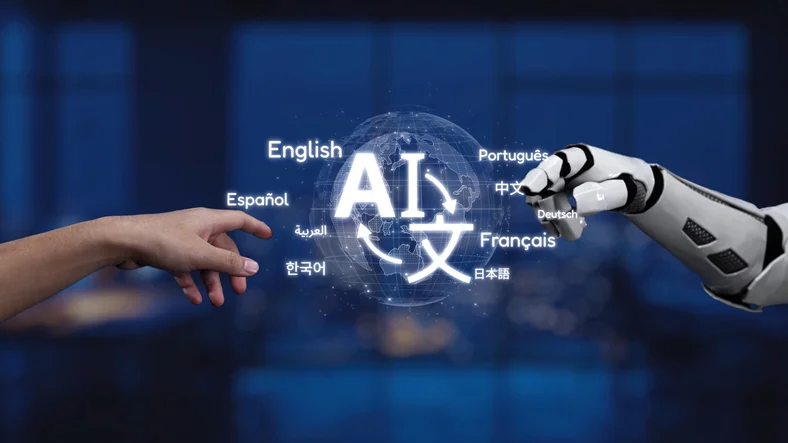
Taken together, the findings suggest that AI has not removed humans from translation workflows; it has elevated their role.
Rather than focusing on mechanical correction, human reviewers increasingly act as:
- Context validators
- Risk mitigators
- Domain experts
- Final arbiters of meaning and intent
These responsibilities are difficult to automate precisely because they depend on experience, cultural understanding, and business context; qualities that remain outside the reach of current AI systems.
In this sense, AI does not eliminate human expertise; it clarifies where that expertise is indispensable.
Implications for Global Business Leaders
For organizations operating across languages and markets, the lesson is clear: successful AI adoption requires more than deploying powerful tools. It requires designing workflows that recognize where machines add speed, and where humans add judgment.
Leaders who assume full automation as the end state risk underestimating the strategic role of quality oversight. Those who treat AI as a partner, not a replacement, are better positioned to balance efficiency, quality, and sustainability.
As with many forms of applied AI, the competitive advantage lies not in the technology itself, but in how intelligently it is integrated into human systems.
Conclusion
AI has unquestionably changed translation and localization. But it has not changed a fundamental reality: language is not just data; it is meaning, context, and intent.
The evidence from real-world workflows shows that human expertise remains central, not despite automation, but because of it. In the age of AI, the organizations that succeed will be those that understand this balance and design accordingly.