In an era where a 15-second TikTok clip can launch a global hit, you might wonder: do traditional music videos still matter? The answer is more nuanced than ever before. While the landscape has dramatically shifted from the MTV glory days, visual content remains crucial for musicians – it’s just taken on new forms and found new homes across the digital ecosystem.
The Numbers Tell a Complex Story
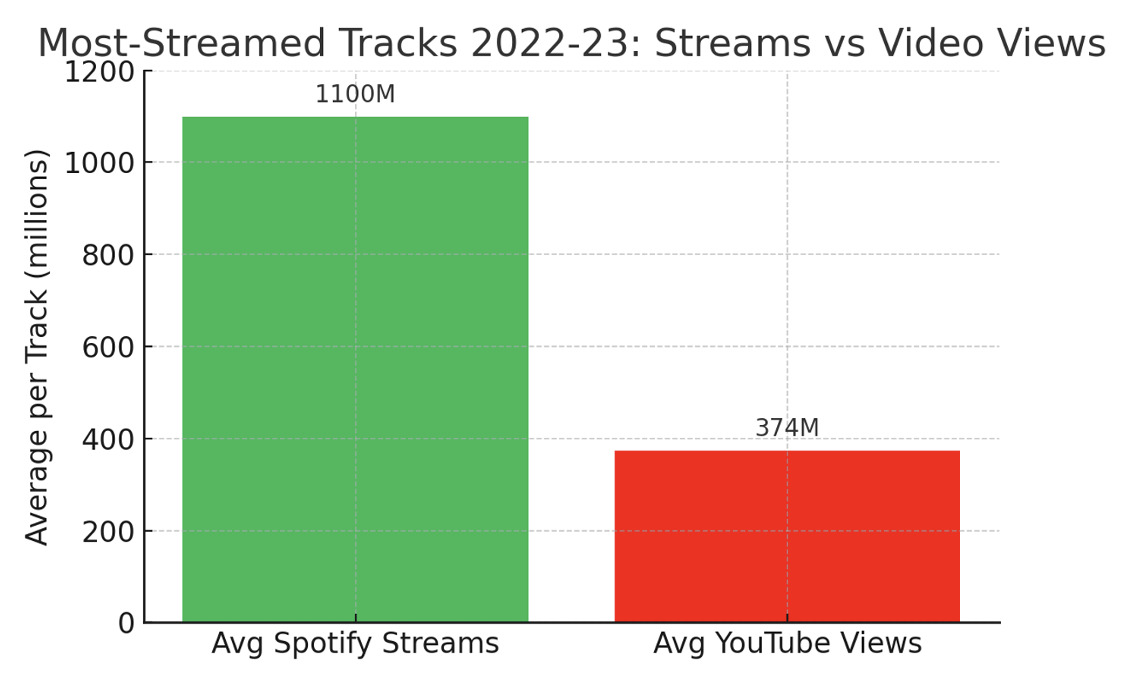
Recent data reveals a fascinating paradox in music consumption. While 90% of top-performing tracks still have official music videos, these videos typically attract only a fraction of their audio counterparts’ plays. The average hit song garners about 1.1 billion Spotify streams but “only” 374 million YouTube views – a significant gap that suggests listeners often discover and enjoy music without ever watching the accompanying visuals.
Yet this doesn’t mean videos are becoming irrelevant. Instead, they’ve evolved into a diverse toolkit that artists use strategically throughout their release cycles. The traditional 3-5 minute narrative music video now shares space with lyric videos, visualizers, vertical clips for Instagram Reels, and bite-sized content for TikTok. Each format serves a different purpose in capturing and maintaining audience attention.
Platform Proliferation: Meeting Fans Where They Are
YouTube remains the undisputed king of music videos, with 2.53 billion monthly active users and generating $36.1 billion in ad revenue. But the real revolution is happening on short-form platforms. TikTok’s 1.6 billion users collectively post 34 million videos daily, many featuring music. Instagram Reels sees 200 billion plays per day, while YouTube Shorts has exploded to similar numbers – a nearly 3x increase year-over-year.
This fragmentation means artists must now think beyond the single “official” video. Successful musicians in 2025 create what industry insiders call a “content creation package” – multiple visual assets that can be deployed across platforms. A typical major release might include the main music video, a lyric video for YouTube searches, Canvas loops for Spotify, behind-the-scenes content for Instagram Stories, and several TikTok-ready clips highlighting the catchiest moments.
The Democratization of Visual Content
Perhaps the most exciting development is how accessible video creation has become. Independent artists no longer need massive budgets to create compelling visual content. Tools like AI music video generators have lowered the barrier to entry, allowing musicians to create professional-looking visualizers and animated content without hiring expensive production teams.
This democratization has led to a “wide net” strategy where quantity and consistency often trump singular high-budget productions. An indie artist filming weekly acoustic sessions on their phone might build a stronger connection with fans than a rival who releases one polished video every six months. The key is maintaining a steady flow of visual content that keeps audiences engaged between major releases.
Genre-Specific Approaches
Different musical genres have adapted to the new landscape in unique ways. K-pop and Latin music continue to invest heavily in traditional music videos, with fans treating video premieres as major events. BTS’s “Butter” garnered 108 million views in its first 24 hours – a testament to coordinated fan engagement.
Meanwhile, indie and alternative artists often favor authenticity over polish, creating DIY videos that resonate with their audiences’ values. Electronic artists lean into visualizers and abstract animations, while hip-hop has mastered the art of creating viral moments through dance challenges and memes.
The Spotify Revolution
One of the most significant developments is Spotify’s entry into video content. Beyond the Canvas feature (those 3-8 second loops that play during songs), Spotify has begun rolling out full-length music videos to Premium subscribers in select markets. Early data shows that users who watch a video on Spotify are 34% more likely to replay the song the following week – a compelling statistic that suggests integrated video content deepens listener engagement.
Looking Forward: Integration and Innovation
As we navigate 2025, the lines between audio and visual, professional and user-generated, long-form and short-form continue to blur. The future likely holds even more integration – imagine AI-generated visualizers that respond to your mood, interactive videos where viewers choose their own adventure, or AR experiences that bring performances into your living room.
For musicians, the message is clear: visual content isn’t optional, but it’s also more flexible than ever. Whether you’re investing in a cinematic masterpiece or cranking out daily TikToks, the key is understanding your audience and meeting them where they are. In a world where attention is the ultimate currency, music videos – in all their evolving forms – remain one of the most powerful tools for capturing and keeping it.
The music video isn’t dead; it’s multiplied, democratized, and more essential than ever. It’s just learned to shape-shift for the digital age.
Disclaimer: This article contains sponsored marketing content. It is intended for promotional purposes and should not be considered as an endorsement or recommendation by our website. Readers are encouraged to conduct their own research and exercise their own judgment before making any decisions based on the information provided in this article.