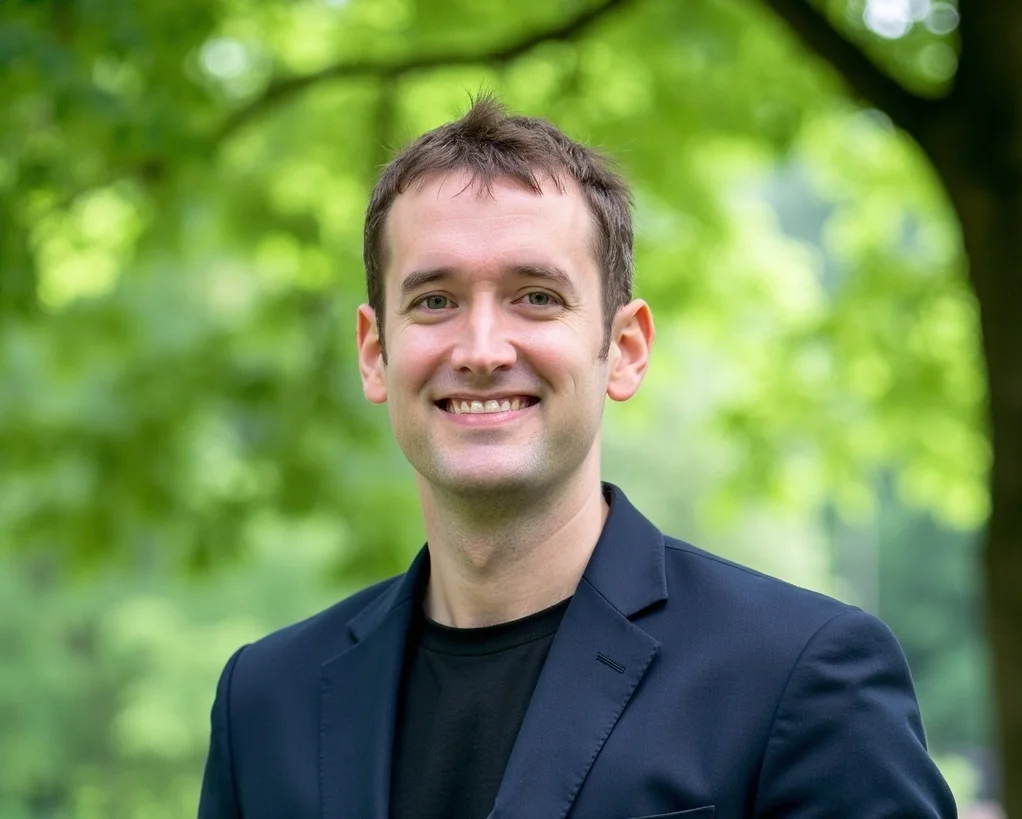
When you search for John Cambridge online, you find much more than just a scientist, educator, and founder of the original concept of the John Cambridge Insectarium. You find a builder of institutions, teams, ethical frameworks, and educational programs that transform our relationship with the natural world.
Most notably, as a scientist and educator, John put insect science at the center of his career in a way that other scientists and educators had not while not just teaching ‘science’ but creating meaningful interaction, rigor, and inspiration into the exploration of insects. Dr. Cambridge holds a PhD in Entomology from Rutgers University and has created more than six other life sciences ventures over his career. His career is not just teaching about science, it is redefining the experience of science.
Science with Purpose: From Idea to Community
A major theme in Dr. John Cambridge’s career is bringing tangible science experiences to life. In every situation—no matter if it is handling insects live in the classroom or educating educators how to engage in immersive science experiences—his motto is to show, not tell. Through his newest nonprofit educational venture Village Edu, and based in the D.C. metro area, he is aligning the scientific approach with public accessibility.
The heart of his mission is simple, yet profound: to stimulate scientific literacy through action-based education. Dr. Cambridge thinks, “Education should be actionable.” “We are not showing kids about insects. We are showing every level of learning about insects.”We show them how to observe them, how to think critically about them, and how to apply that knowledge to improve their communities’ health and sustainability.”
Village Edu’s flagship programming—the Pollinator Patch series—allows students to observe and record all the ways pollinators are faring, while also gaining a broader understanding of ecological scenarios related to species phenology and taking real action toward biodiversity preservation. It is science that lives beyond the textbook.
Ethical Leadership in Nonprofit Science
While public trust in many institutions is highly scrutinized, John Cambridge is a leader who has maintained a core commitment to ethical leadership in the nonprofit sector. He says, “Ethical leadership is about balancing the needs of your mission, your team, and the communities you are serving.” This is apparent in the way Village Edu cultivates a sustainable development stance of transparency and planning for long-term community benefit.
Cambridge recognizes that burnout is detrimental to any mission-based organization, most especially in the education and science communications fields. That is why he is patient and plans near and long-term. “Burning out your staff for short-term gains is never worth it,” he states. “This is a marathon, not a sprint.”
This patient and calculated style of leadership is emblematic of the John Cambridge Insectarium legacy. Even as he pioneers new models of learning through Village Edu, the ethics have remained the same: working for the public, supporting the team, and never sacrificing scientific integrity for convenience.
Mentorship and a Culture of Growth
Finding a team of people who are passionate about educating, scientists, and science literacy is not a small feat. Cambridge stewards a commitment to mentorship, especially regarding early-career professionals.According to Cambridge, “A great manager not only cares about their employees’ work – they care about what’s in their best interest as well.”
Village Edu employs many young teachers, and Cambridge believes in their development as a long-term strategy. “We want to make what they’re doing here, something they take pride in looking back on and when that happens, much of the other stuff works itself out.”
Ultimately, it creates a work culture that is fundamentally positive and forward-thinking, and something that is often absent from more traditional academic or museum environments. Many of these newly minted educators will embark on their career carrying with them the values and attitudes developed while working with Cambridge – he’s steered them to multiply his small influence throughout the science education landscape.
Science Education That Knows Kids Are Smart
One of the key principles of John Cambridge’s educational philosophy is to never assume a child can’t learn something.
He and his team at Village Edu take complex concepts from biology, which are often reserved for graduate level classes, and make lessons for elementary students that they can both understand and enjoy. “Kids are amazing at learning,” he explains. “Our public education system often forgets how smart kids are.”
Cambridge doesn’t want to water down or oversimplify science – he wants students to learn the appropriate language, and he has confidence that they can learn precise language, knowing they will learn and apply the terms properly. And they do.
The evidence is in the results. Parents frequently comment that conversations over dinner now often contain new insect vocabulary. To the point they’re pulling out their phones to search whatever they’ve picked up that day.
John Cambridge Insectarium Legacy and Evolution
Although John Cambridge Insectarium has become a term that people associate with the work he does to connect the public with his science, Cambridge is intentionally changing into something beyond stationary or locked down museum models. Moreover, Village Edu’s operational model is a reflection of that change.
Village Edu does not operate a walk-in zoo or museum. Rather, it operates mobile programs–bringing the science to where it is needed: the classroom, parks, or other community spaces. Our animal housing facility in Bethesda, Maryland, is a permitholding training location and specimen housing facility; not a destination for the public.
“Just because we are not open to the public, does not mean that the work we do is not legitimate,” Cambridge says. “We have taken steps previously to ensure that all of the permits and licenses to house every animal are done ethically and in compliance with all local, state, and federal regulations. That is part of the ethic we bring into the space.”
Reclaiming a Narrative Through Action
In the modern public information age, many public figures are under a microscope. John Cambridge’s solution to truth isn’t to argue or focus too heavily on it, but rather to act.
“I am naturally an optimist,” he says.“While the media is what it is, the work we’re doing now will speak for itself.” His eyes and heart are looking ahead: building exceptional science programming, broadening the reach of Village Edu, and staying true to truth and transparency.
Cambridge states, “If someone searching for John Cambridge [online] came across some antiquated or misleading information about [him], the answer is simple: reach out. I love meeting people, showing them what we are building, and getting them jazzed about the natural world. That’s what matters.”
Why it Matters Now
At a time when the planet is experiencing biodiversity loss, ecological imbalance, and a disconnection between humans and the natural world, it is educators like John Cambridge who are doing much more than teaching; they are preparing stewards of the future. With Village Edu and the evolution of his original vision for the Insectarium, John Cambridge is living proof that ethical and passionate hands-on science education can bring science to regenerate young minds and a whole community.