Busan, South Korea’s vibrant coastal metropolis, is a destination that blends urban excitement with natural beauty. As the second-largest city in the country, it’s often referred to as Korea’s “maritime capital” because of its bustling ports, golden beaches, cultural heritage, and stunning mountains.
For travelers seeking a mix of city life and seaside charm, Busan delivers an unforgettable experience. With attractions ranging from modern skyscrapers to traditional markets, and from serene temples to lively nightlife, Busan offers something for every kind of explorer. For more in-depth insights, visitors often turn to 부산비비기 여행 가이드 and 부산비비기 지역정보, both of which provide curated local recommendations and updated travel tips.
Essential Travel Information
Best Time to Visit Busan
Busan is a year-round destination, but the best seasons to visit are spring (April to June) and autumn (September to November). During these months, the weather is mild, the skies are clear, and festivals are in full swing. Summer draws beach lovers to Haeundae and Gwangalli, while winter offers a quieter, more relaxed atmosphere.
How to Get to Busan
- By Air: Gimhae International Airport connects Busan with major Asian cities.
- By Train: The KTX high-speed rail links Seoul to Busan in under three hours.
- By Bus: Intercity buses run regularly from across the country.
- By Ferry: Busan’s port also offers international ferries to Japan.
Transportation Within Busan
Busan’s metro system is extensive and user-friendly, making it easy to navigate the city. Local buses reach most neighborhoods, while taxis are convenient for short trips. A transportation card (T-money or Cashbee) makes commuting seamless.
Top Attractions in Busan
Haeundae Beach and Gwangalli Beach
Haeundae is perhaps Busan’s most famous beach, stretching with golden sand and lined with luxury hotels and lively cafés. Nearby, Gwangalli Beach offers stunning night views of the Gwangan Bridge, making it a hotspot for evening strolls and festivals.
Gamcheon Culture Village
This colorful hillside village, often called the “Santorini of Korea,” is filled with narrow alleys, street art, and quirky cafés. Its charm lies in its history as a settlement for refugees during the Korean War, later transformed into a vibrant art space.
Jagalchi Fish Market
The largest seafood market in Korea, Jagalchi, is a must-visit for food lovers. Visitors can select live seafood and have it prepared fresh on-site, a cultural and culinary experience that’s truly unique to Busan.
Beomeosa Temple and Spiritual Landmarks
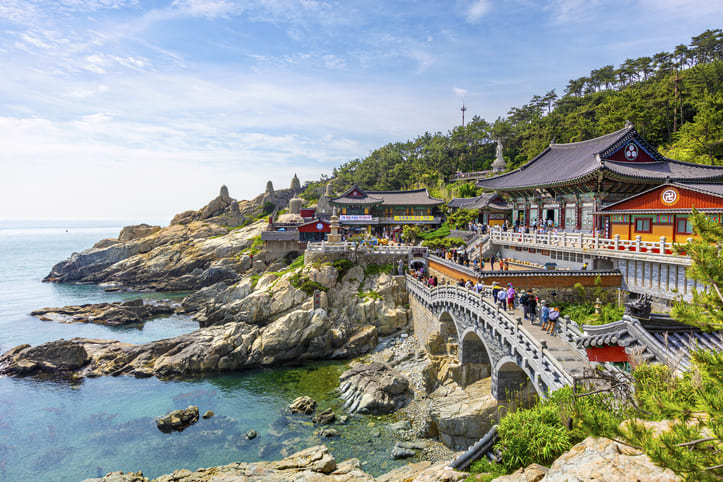
Located on the slopes of Geumjeongsan Mountain, Beomeosa Temple is a peaceful escape into traditional Korean Buddhism. The temple, built in the 7th century, showcases intricate wooden structures and serene hiking trails.
Busan Tower and Yongdusan Park
For panoramic city views, head to Busan Tower in Yongdusan Park. The park itself is a relaxing green space, often hosting cultural performances and exhibitions.
Exploring Busan’s Regions
Downtown and Nampo-dong
Nampo-dong is the cultural heart of Busan, filled with shopping streets, street food vendors, and attractions like BIFF Square.
Centum City and Modern Landmarks
Home to Shinsegae Centum City, the world’s largest department store, this district showcases Busan’s modern side with luxury shopping, spas, and entertainment centers.
Seomyeon: The Heart of Nightlife
If you’re looking for lively bars, karaoke rooms, and clubs, Seomyeon is the place to be. It’s a bustling district that never sleeps.
Yeongdo Island and Coastal Views
A quieter part of Busan, Yeongdo Island, is famous for its dramatic coastal scenery, fishing villages, and the Taejongdae Resort Park.
Food and Culinary Journey
Famous Dishes: Milmyeon, Eomuk, and Ssiat Hotteok
Busan’s food culture is as diverse as its people. One of the city’s signature dishes is milmyeon, a refreshing cold noodle dish often enjoyed during the summer. Unlike the famous Pyongyang naengmyeon, milmyeon is made with wheat noodles and served in a tangy, icy broth.
Another Busan staple is eomuk (fish cake), which you’ll find everywhere from street stalls to specialty shops. Often skewered and served in warm broth, Busan’s eomuk has a distinct flavor thanks to its fresh seafood base.
For a sweet treat, ssiat hotteok, or seed-filled pancakes, are a must-try. Crispy on the outside and gooey inside, these pancakes are stuffed with brown sugar, honey, and a variety of seeds, offering a delightful crunch.
Street Food Experiences
Food lovers will find endless joy in Busan’s street food culture. From steaming bowls of tteokbokki (spicy rice cakes) to fried dumplings and grilled seafood skewers, the streets of Nampo-dong and BIFF Square are alive with aromas and flavors. Sampling these treats is more than just a meal—it’s part of Busan’s cultural identity.
Traditional Markets and Dining Districts
Markets like Gukje Market and Bupyeong Kkangtong Market are central to Busan’s food scene. Visitors can savor freshly cooked seafood dishes or explore alleyways filled with traditional Korean eateries. Seomyeon, on the other hand, offers modern restaurants and international dining options, making it perfect for all palates.
Nature and Outdoor Adventures
Hiking Trails: Geumjeongsan and Igidae Coastal Walk
Busan is surrounded by mountains and coastline, making it a paradise for outdoor enthusiasts. Geumjeongsan Mountain features ancient fortress walls and scenic trails, offering both history and breathtaking views.
The Igidae Coastal Walk is a must-do for those who prefer seaside treks. Stretching along cliffs with panoramic views of Haeundae and Gwangan Bridge, the trail is accessible yet rewarding.
Hot Springs and Relaxation
For relaxation, Busan boasts a number of hot springs. Heosimcheong Spa is one of the largest hot spring complexes in Asia, offering mineral-rich waters in a luxurious setting. After a long day of sightseeing, soaking in these waters rejuvenates both body and mind.
Day Trips Around Busan
Busan also serves as a gateway to nearby attractions. A short ferry ride takes you to Oryukdo Islets, famous for their dramatic cliffs. Alternatively, you can explore Tongyeong, a charming coastal town with stunning views and fresh seafood.
Culture, Arts, and Festivals
Busan International Film Festival (BIFF)
Held every October, the Busan International Film Festival is one of Asia’s most prestigious film events. BIFF attracts filmmakers, celebrities, and cinephiles from around the world. BIFF Square in Nampo-dong, with its handprints of famous directors and actors, remains a year-round attraction.
Traditional Performances and Art Museums
Busan’s cultural landscape includes the Busan Museum of Art, which hosts rotating exhibitions of both Korean and international artists. Traditional performances, such as pansori (Korean folk opera), are also staged in cultural centers, keeping the heritage alive.
Local Festivals and Seasonal Events
From the Busan Fireworks Festival lighting up Gwangalli Beach to the Sea Festival celebrating summer, Busan knows how to put on a show. Seasonal flower festivals, like the cherry blossoms in Dalmaji Hill, add a romantic touch to the city.
Shopping in Busan
Traditional Markets: Gukje Market
Established after the Korean War, Gukje Market remains one of Korea’s largest traditional markets. Vendors sell everything from textiles to antiques, giving visitors a glimpse into post-war resilience and today’s bustling commerce.
Luxury Shopping: Shinsegae Centum City
Recognized by Guinness World Records as the world’s largest department store, Shinsegae Centum City is a shopping paradise. It offers luxury brands, gourmet dining, an ice rink, and even a spa, making it more than just a mall.
Souvenir and Handicraft Finds
For unique gifts, Busan’s craft shops sell items such as handmade ceramics, local teas, and artisan jewelry. The Jagalchi area also has shops with quirky souvenirs that reflect the city’s maritime spirit.
Travel Tips for Visitors
Safety and Etiquette
Busan is considered one of the safest cities in Asia. However, travelers should still exercise caution in crowded markets and nightlife districts. Korean etiquette emphasizes respect—remember to bow when greeting and remove shoes before entering homes.
Budgeting and Currency
South Korea uses the won (₩), and credit cards are widely accepted. Travelers on a budget will find plenty of affordable meals in street markets, while those seeking luxury can enjoy five-star hotels and fine dining.
Language and Communication
While Korean is the primary language, English is understood in tourist-friendly areas. Learning a few basic Korean phrases can enhance your travel experience and show appreciation for the culture.
Conclusion: Why Busan Leaves a Lasting Impression
Busan is more than just a coastal city—it’s a tapestry of tradition and modernity, relaxation and adventure, culture and cuisine. Whether you’re watching the sunrise at Haeundae Beach, hiking Geumjeongsan, exploring Gamcheon’s colorful alleys, or indulging in fresh seafood at Jagalchi Market, Busan offers a sensory feast that lingers long after you’ve left.
By blending natural beauty with urban sophistication, Busan has rightfully earned its place as a top travel destination in Asia. For travelers planning their next journey, this Busan Travel and Regional Guide serves as a trusted companion. Pair it with local insights from 부산비비기 여행 가이드 and 부산비비기 지역정보, and you’ll discover the very best this coastal gem has to offer.