
Through UNIPLAT and Stark Global Japan, Takahisa Karita is positioning Sweden at the center of a long-term strategy that connects research, industry, investment, and public institutions.
Sweden’s record in life sciences, MedTech, sustainability, advanced manufacturing, and entrepreneurship has made it an important meeting point for international cooperation. For global entrepreneur Takahisa Karita, those strengths have also made the country central to his plans to build closer connections between Japan and Europe.
As cofounder of UNIPLAT and CFO and CMO of Stark Global Japan, Takahisa is pursuing a strategy that extends beyond entering a new market. His recent work in Sweden centers on connecting researchers and entrepreneurs with the investors, corporations, municipalities, and academic institutions that can help turn specialized knowledge into practical projects.
Why Sweden Stands Out
Sweden brings together scientific expertise, industrial experience, environmental awareness, and established support for entrepreneurship. That combination aligns with Takahisa’s work across technology, biotechnology, healthcare, pharmaceuticals, finance, and education.
It also supports a collaborative model in which research, business, and public institutions contribute different forms of expertise. A researcher may need commercial partners or investment. A company entering Europe may need local knowledge, facilities, and regulatory guidance. Municipalities, meanwhile, can introduce international organizations to existing regional networks.
UNIPLAT is designed around similar connections. Operated by Switzerland-based Unify Platform AG, the online platform supports entrepreneurs and researchers working toward the United Nations Sustainable Development Goals. As of May 2025, it reported more than 160,000 members across 146 countries, over 100 partner organizations, and more than 80 advisory board members.
In March 2025, Unify Platform established UNIPLAT SKANDINAVISKA AB in Stockholm to support highly specialized researchers and entrepreneurs.
The Swedish subsidiary has also begun work involving the research, development, and licensing of new medicines, creating a direct link with Sweden’s life sciences sector.
Cooperation at the Municipal Level
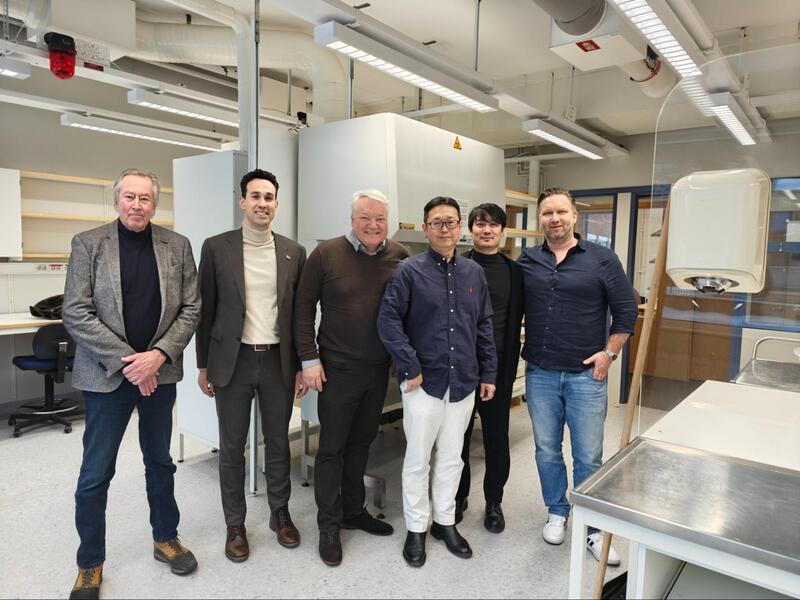
Takahisa’s discussions in Södertälje demonstrate how this strategy can take shape locally. During a recent visit, a Japanese delegation met with representatives from the municipality, its business office, SBB, and Södertälje City to discuss entrepreneurship, research, and possible future establishments connected to UNIPLAT.
The city’s international population, industrial history, and connections among business, research, and government made it particularly relevant.
“We are very interested in Södertälje as a possible global base for UNIPLAT,” Takahisa said. “It is an international city where over 90 languages are spoken, with strong industrial roots and a clear innovative power.”
Such municipal relationships can make international cooperation more concrete by connecting overseas groups with local companies, researchers, facilities, and public bodies.
Another Sweden-Japan Connection
Stark Global Japan has created an additional link between the two countries. In January 2026, the company entered into a Letter of Engagement with Business Sweden’s Commercial and Investment Section at the Embassy of Sweden.
The engagement concerns plans for a plant-factory and Crop Mobility project in Sweden, which the company is considering as a global base. Stark Global Japan’s broader work includes food resource production, agricultural systems, and the development and supply of active pharmaceutical ingredients.
The agreement provides the Swedish initiative with a clearer institutional framework, including expected activities, a proposed timeline, and the forms of support that Business Sweden may provide.
It also shows how Sweden-Japan cooperation can extend across agriculture, medicine, sustainability, and international investment.
Building a Long-Term Network
For Takahisa, Sweden’s value lies in the relationships that can be built among sectors and across borders. Researchers, startups, investors, corporations, academic institutions, and governments often hold different pieces of the same problem. Bringing them into sustained dialogue can make scientific and commercial cooperation more practical.
Through Stockholm-based operations, discussions in Södertälje, and the engagement with Business Sweden, Takahisa is positioning Sweden as a foundation for long-term cooperation and a point of entry between Japan and Europe.