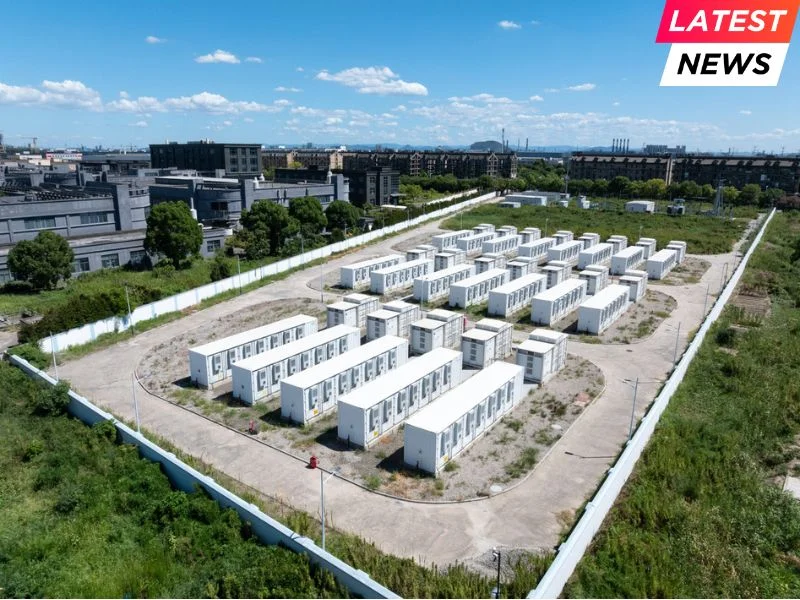
China’s overhaul of its electricity market is driving a surge in energy storage profitability, sending Chinese battery manufacturers into high gear as international demand rises. Energy storage plants ran longer in the third quarter, averaging 3.08 hours per day, up 0.78 hours from a year earlier, following June reforms that replaced fixed power rates with market-based auctions.
Government incentives are amplifying the boom. A $35 billion plan aims to nearly double battery storage capacity by 2027, while 10 provinces have introduced capacity tariffs to support standby storage, alongside other subsidies. Analysts describe the policy shift as “the most decisive for energy storage in over a decade.”
Exports are soaring. Chinese firms shipped more than $65 billion in storage and electric-vehicle batteries this year, with total battery exports—including EVs—hitting a record $66.761 billion in the first ten months. Non-automotive energy storage exports grew 51.4% in the first 11 months, outpacing EV battery growth. Top Chinese producers dominate the global market, including CATL, BYD, EVE Energy, HiTHIUM, CALB, and REPT BATTERO, while only Japan’s AESC breaks the Chinese monopoly in the top ten suppliers.
Domestic and international demand is expanding rapidly. Renewable energy projects, data centres, and AI facilities require reliable backup power, and pairing solar with storage has become “the only solution for meeting U.S. AI data-centre power needs,” according to UBS analyst Yishu Yan. UBS raised its 2026 forecast for global battery-energy storage installations by 25%, reflecting the surge.
Production is intensifying. Analyst Cosimo Ries noted, “These leading energy storage cell makers, they have full orders. Many of them are basically working double shifts now to try and meet demand.” EVE Energy reported a 35.51% increase in storage sales for the first three quarters, while REPT BATTERO set record third-quarter shipments.
China already holds the world’s largest battery energy storage fleet, supplying roughly 40% of global capacity. Historically, some storage remained idle due to low profitability, but the combination of market reforms, provincial subsidies, and rising international demand is changing the economics. The sector now stands at the forefront of China’s clean-technology exports, surpassing solar photovoltaics since 2022.
Related Readings: