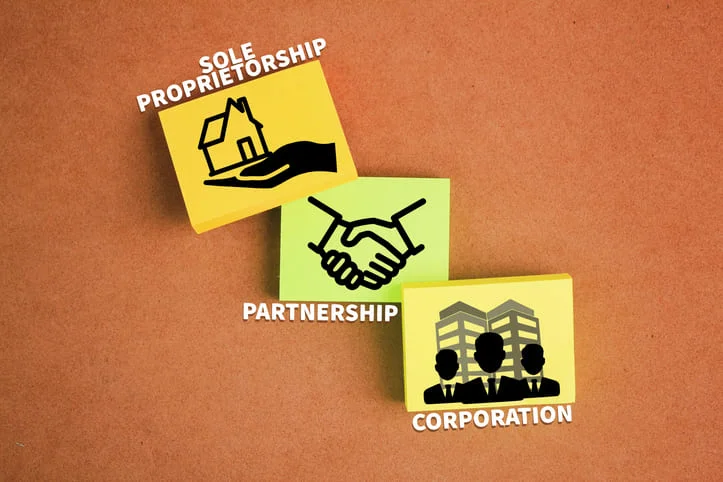
This article explains the difference between the Sole Proprietorship, LLP and private limited companies. It covers responsibility, compliance, money and scalability ideas for entrepreneurs. Understanding which structure matches your business goals and ensures long-term success.
Introduction
Choosing the right business structure is one of the most basic decisions that an entrepreneur can make, as it directly affects risk, finance and development capacity. Understanding the significant difference between informal layouts, hybrid models, and formal corporate structures is necessary to create an informed alternative. This article provides a comparative framework for business owners to help the owners of the sole proprietorship, LLP or private limited company evaluate the boundaries of the company that leads them to the structure that best supports long-term success, compliance and scalability. By weighing factors such as responsibility, taxation, regulatory obligations and financing alternatives, the founder can make a strategic decision that corresponds to the business goals and operating requirements.
Understanding the Three Primary Structures
Understanding primary business structures is necessary to create an informed alternative for entrepreneurs that corresponds to their goals and operating requirements. Each structure provides unique benefits and challenges, which affect responsibility, taxation, compliance and development capacity.
Private Limited Company (Pvt Ltd): A private limited company is a formal company structure that is ideal for scalable businesses. Through Pvt Ltd company registration, entrepreneurs can separate personal and commercial responsibility, attract investors and easily raise money. There are several requirements for compliance, including annual submission, company management and statutory items, but the structure provides reliability, development capacity and legal protection that informal models may not match.
Limited Liability Partnership (LLP): An LLP combines elements of partnerships and business institutions. Partners have limited obligations while maintaining the flexibility of the management, protecting personal property from business loans. Compliance is more than a simple ownership, but an LLP provides a more formal structure suitable for professional services or cooperative companies.
Sole Proprietorship: This is the simplest and most informal structure, where a single person owns and manages the business. It provides complete control and minimal regulatory compliance, but exposes the owner to unlimited personal responsibility. Taxation is decent, but increasing external capital can be challenging.
Direct Comparison: Key Metrics for Decision Making
When selecting a business structure, understanding how company registration affects liability, compliance, funding, and growth is critical to making a strategic decision.
Personal Liability and Risk Shielding: In a sole proprietorship, the owner can withstand unlimited personal responsibility, which means that individual assets can be used to cover business debt or legal requirements. LLPS and PVT Limited companies offer a risk shield, which limits the responsibility for the amount invested in business and protects individual property from unexpected business obligations.
Compliance Burden and Administrative Cost: Compliance obligations vary widely in structure. The sole proprietorship has minimal archiving and low administrative costs, making it easier to manage. LLP -er requires annual filing and maintenance of statutory items, while private limited companies face more complex corporate governance, statutory audit and strict reporting requirements, which incur high administrative expenses
Access to External Equity Funding: Increasing external capital is the easiest for private limited companies, as they can issue shares, attract investors, and companies can secure capital or angel financing. LLP -er has limited options for external equity, and the only ownership is mainly dependent on individual funds or loans.
Credibility and Professional Market Image: Private limited companies and LLPs express professionalism and legal validity, and increase trust between customers, suppliers and financial institutions. The only ownership, although easy, can seem less formal and may encounter challenges in obtaining large contracts or funding.
Ease of Formation and Closure: Sole proprietorship requires minimal documents and regulatory formalities, the easiest to install and dissolve. LLP includes moderate registration processes and can be dissolved with the correct match. Private limited companies require formal inclusion through compliance with the company’s registration, structured documentation and formation and are closed for both formation and closed
Scalability and Management Structure: Private limited companies are designed for development, which allows many shareholders, boards and structured management roles. LLPs provide flexibility in decision-making processes and partnership management, but may be less suitable for mass operations. The Sole proprietorship is limited by the capacity of a single owner and limits scalability.
Tax Implications: Tax treatment varies by structure. The Sole proprietorship is taxed as individual income, which can be simple, but increased revenues can lead to high prices. LLP is taxed as a partnership; some cuts and discounts are offered. Private limited companies are required as corporate institutions to benefit from corporate tax rates, potential discounts and strategic planning opportunities, although they include more complex compliance.
Scenario-Based Recommendations
Choosing the right business structure depends on your business goals, scale and long-lasting vision. Understanding which structure corresponds to the operating requirements, risk tolerance and financing plans can help to ensure steady growth, legal compliance and financial efficiency.
For entrepreneurs starting a small-scale business with minimal investment and a desire for full control, proprietorship firm registration is the most practical choice. This allows for rapid layout, minimal compliance and direct taxation. This structure is ideal for freelancers, small dealers or individual advisers who want to manage all aspects of the business personally while keeping operating costs low.
For companies involving several partners seeking flexibility in management and safety against personal responsibility, LLP registration is beneficial. It provides a legal framework for shared responsibilities, moderate compliance obligations and preservation of assets, which makes it suitable for professional services, consultations and cooperation companies.
For rapid growth, external funding and goals for many stakeholders, a privately limited company registration is recommended. It offers a formal corporate structure, reliability with customers and investors, legal protection for personal property and increased opportunity to increase capital. This makes it ideal for startups, technology companies or companies with long-term scalability goals.
Conclusion
Choosing the right business structure is a critical decision that shapes the future of your enterprise, influencing liability, taxation, compliance, growth, and credibility. Whether you opt for a proprietorship firm registration for simplicity, an LLP for shared management and limited liability, or a Pvt Ltd company registration for scalability and investor appeal, aligning the structure with your business goals is essential.
Carefully considering factors such as personal risk, compliance load, money claims, professional image, and long-term growth capacity helps you ensure that your choice supports permanent success. By evaluating your operating requirements and strategic visions, you can choose a structure that not only meets government requirements, but also keeps your business for growth, stability and market competition. Originally, making an informed decision saves time, reduces legal and economic risks and forms a strong base for your entrepreneurship travel.