The recent European Court of Justice (ECJ) ruling against Malta’s Citizenship by Investment programme marks a turning point for the global investment migration industry. While it closes one chapter for EU-based schemes, it simultaneously strengthens the case for robust, transparent, and independently regulated models—particularly those emerging across the Caribbean Citizenship by Investment landscape.
History of CBI Programmes
The evolution of Citizenship by Investment (CBI) programmes traces back to the 1980s, when St. Kitts and Nevis pioneered the concept. At the time of independence, the country faced severe economic decline, particularly due to the global fall in sugar prices—its main export commodity. In response, the government established the world’s first CBI programme through its Constitution and Citizenship Act. The initiative was designed to attract foreign direct investment and stimulate economic diversification.
St. Kitts and Nevis’ programme originally offered two pathways to citizenship. The first involved a real estate investment of USD 400,000 in a government-approved project, with a mandatory five-year holding period. The second required a donation of USD 250,000 to the Sugar Industry Diversification Foundation (SIDF). A unique aspect of this programme was that new citizens were not immediately granted voting rights; amendments to the National Assembly Election Act in 2007 stipulated that suffrage would only be extended to citizens who had resided continuously in the country for at least twelve months prior to registration.
The success of the St. Kitts and Nevis model inspired other Caribbean nations to launch similar programmes. Dominica introduced its CBI in 1990, followed by Grenada in 1996. However, the late 1990s to mid-2000s saw a decline in the popularity of CBIs, due in part to mismanagement and the negative reputation of poorly designed schemes. During this lull, investment immigration shifted towards residency-based models, particularly in the United States and United Kingdom.
The 2010s marked a significant resurgence of interest in CBI programmes. In this period, six notable programmes emerged – including those in Antigua and Barbuda (2013), Grenada (relaunched in 2013), and Saint Lucia (2016) – as well as European versions in Cyprus and Malta. Across jurisdictions, the primary motivation remained consistent: attracting wealth to spur socioeconomic development, support infrastructure, and diversify economies.
In recent years, as global demand for second citizenship has increased, scrutiny and regulatory oversight have intensified. Caribbean nations have responded by enhancing due diligence, streamlining procedures, and making the process more transparent. This ensures integrity and maintains international trust in their programmes.
Overview of Current Caribbean CBI Programmes
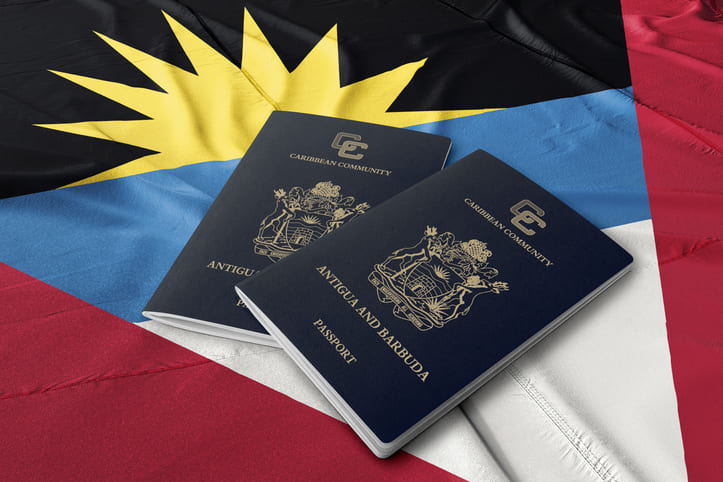
- CBI Antigua and Barbuda offers a family-friendly programme where applicants may either donate USD 230,000 to a state fund or invest at least USD 325,000 in real estate. The process typically takes three to four months, with a minimal presence requirement of five days within the first five years.
- CBI Dominica requires a donation of USD 200,000 or a comparable real estate investment. The straightforward process is completed in three to four months, and there is no physical residency requirement.
- CBI Grenada allows for citizenship through a donation of USD 235,000 or investment in pre-approved real estate projects (including high-quality resorts and residencies). The application process takes around four to six months, with no need for physical residency. Grenadian citizenship offers visa-free or visa-on-arrival access to over 140 countries.
- CBI Saint Lucia, like Grenada’s CBI, provides visa-free or visa-on-arrival access to over 140 destinations. Citizenship can be obtained through a USD 240,000 donation or a real estate investment of USD 300,000, with a processing time of four to six months and no residency requirement.
- CBI St. Kitts and Nevis remains a flagship programme, now offering citizenship through a USD 250,000 donation or real estate investment starting at USD 400,000. Processing typically takes four to six months, with no requirement for physical residency.
In March 2024, the five Caribbean nations signed a Memorandum of Agreement to harmonise pricing, due diligence, and marketing practices across all programmes. This cooperation has since evolved into a full regional regulatory framework.
By 2026, these reforms will be governed by the newly created Eastern Caribbean Citizenship by Investment Regulatory Authority (ECCIRA) – an independent oversight body headquartered in Grenada. ECCIRA will regulate licensing, applicant screening, compliance audits, and uniform reporting across all five participating nations, setting a new benchmark for global CBI governance.
Implications of the Malta Ruling
On 29 April 2025, the European Court of Justice (ECJ) delivered a landmark ruling declaring Malta’s Citizenship by Investment programme incompatible with EU law. Malta’s scheme, operational since 2014, offered EU citizenship to affluent individuals for contributions beginning at €600,000. Although it generated approximately $2 billion in revenue, it consistently faced criticism for enabling wealthy investors to acquire EU rights without genuine residency or national ties.
The ECJ’s decision effectively ends Malta’s golden passport initiative and sends a strong signal against similar EU-based schemes. However, for non-EU nations—particularly those in the Caribbean—the ruling may present an opportunity. Well-regulated, transparent CBI programmes in the Caribbean stand in contrast to the EU’s model, particularly in terms of compliance, due diligence, and sovereign control.
Small island nations often lack the economic scale and diversification found in larger countries. For them, investment migration serves as a crucial tool for generating foreign direct investment, funding infrastructure, and enhancing public services and climate resilience. The Malta ruling, while a setback for Europe’s CBI landscape, could redirect investor interest toward the Caribbean, provided these programmes continue to uphold high standards of governance and transparency.
The Future
The five Caribbean nations have now advanced a comprehensive and legally binding reform of their Citizenship by Investment programmes. These reforms introduce a 30-day residency requirement within five years of approval, strengthen due diligence standards, and tighten the regulation of licensed agents and developers.
At the centre of these changes is the creation of the Eastern Caribbean Citizenship by Investment Regulatory Authority (ECCIRA), headquartered in Grenada. This independent body will oversee all CBI activities, conduct audits, set annual approval quotas, and issue licences across the participating nations.
The establishment of ECCIRA – expected to become operational in early 2026 – marks the most significant structural transformation in the Caribbean’s investment migration history. Developed through two years of negotiation under the Organisation of Eastern Caribbean States (OECS) framework, ECCIRA positions the region as the global benchmark for responsible investment migration.
The European Court of Justice’s ruling against Malta may reshape the global CBI market, but it also highlights the strength of the Caribbean’s evolving, transparent, and regionally regulated model. As the EU retracts from citizenship-by-investment initiatives, the Caribbean’s approach—anchored in cooperation, oversight, and integrity – stands as the future of legitimate global mobility.