Introduction
At the age of fourteen, most teenagers are still discovering hobbies rather than defining their life’s work. For Tsuyoshi Sasaki, it was the same—except that one book he read at that age planted a seed that would define his career. The book, recommended by his father (a business executive), compared American and Japanese management styles through the lens of parent–child relationships in each culture. It awakened in him a fascination with leadership, culture, and how people work together. This early inspiration, combined with education and professional challenges, led him to a mission: to place human understanding at the center of business.
From California Classrooms to Project Management
At seventeen, Sasaki’s quest for business knowledge took him to a summer school in California—an experience that would shape his path. After completing undergraduate and graduate studies in the United States, he returned to Japan and joined the Japanese branch of a major American corporation.
There, amid cross-cultural expectations and management complexities, he stepped into his first major leadership role: project manager at one of America’s largest IT companies, leading a project of about 1,000 people. Looking back, he described how the project was on the verge of collapse. The issue wasn’t technical flaws or poor planning, but a breakdown in communication. His team wasn’t following instructions because the messages weren’t getting through. He had overlooked differences in how people think, interpret direction, and respond to leadership.

Wealth Dynamics: The Key to Human Understanding
In search of solutions, Sasaki discovered Wealth Dynamics, a profiling tool that categorizes people into four “frequency types” (and more specifically, eight profiles) based on their natural strengths and traits.
By applying this framework to his team and adjusting his communication style accordingly, he began to see results. The stalled project started moving again, relationships became smoother, and the team ultimately succeeded. This was a turning point—Sasaki had shifted from simply managing tasks to managing human dynamics.
Resilience and Wisdom: Lasting Lessons
As Sasaki advanced, he balanced his work as a project manager with building his own company. His career has been marked by challenges: leading a large-scale project under tough constraints, running his own business, and navigating the global crisis of COVID-19.
These experiences exposed a truth: when human connections are neglected, systems quickly reveal their fragility. Through continuous use of Wealth Dynamics and an emphasis on empathetic leadership, Sasaki guided teams to remain grounded, adapt to uncertainty, and rebuild trust.
The takeaway is simple: technical skills, budgets, and schedules are essential, but they are not enough. A leader’s self-awareness, emotional intelligence, and adaptability matter just as much. Communication—delivered with the right clarity, tone, and timing—becomes not a burden, but a bridge.
Backed by Global Trends
Global data supports Sasaki’s experience:
- Organizations with emotionally intelligent leadership are about 35% more likely to achieve above-average financial performance.
- Teams that communicate effectively can boost productivity by up to 25%, while 86% of employees cite poor communication as a leading cause of workplace failure.
Sasaki’s experiences align with these findings. When people feel understood and their preferred ways of working are respected, operations flow smoothly, morale stabilizes, and resilience emerges.
He often advises: “The first step is to know your own type. Then, understand the types of the people you work with. From there, business operations, sales, hiring—many things become much smoother.” His point is clear: when communication is rooted in clarity, timing, and respect, it ceases to be an obstacle and becomes a channel for shared progress.
The Broader Impact: What Changes When Understanding Leads?
Sasaki envisions this approach as transformative across all human systems
- Smoother relationships: self- and other-understanding reduce friction.
- Effective communication: clarity, empathy, and timing minimize misunderstandings.
- Stronger teams: people collaborate more deeply when they feel understood.
- Shared success: groups—from companies to families—align more effectively toward common goals.
Experts echo these principles:
- “The art of communication is the language of leadership.” — James Humes
- “Communication is the most important skill any leader can possess.” — Richard Branson
- “The growth and development of people is the highest calling of leadership.” — Harvey S. Firestone
Wealth Dynamics and Organizational Performance
While global statistics on Wealth Dynamics specifically are not widely available, the company behind it is listed on the New York Stock Exchange and reports usage by millions of entrepreneurs, business leaders, and coaches worldwide. Research on organizational performance consistently shows that communication is a primary success factor.
According to surveys published by Forbes and others, companies that invest in transparent and empathetic communication tend to achieve higher employee engagement, lower turnover, and stronger innovation outcomes.
Vision for the Future and Legacy
Sasaki’s vision is bold. He hopes every worker can learn about “human types” to better understand themselves and others—helping companies, families, and communities achieve goals in harmony. His leadership is not about personal fame but about spreading awareness.
He believes that when people truly understand themselves and those around them:
- Workplaces are built on trust rather than tension.
- Communication issues are resolved before projects derail.
- Collaboration flourishes on a foundation of respect for differences.
Conclusion
Tsuyoshi Sasaki’s career demonstrates that while management is necessary, it is not sufficient. True leadership is born of understanding—of self, of others, and of the human fabric that binds organizations together.
His application of Wealth Dynamics is more than a productivity tool; it is a framework for empathy, clarity, and connection. In an era where many organizations struggle with “one-size-fits-all communication,” Sasaki offers an alternative path: leadership rooted in the courage to understand.
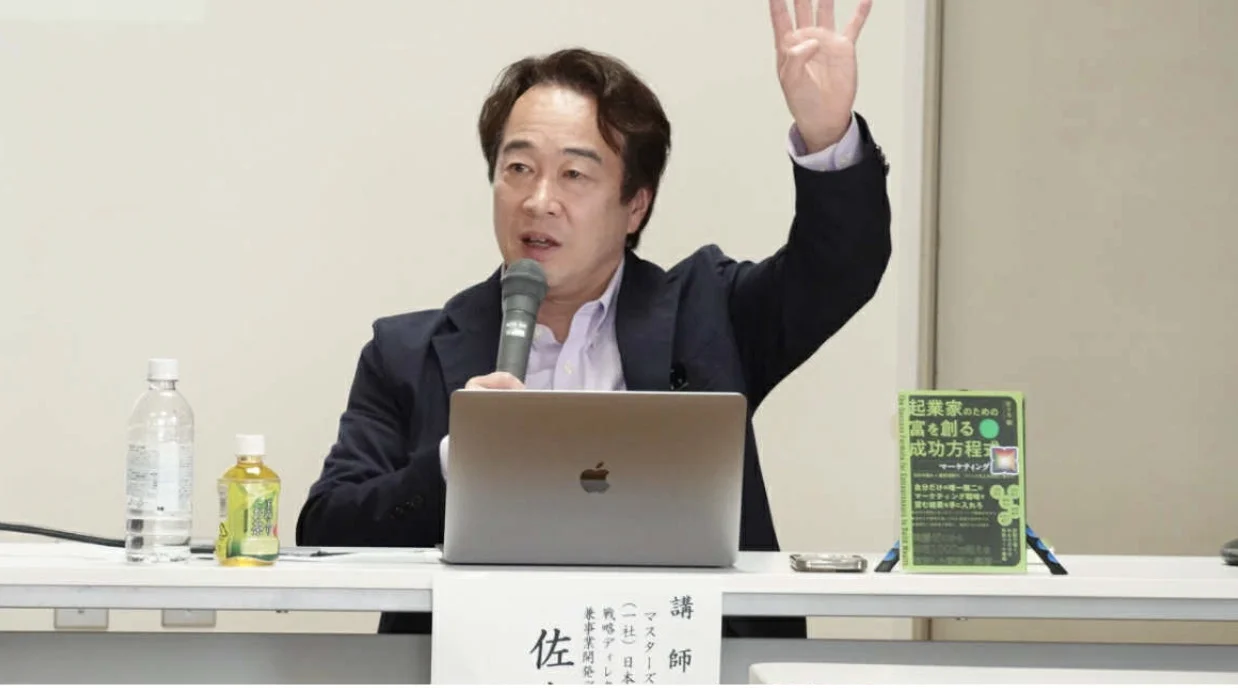
This philosophy is also captured in his book The Success Formula for Creating Wealth for Entrepreneurs: Marketing, which became an Amazon bestseller and ranked #1 across five categories including business, management, and entrepreneurship. Building on this foundation, Sasaki continues to shape the business world as a strategic consultant, international project manager, and Wealth Dynamics expert—three pillars of a legacy built on human understanding.
The photos in the article are provided by the company(s) mentioned in the article and used with permission.