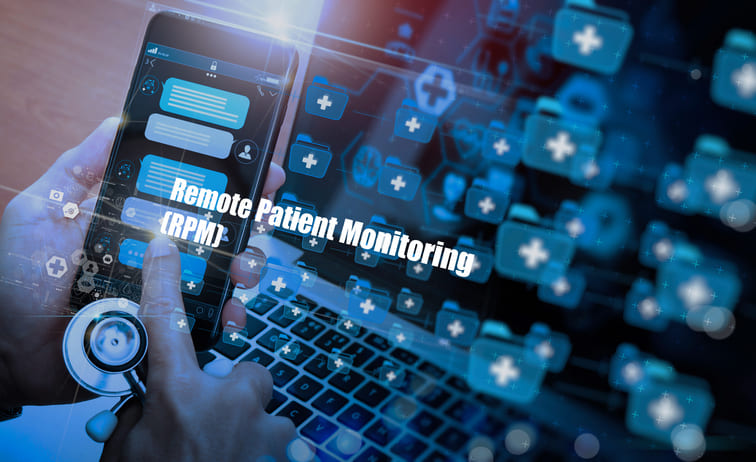
Remote patient monitoring EHR integration has revolutionized healthcare. 80% of Americans support this technology, and more than 70 million Americans will use these devices, and with good reason too. There’s a powerful narrative hidden within these statistics; a story waiting to be discovered.
Healthcare providers who properly integrate remote patient monitoring programs have reduced hospital readmission rates to 1.3%, while non-monitored patients stay at 13.1%. High-risk chronic care patients’ costs have dropped by 52% with proper implementation.
When picking remote patient monitoring tools, healthcare providers should make sure the systems all work together. The right monitoring software creates a continuous connection between devices and electronic health records. Our data shows that quality monitoring platforms can bring in $1,883 per patient annually through specific CPT billing codes.
Patients report feeling much better; the positive changes are noteworthy. Boosting Care Quality Through Integrated Remote Monitoring goes beyond technology – it transforms people’s lives. Research shows patients’ systolic blood pressure drops by -15.1 mmHg on average, and 75% make lifestyle improvements. The right monitoring company makes a difference, as monitored patients feel completely secure under their provider’s care.
The Rise Of Remote Monitoring In Modern Healthcare
Telehealth has undergone a dramatic transformation. Tracking vital signs was the first step; now, remote patient monitoring uses a whole system of linked technology. The global RPM market stands at USD 51.00 billion today, and experts project it will reach USD 350.00 billion by 2030.
Why RPM Is Gaining Momentum
RPM adoption has exploded in the last five years. Modern healthcare relies heavily on what started as simple vital sign tracking. The COVID-19 pandemic served as a major catalyst – healthcare providers saw a 154% surge in remote patient visits during early 2020. Consider this a permanent fixture. It’s not going anywhere.
Because of the nationwide lack of doctors, the American Hospital Association is pushing to make telehealth rules permanent. Rural areas are especially hard hit.
RPM offers some really great advantages. Healthcare practitioners consistently find that RPM provides:
- Continuous monitoring between clinic visits to detect health deterioration early
- More realistic patient vital readings without “white coat syndrome”
- Fewer unnecessary clinic visits
- Better patient self-management and education
Live data collection has revolutionized patient care approaches. “With RPM technology, healthcare practitioners can view valuable symptom information that patients don’t necessarily report during in-person visits,” notes one systematic review. By constantly watching, we catch problems early. This means we can step in quickly, stopping issues from growing.
Key Drivers: Ageing Population And Chronic Diseases
Our ageing population and rising chronic disease rates drive RPM growth rapidly. Chronic diseases cause over 70% of global deaths each year. Four in ten American adults live with two or more chronic conditions, while the U.S. spends USD 4.50 trillion yearly on chronic disease management.
Numbers don’t lie; they clearly illustrate the situation. Chronic illnesses like heart failure, diabetes, and COPD drive healthcare costs and patient admissions higher. Chronic medical conditions accounted for 86% of all U.S. healthcare spending in 2010. Remote monitoring provides a practical solution through:
- Continuous glucose monitoring for diabetes patients
- Daily weight and vital sign tracking for heart failure patients
- Symptom monitoring for COPD patients
The results speak volumes. RPM has been shown to this program may decrease emergency room visits up to 40%! Hospital readmissions dropped by 38 percent. Older adults using these technologies have seen their mortality rates drop by 45%.
How RPM Supports Value-Based Care
RPM fits perfectly with value-based care models that tie provider compensation to patient outcomes rather than service volume. The Centers for Medicare and Medicaid Services (CMS) aims to have 100% of Medicare beneficiaries and most Medicaid beneficiaries in accountable or value-based care arrangements by 2030.
RPM bridges traditional fee-for-service and proactive, outcomes-focused care because it:
- Extends care beyond facility walls to monitor health status live
- Cuts hospital readmissions through post-discharge monitoring
- Lowers avoidable healthcare costs
- Enables early intervention before conditions worsen
Financial incentives have lined up too. CMS introduced specific CPT codes for RPM in 2019, letting providers bill for this proactive care model. CMS’s final rule for Medicare payments under the Physician Fee Schedule in 2024 now allows Federally Qualified Health Centers to bill for RPM services.
A major change is happening in healthcare. We’re seeing a move from reacting to illness to preventing it. A patient survey revealed that 70% of participants felt more confident managing their chronic conditions thanks to remote patient monitoring. Healthcare organizations looking to Boost Care Quality Through Integrated Remote Monitoring can see clear evidence that RPM delivers better outcomes at lower costs.
Core Benefits Of Integrated Remote Monitoring
Raw numbers tell the story of integrated remote monitoring systems. Many healthcare organizations report substantial gains from implementing remote patient monitoring; this includes things like reduced hospital readmissions and improved patient satisfaction.
Providers and patients both benefit, and it’s more than just a little extra convenience.
Improved Patient Outcomes
Remote monitoring technologies help patients get healthier. Studies show major decreases in disease-specific markers (from 12,000 to 11,000) and clear reductions in symptom severity (from 3,500 to 2,500). Patient health status scores jumped from 7,200 to 8,500.
Remote monitoring helps patients with hypertension control their blood pressure better. One study showed average drops of 6 mmHg in systolic and 2 mmHg in diastolic pressure.
Research from the American Heart Association revealed even better news – telemonitoring could cut heart attack and stroke rates by half compared to regular care.
Following patients between appointments helps find health problems early. A study points out that “RPM can monitor slight changes in patients’ vital signs and notify health professionals through the EHR system”. Responding quickly means fewer complications and better patient results. This is especially true for patients managing chronic illnesses.
Reduced Hospital Readmissions
Hospital readmissions pose a major healthcare challenge. The answer? Remote patient monitoring. It really makes a difference. An Arizona cardiology practice found that RPM cut 30-day hospital readmissions for heart patients by half. Only 7% of monitored patients needed readmission within 30 days, while 15% of non-monitored patients returned to the hospital.
Certain settings? They work even better. Trinity Health’s RPM program dropped thirty-day readmissions from 16% to 6%. Another study found 87% fewer hospitalizations among patients using monitoring.
Medicare’s Hospital Readmissions Reduction Program (HRRP) uses these numbers to determine penalties. Hospitals face penalties if they have too many patients returning. With each cardiac readmission costing about $15,000, preventing these events helps both patients and healthcare systems save money.
Enhanced Patient Engagement
Remote patient monitoring platforms help patients take charge of their health care. Patient satisfaction with communication rises from 80% to 95%, and satisfaction with healthcare convenience grows from 75% to 90%.
Patients can easily take part in monitoring programs thanks to wireless technology. They take measurements more often (0.66 vs. 0.2 times daily) and upload data more regularly (0.46 vs. 0.01 uploads daily).
Positive change comes from regular feedback. It’s a fact. One report notes that “Patients gain confidence knowing their progress is on track”. Better results are seen, most notably with chronic illnesses, thanks to this involvement. Plus, “knowing that a clinician regularly monitors their health encourages patients to adhere to their treatment plans”.
See how your healthcare organization can profit. More information is available in our new article. Improving healthcare is easier with remote monitoring. Think of the possibilities! Better patient outcomes, reduced hospital readmissions, and increased patient satisfaction.
Conclusion
Remote patient monitoring has evolved beyond a mere healthcare trend. Better patient outcomes and lower costs are two big benefits of well-designed RPM systems. Fewer patients are readmitted to the hospital. The results speak for themselves.
Good planning makes all the difference. Before healthcare can fully benefit from RPM, some significant challenges need to be overcome. These include issues like patient engagement and data integration. Data interoperability remains the biggest problem, as all but one of these U.S. providers struggle with smooth health data sharing. Patient adherence and staff training need careful consideration too.
Top organizations have developed excellent methods. By bringing virtual care under one roof, teams build systems that are easy to follow. This makes everything more efficient and helps patients stick to their plans. Think of it like an assembly line, but for healthcare.
RPM’s link to electronic health records is a total game changer. Immediate data syncing, fewer manual entry errors, and improved clinical decisions reshape healthcare delivery completely. This smooth information flow enables earlier interventions and individual-specific treatment plans based on continuous health data instead of occasional check-ups.
Disclaimer: This article contains sponsored marketing content. It is intended for promotional purposes and should not be considered as an endorsement or recommendation by our website. Readers are encouraged to conduct their own research and exercise their own judgment before making any decisions based on the information provided in this article.