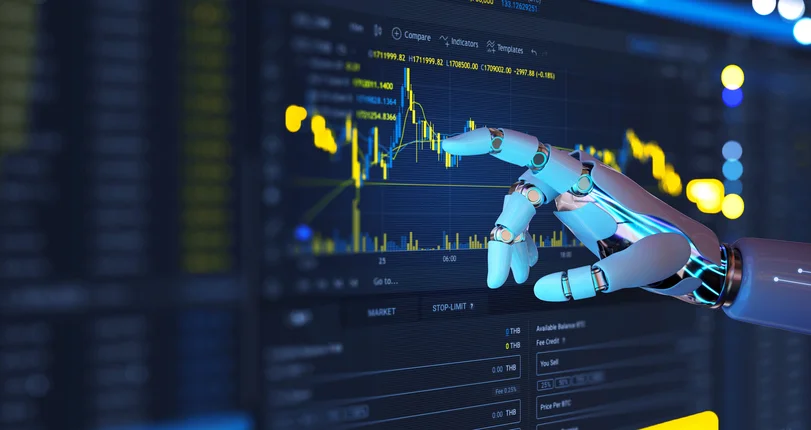
The cryptocurrency market is characterized by speed, volatility, and constant change. Artificial intelligence (AI) has recently emerged as a major force in finance, with its effect on crypto trading is already visible. AI is transforming how investors, exchanges, and institutions handle digital assets, aiding forecasting and automating tasks. https://investingguide.co.uk/awards/ai-trading-apps-uk/ states modern AI trading apps enable retail users to access tools previously reserved for hedge funds and specialist firms. These systems process information faster and on a larger scale than human traders. For beginners, they simplify market entry by providing insights and automation, eliminating the need for constant monitoring. Many platforms also feature built-in risk alerts, helping users avoid significant losses during volatile swings.
The Evolution of Trading in the Digital Era
When Bitcoin emerged in 2009, most trading was manual and driven by early adopters. As the market grew, algorithmic systems became common, delivering faster execution and tighter risk control. Today, artificial intelligence marks the next stage. These systems can adapt and refine their strategies as conditions change.
Unlike fixed-rule algorithms, AI platforms can process large amounts of information. This includes price charts, investor sentiment, and economic data. These tools help traders spot patterns in fast markets. This gives them an edge that human judgment can’t match.
Why Crypto Trading is Ready for AI
Several features of the cryptocurrency market make it well-suited for artificial intelligence:
- Continuous Trading: Crypto markets never close. AI systems can check and act at any time.
- High Volatility: Price swings are frequent. Machine learning can adjust strategies quickly to manage risk.
- Information Overload: There are thousands of tokens and constant news. So, there’s more data than people can handle. AI can filter and interpret this information effectively.
- Market Inefficiencies: Compared with mature asset classes, crypto remains less efficient. AI tools can identify and exploit pricing gaps.
These factors make intelligent automation a great help for beginners and professionals.
Core Applications of AI in Crypto Trading
Artificial intelligence is no longer experimental in financial markets. In the crypto space, it is already enhancing decision-making, security, and portfolio management. The main areas of impact include the following:
Predictive Modelling
AI reviews past price data and current market signals to predict future movements. These forecasts are not exact, but they give traders a clearer sense of probabilities and risks. Professional desks use such tools to test scenarios and prepare for rapid changes.
Portfolio Management
Simple robo-advisors have developed into advanced platforms that adjust portfolios automatically. They rebalance holdings, manage risk, and suggest assets that match an investor’s profile. For beginners, this offers steadier exposure without constant monitoring. For institutions, it creates efficiency at scale.
Sentiment Analysis
Crypto markets often react to public mood. AI tools scan social media, forums, and news to gauge sentiment in real time. Traders can use these insights to find possible surges or sell-offs before they show up in price charts.
Security and Fraud Detection
AI also strengthens security. Exchanges use it to detect irregular trading patterns, flag fraud, and reduce the risk of hacks. With billions lost to crypto crime each year, these tools provide critical protection. For trading platforms, advanced security is now essential.
High-Frequency and Arbitrage Trading
AI supports strategies that rely on speed. High-frequency systems can execute thousands of orders in fractions of a second. Arbitrage tools capture small price gaps between exchanges before they disappear. These strategies help professionals the most. They also show how AI is changing market mechanics.
Risks and Limitations
Artificial intelligence brings benefits, but it also presents risks:
- Model Overfitting: Some systems find patterns that fail when conditions change. Without proper testing, this can lead to losses.
- Data Reliability: If the data is wrong or manipulated, results will be flawed. Crypto markets are especially vulnerable to misinformation.
- Regulatory Oversight: As automated systems make more decisions, questions about accountability remain. Regulators are still deciding how existing rules apply.
- Access Gaps: The best tools remain concentrated among large institutions. Smaller investors may face higher costs or fewer features.
Because of these risks, AI should be used as a support tool, not as a replacement. Human oversight and judgement remain essential.
Using AI Responsibly
Both beginners and experienced investors can benefit from a measured approach. It is important to understand how these systems work before investing. Human control should remain central to all decisions. AI insights are most effective when combined with traditional analysis. Investors should also favour platforms with strong reputations and clear regulatory safeguards.
What the Future Could Look Like
The combination of AI and blockchain could create new models of finance. Decentralised organisations may use AI to manage treasuries. Smart contracts could adjust automatically as market conditions change. Retail investors are likely to gain broader access through mainstream trading apps.
As adoption grows, markets may become more efficient. Yet the speed and complexity could also raise the risk of sudden shocks if systems fail. The priority will be to balance innovation with oversight. Regulators will need to design rules that support growth while protecting integrity. Investors will need to learn how to work with these tools rather than rely on them blindly. The most successful traders will be those who adapt early, test cautiously, and remain flexible as new technologies evolve.
Conclusion
AI is no longer on the margins of crypto trading. It shapes how markets work. This includes analysis, execution, security, and compliance. The opportunities are significant, but the risks cannot be ignored.
For investors, the strongest results will come from combining technology with sound judgment. Those who treat AI as a partner, not a substitute, will be better prepared for the next stage of digital finance.
Disclaimer: This article contains sponsored marketing content. It is intended for promotional purposes and should not be considered as an endorsement or recommendation by our website. Readers are encouraged to conduct their own research and exercise their own judgment before making any decisions based on the information provided in this article.