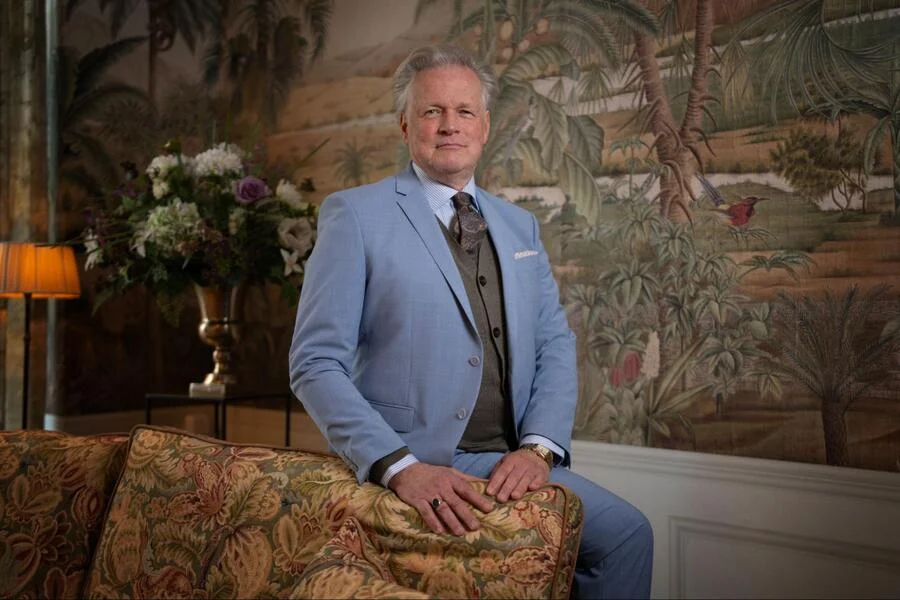
Every company is powered by human beings, yet most sustainability programs often overlook them. For the past few years, sustainability has been defined by carbon emissions and environmental milestones. These are considered critical, but they tell only part of the story. True sustainability goes deeper, to the human beings at the heart of every system. As Ronald Heister, global PR industry expert and founder of Human Sustainability Framework, explains, “Without humanity, what are we doing it for?”
Today, humanity stands at a defining crossroads. Around the world, systems are shifting, technologies are accelerating, and plans are unfolding that affect every life. In the midst of this transformation lies a profound question: will human beings continue to see themselves merely as parts of a machine, or as conscious individuals with inherent dignity and purpose?
When people begin to see themselves in this deeper way, fear and division lose their power, and unity emerges, enabling companies to achieve their goals. But Heister insists that such introspection requires real change, which doesn’t come from outside forces or distant heroes; it begins within people themselves, with the daily choices made in homes, workplaces, and communities. “We are often told to look up to heroes. But the real hero is the one in the mirror. No one else is coming to rescue us,” he says.
That conviction underpins the Human Sustainability Framework, a methodology designed to instill fulfillment, clarity, and resilience within humans and organizations. The 17 Real Human Goals include timeless principles, inspired by the Armor of God: truth, righteousness, peace, faith, salvation, and Spirit. The Real Human Goals, such as live in truth, lead with integrity, build inner resilience, move with purpose, and more, lead to trust, purpose, and stewardship. They include seventeen practical, measurable steps for leaders, teams, and individuals. The goals cluster into three strategic groups: Truth & Dignity, Identity & Hope, and Integrity & Compassion. Together, they restore direction in an era of disinformation, disconnection, and division.
They address a simple question that is rooted in not just how a company can perform, but how humans can thrive both at work and at home, even in times of systemic change that touches everything: work, power, value, and meaning. Heister suggests that people are defined by their character and who they are inherently, not their work. “I believe this is something that leaders should be reminded of,” says Heister. “For the sake of their workers, the business, and humanity itself.”
The world is undergoing what Heister calls a “double disruption.” Global debt has exceeded $324 trillion, placing an enormous strain on economies. At the same time, AI threatens to transform or replace many jobs by 2030. For centuries, work has been a source of identity and meaning. Now, as these foundations shift, humanity risks mass disorientation and a collapse of purpose.
“If someone’s asked ‘who are you,’ they mention what they do for a living,” he says. “What you are and what you do are different things. You are not your work. It’s not the essence of who you truly are. Because if you lose that job, who are you then? What is your purpose then? That’s what we help businesses and employees define.”
The Human Sustainability Framework follows a structured process: vision, measurement, action, monitoring, and evaluation. It begins with the 17 Real Human Goals, a blueprint for living and leading with integrity, connection, and oneness. From there, companies use Human Fulfillment Indicators (HFIs) to measure what truly matters: trust, dignity, psychological safety, and the capacity to grow. Unlike traditional KPIs, these indicators make the invisible visible, revealing where employees feel fulfilled and where they are drained.
Next comes action: embedding the goals into leadership, strategy, and culture. The program guides organizations by adding Human Sustainability to their current ESG initiatives, from leadership alignment to team practices. Progress is then tracked through the Human Sustainability Monitor, which reveals patterns, risks, and opportunities across the company. Finally, the results are captured in the Corporate Humanity Footprint, which is made public so that other companies can learn from the emerging best practices.
This process challenges companies to redefine what good stewardship looks like. As Heister explains, “Profits can wane if companies lose 80% of productivity, as the very energy of the people working with them and for them can be drained. Not to mention, this can have a massive negative impact on the company’s reputation and public perception.”
In today’s workplace, where 82% of employees are at risk of burnout, organizations cannot afford to ignore the human side of sustainability.
To embed this vision into organizations, Heister suggests bold new roles, such as the Chief Humanity Officer. Just as companies have CFOs to safeguard finances, CHOs could safeguard humanity, ensuring human sustainability is built into decisions at every level. But Heister emphasizes that responsibility does not rest only with leaders.
What sets this methodology apart is its balance of vision and measurability. Too often, human-centered initiatives are dismissed as soft or intangible. The Human Sustainability Framework counters this by offering concrete indicators and transparent reporting, enabling companies to track progress with the same rigor they apply to financial or environmental goals.
Human Sustainability Framework is now opening pilot programs for companies ready to pioneer this shift. Early adopters will gain tailored frameworks and measurable results, as well as recognition as leaders in human sustainability. Furthermore, Heister is also preparing to publish a book reflecting on his career and the lessons that led to this movement.
At its heart, the Human Sustainability Framework is more than a business model; it is a human reset, reminding the world that without inner sustainability, no external system will hold.
The systemic transformation of humanity is happening fast, and it is touching nearly every aspect of daily life. For businesses willing to step forward, the path is clear: act with clarity, measure what matters, and lead with humanity at the center. As Heister puts it: “Humanity has a choice. We can either see ourselves as functioning humans within a system, or as independent, powerful beings with a purpose on Earth to observe, learn, grow, and love before our time here ends. And that’s the need of the hour.”