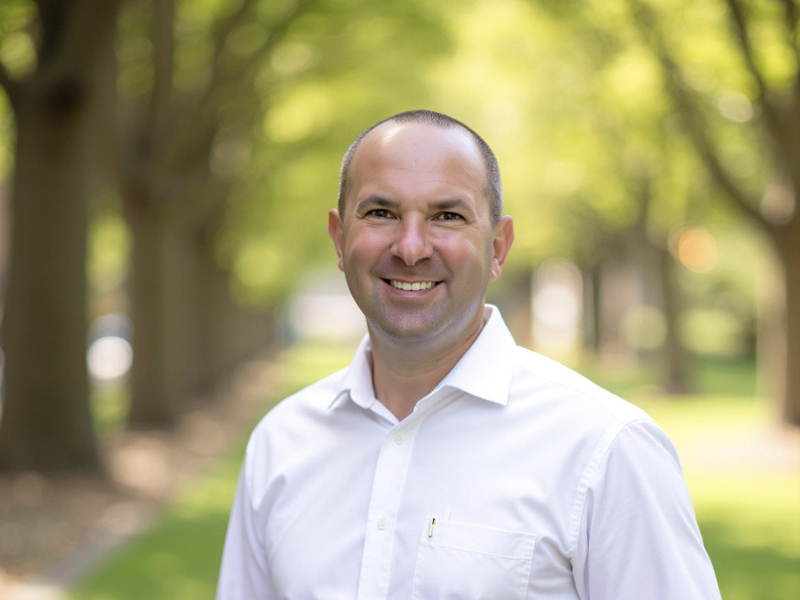
Frank Cardia has nearly 30 years of experience in the financial services industry. Throughout that time, he has built a career grounded in long-term value, integrity, as well as a commitment to both professional excellence and personal development.
As Founder and Managing Partner of Augurey Ventures, Cardia’s trajectory reflects a deliberate shift. From fast-paced market activity to more sustainable asset management strategies. His success is not marked by any single moment of breakthrough. Instead, by his consistent, focused approach to business and leadership over decades.
A Steady Climb from Registered Representative to Venture Leader
Frank Cardia began his career as a Registered Representative in 1996, focusing heavily on the equities market. Early in his career, Cardia gained a reputation for diligence and market knowledge. He did this by building a multimillion-dollar client book, and developing deep expertise in equities trading. Yet over time, he recognized the need for a more strategic, long-term approach. One that prioritized asset management over day-trading.
This awareness led to a significant transition in his investment philosophy. Now a licensed Series 65 Financial Advisor, Cardia pivoted away from short-term trading to focus on structured wealth-building for high-net-worth individuals. Over time, his practice grew to include an array of financial instruments. This includes stocks, bonds, options, fixed income investments, as well as private equity.
This broad-based knowledge set the stage for his eventual co-founding of Augurey Ventures, a firm that reflects his belief in creating lasting value for clients. Prior to this venture, Cardia had already established success by managing multiple private equity funds. He was also involved in over one billion dollars’ worth of venture capital and funding transactions.
Throughout this evolution, one thing remained constant. That was his commitment to maintaining a personal retail business that caters primarily to high-net-worth clients. This spans across both the U.S. and international markets.
A Philosophy of Practical Mentorship and Decision-Making
Unlike many who point to a single guiding figure in their journey, Frank Cardia views mentorship as a multi-faceted and ongoing process. He credits authors and speakers like Tony Robbins and Jim Rohn for shaping his outlook early on. In particular, their teachings around clarity and perception. A principle that’s stayed with him for decades is to “see things as they are. Not worse, not better.” This balanced view has helped him maintain objectivity in high-stakes situations throughout his career.
Rather than adhering to a specific mentorship formula, Cardia believes in hands-on leadership. “In 30 years,” he notes, “I have never asked any employee that I was training to do something I myself wasn’t already doing or prepared to do.” His leadership model is grounded in transparency, direct engagement, and leading by example. This has become a style that naturally builds trust and accountability.
Decision-making is another cornerstone of Cardia’s philosophy. He emphasizes the importance of being able to evaluate a situation fully and then commit to a course of action. “Indecisiveness is the killer of all growth,” he says. While he doesn’t advocate for rash decisions, he cautions against analysis paralysis. He rather encourages leaders to embrace responsibility, and take corrective action if needed.
Evolving Mentorship, Consistent Values
While his approach to mentorship has remained consistent over the years, the environments in which he mentors have changed. Whether working with new advisors, fund managers, or business partners, Frank Cardia maintains a clear and honest communication style. “Your team should always know where you stand,” he explains. His straightforward manner builds cohesion, and allows mentees to align their performance with shared goals.
He sees mentorship not just as training, but as an opportunity to meaningfully influence someone’s life trajectory. “It’s incredibly rewarding when you watch someone you’re mentoring begin to flourish,” he notes. For Cardia, this is not about accolades. It’s about watching people grow into their own confidence and capacity.
While many professionals seek mentors with greater financial success or higher status, Cardia challenges that notion. “I’ve learned valuable lessons from people who may not have been ahead of me financially,” he says. “There’s insight in every experience, even lessons on what not to do.” This openness to learning from a wide range of people reinforces his belief that mentorship is less about hierarchy, and more about shared values and mutual respect.
Relationship Building in Finance and Leadership
Maintaining long-term relationships, whether with mentors, mentees, clients, or partners, is a priority for Cardia. He remains in regular contact with mentors through phone calls, emails, and messages. These connections are not maintained out of obligation, but because he continues to find value in ongoing conversations. “I always make time for people who offer value,” he says simply.
This approach extends to his client work as well. One of the defining aspects of Cardia’s business success has been his ability to maintain personalized service, even as his portfolio has scaled. In a field where automation and delegation are common, Cardia remains closely involved with client relationships. He sees this not just as a business practice, but also as an ethical obligation.
Values-Based Leadership at Augurey Ventures
At Augurey Ventures, Cardia applies the same leadership style he’s honed over decades. The company focuses on long-term, strategic investment vehicles. This includes private equity funds, and venture partnerships. As managing partner, Cardia is responsible not just for fund performance, but also for organizational culture and leadership development.
His approach to identifying talent is aligned with his mentoring philosophy. He looks for individuals who exhibit curiosity, initiative, and the willingness to learn. This is regardless of their current title, or level of experience for that matter. Once he identifies potential, he offers them the kind of “in-the-weeds” guidance that shaped his own development.
This practical, transparent leadership style allows him to build cohesive teams that are both capable and aligned. At the core of his work is the belief that every team member, regardless of role, should understand the firm’s mission and feel empowered to contribute to it.
Continuing Growth Through Reflection
When asked how he continues to learn, even at this stage of his career, Frank Cardia again points to conversation and reflection. He frequently revisits lessons from books, former mentors, and life experiences. Sometimes often recalibrating his outlook based on current challenges. “Even mistakes have value,” he reflects. “You just need to see them for what they are and decide how to move forward.”
This level-headed approach is particularly relevant in financial services, where market conditions can change rapidly and client expectations are high. In this environment, Cardia’s calm, deliberate style provides a measure of stability for both clients and team members.
Conclusion
Frank Cardia’s career is a study in consistency, client-first thinking, and grounded leadership. Whether managing private equity funds, mentoring future leaders, or advising clients, his philosophy remains rooted in clear decision-making, honest relationships, and the long view.
For those entering the financial sector or seeking leadership growth, his example offers something rare. A blueprint for success that emphasizes discipline over flash, resilience over urgency, and mentorship over micromanagement. In a field often driven by short-term gains and rapid shifts, Frank Cardia demonstrates the enduring power of measured growth, client trust, and continuous learning.