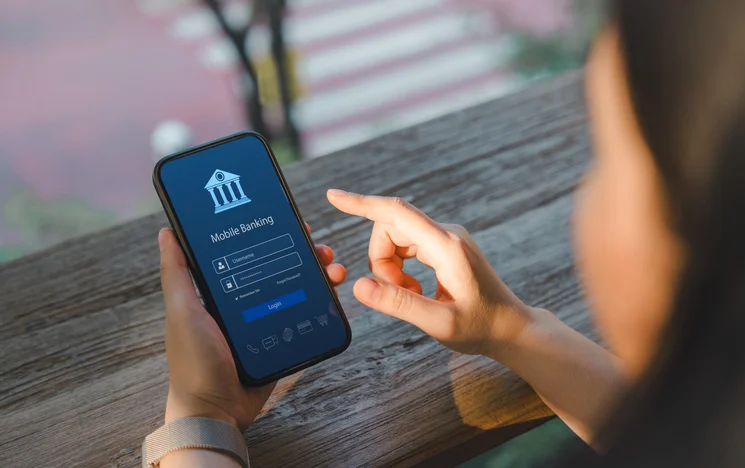
Digital banking apps or web portals have become the primary way people interact with their financial institutions, and user experience is now a direct driver of loyalty.
Customers want speed, simplicity, and security but too often, they’re forced to sacrifice one for the other.
In 2025, the strongest banking UX strategies are proving that seamlessness and safety can coexist. At the center of this shift is one solution: continuous biometric verification paired with multi-factor authentication (MFA) like IronVest.
What users want from banking app experiences
Pick a bank, any bank. Go onto their app store page and read the reviews from customers.
One of the biggest pain points users call out in bad banking app reviews is the banking user experience: the constant demand for codes, passwords, or extra devices. Comments like “I wasted nearly an hour trying to log in, then gave up” and “I’m constantly having to authorise purchases via the app” are almost universal when banks rely on 2fa auth technology.
What customers are asking for instead is simple: security that doesn’t get in the way. They want to check a balance or make a transfer with a single action, not three layers of verification. They want to trust their bank to keep their money safe without being forced to prove their identity over and over.
In hundreds of positive reviews that we read, the words that came up most often were “easy,” “fast,” and “just works.”
Writing on his blog, Jamal Habash, a technical advisor at the Government of Canada, described a recent experience he had while traveling abroad, where he found himself completely locked out of his personal bank account.
Because his bank relies heavily on SMS-based two-factor authentication, turning off his Canadian SIM to avoid roaming charges left him unable to receive the necessary login code. Although he had installed the bank’s own “Authenticate” app as a backup, it had logged him out, and reaccessing it also required an SMS.
Despite having both the app and his credentials, Habash was caught in what he called a security “catch-22.”
Habash summarized his experience as “a textbook case of security punishing the user instead of protecting them.”
Consumers value security, but not at the cost of a slow or complex login process.
In response to Habash’s experience, many users echoed his sentiment. One person remarked that “Authentication flows too often feel like they were designed in a vacuum, engineered by siloed security teams and product managers with no regard users.”
Why Banking Apps Struggle With Authentication UX
Even well-designed apps often stumble at the authentication layer unless they use an authentication solution with great UX.
Traditional MFA and step up authentication protocols protect accounts and is thought by many banks to be the best way to meet compliance obligations. But it is a) only offering protection by interrupting users with extra steps and b) not actually the best solution for the compliance challenge.
Unfortunately password fatigue, one-time passcodes, and forced logouts remain some of the top sources of user frustration in banking UX reviews. These friction points lead to abandoned sessions, higher support costs, and ultimately, customer churn.
3 things the best banking app user experiences have in common
As banking becomes increasingly digital-first, authentication, the best banking app user experiences eliminate ates the tradeoff between safety and simplicity, setting the standard for what banking UX should look like in the next decade.
1. Meeting Users Where They Are
Recent studies reveal stark frustration levels: approximately 83% of Gen Z and 78% of Millennials report dissatisfaction with current digital banking experiences especially authentication.
38% of users said they’re constantly worried someone could access their account if their phone is lost or stolen.
IronVest
This approach directly addresses both pain points. Users shouldn’t be challenged just to log in, not when their device is recognized and their behavior is consistent. At the same time, they gain stronger protection against account takeover.
2. Aligning with the Evolution of Security Expectations
Biometric authentication continues its meteoric rise: 77% of mobile banking users now utilize biometrics, and over half of credit cardholders would switch banks to one that offered biometric options.
Meanwhile, invisible risk-based systems are the answer to reducing account lockouts, MFA fatigue, and friction-caused abandonment during onboarding or transactions. These systems let customers do more with fewer obstacles.
3. Delivering Business Outcomes That Matter
Banks embracing continuous biometric + invisible MFA report:
- Reduced drop-offs during login and transaction flows (because users rarely hit failed MFA loops).
- Higher NPS and satisfaction scores, especially from younger users who expect digestible, mobile-first experiences.
- Strong compliance alignment—this model satisfies modern regulatory frameworks (e.g. PSD2, FFIEC, ISO 27001, PCI-DSS) while preserving usability.
Delivering best in class banking User Experience with Continuous Authentication
Continuous biometric verification and invisible MFA is a far more future-proof solution that meets security and compliance requirements for all current banking regulations, i.e. PSD2 in Europe, FFIEC guidelines in the US, and global standards such as ISO 27001 and PCI DSS.
Instead of treating authentication as a single event at login, continuous biometric verification keeps validating the user throughout the entire session. It uses signals like facial recognition, behavioral biometrics (typing patterns, device handling), and liveness detection to confirm that the person using the app is the authorized account holder at every moment.
For the user, the resulting authentication experience feels effortless.
They log in once ( with a glance and/or fingerprint) and never have to think about authentication again. It does not matter if they want to check their balance or make a loan application, once authentication has happened it continues to happen seamlessly.
No need for interruptions for step up authentication.
For the bank, this approach (which might seem less safe) is also more secure because identity is constantly being checked in the background, not just at the front door. It’s a binary solution. The user either is or is not who they say they are.
Disclaimer: This article contains sponsored marketing content. It is intended for promotional purposes and should not be considered as an endorsement or recommendation by our website. Readers are encouraged to conduct their own research and exercise their own judgment before making any decisions based on the information provided in this article.